

 English
 English
 русский
 Français
 Español
 Português
 عربى
عربى
Cat:Glue -coated Protective Film
● Protects carpet against staining, paint spillage and dirt during painting, building, remodeling, plastering, tiling, decoration, general maintenance...
See Details
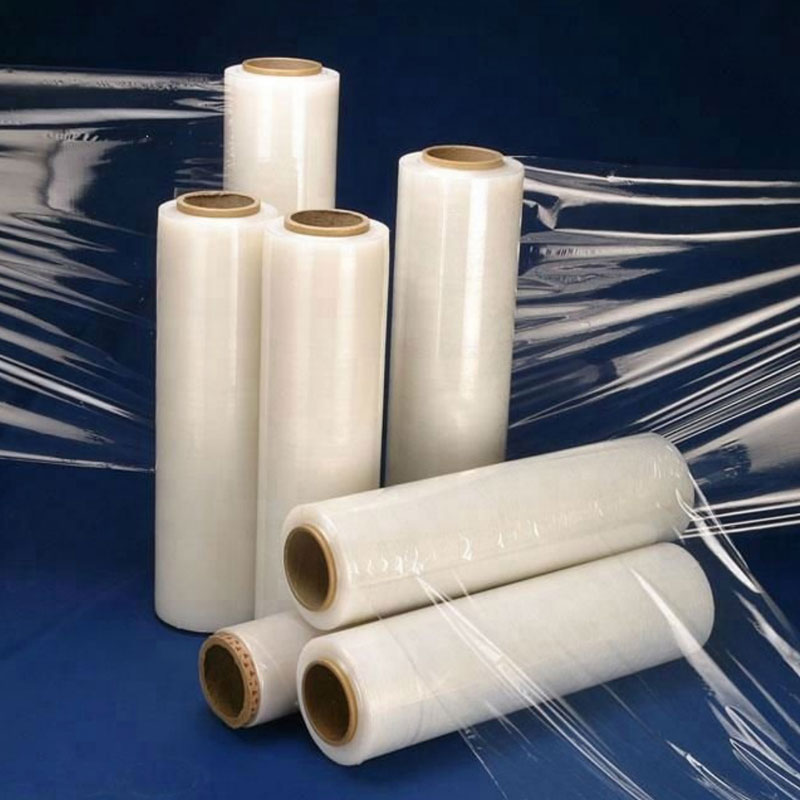
Manual stretch film is a practical and economical packaging material designed for securing products, cartons, pallets, bundles, and irregular loads during storage and transportation. Its combination of stretchability, self-adhering performance, puncture resistance, tear resistance, transparency, and convenient manual application makes it an important solution for warehouses, logistics operations, manufacturing plants, retailers, distributors, and many other industries.
Unlike ordinary wrapping film, manual stretch film is engineered to elongate around a load and create a tight, stable unit. Each layer bonds to the next without requiring additional adhesive, string, or strapping in many applications. This helps reduce packaging time, control material consumption, and protect goods from dust, moisture, dirt, abrasion, and movement during handling.
Wuxi Qida Tape Co., Ltd. manufactures manual stretch film as part of a broader portfolio of protective films and surface protection materials. With in-house film production, adhesive coating, rewinding, slitting, printing, inspection, and packaging capabilities, the company can provide consistent products for both standard and customized requirements. Its experience in protective film manufacturing, quality management, research and development, and international supply gives customers access to a dependable packaging partner rather than only a single packaging product.
Manual stretch film is a flexible polyethylene film supplied in relatively small rolls that can be applied by hand. The operator holds the roll or uses an optional handle dispenser while walking around the load and stretching the film around it. The film is applied in overlapping layers until the goods are sufficiently stabilized and protected.
The film is generally produced from polyethylene materials selected for flexibility, tensile performance, puncture resistance, and controlled cling. Its self-adhering characteristic allows one layer to bond to another while minimizing unwanted adhesion to the packaged product. This balance is important: the film must hold firmly during transportation but should also be removable when the goods reach their destination.
Manual stretch film is available in different thicknesses, widths, roll lengths, colors, and performance grades. The appropriate specification depends on the weight and shape of the load, the distance of transportation, storage conditions, handling method, and desired level of visibility or identification.
For lightweight cartons, a thinner film may provide sufficient holding strength and help reduce material usage. Heavier, sharp-edged, or irregular products may require a thicker grade or additional wrapping layers. Clear film is widely used when visual inspection and barcode identification are important, while white, black, or other colors may be chosen for product differentiation, concealment, or warehouse organization.
The available manual stretch film range can be configured for a variety of packaging situations. The standard product characteristics include a thickness range from 7 micrometers to 35 micrometers, widths from 100 millimeters to 500 millimeters, and roll lengths from 150 meters to 500 meters. The film can be supplied in clear, white, black, or other colors according to application requirements.
| Characteristic | Available Specification or Performance | Packaging Benefit |
|---|---|---|
| Film thickness | Approximately 7 to 35 micrometers | Allows users to match material consumption with load protection requirements |
| Film width | Approximately 100 to 500 millimeters | Supports both compact hand wrapping and larger load coverage |
| Roll length | Approximately 150 to 500 meters | Provides flexibility for different packaging volumes and work rhythms |
| Bonding performance | High self-adhering strength | Helps layers remain connected without separate tape or adhesive |
| Transparency | High transparency available | Permits visual inspection, identification, and barcode reading |
| Color options | Clear, white, black, and other colors | Supports classification, concealment, and visual management |
| UV resistance | Available for exposure of up to approximately three months, depending on conditions | Provides additional protection for temporary outdoor storage |
| Application method | Manual wrapping, with optional handle dispenser | Suitable for warehouses and operations without stretch-wrapping machinery |
Actual performance depends on film grade, load geometry, wrapping technique, temperature, humidity, storage duration, and transportation conditions. For demanding applications, customers should confirm the required specifications through samples and testing before large-scale production.
Stretchability is one of the most important advantages of manual stretch film. During application, the operator elongates the film so that it conforms closely to the shape of the packaged goods. This allows a single film type to accommodate cartons, bags, containers, pipes, furniture components, machine parts, and other products with different dimensions.
A film with appropriate stretch performance can cover a larger area than its original relaxed length. This can lower the amount of film required per load and make wrapping more economical than using rigid packaging materials for every item. Stretching also creates tension around the load. When the film is applied correctly, this tension helps hold products together and reduces shifting during lifting, vibration, impact, and transportation.
Manual stretch film is especially useful for irregular loads. Products with uneven surfaces or mixed carton sizes may be difficult to secure with uniform strapping alone. The film can bridge gaps, follow corners, and conform to changing contours. Several overlapping layers can then create a unified package that is easier to move with a pallet truck, forklift, or other handling equipment.
Stretchability also contributes to efficient material use. Instead of applying a thick, loose layer, an operator can use controlled tension to obtain the required holding force with a suitable gauge. This does not mean that the thinnest film is always the most economical option. The most efficient solution is the film that balances thickness, stretch, puncture resistance, wrapping speed, and load stability.
Manual stretch film is designed to adhere to itself as layers overlap. This self-adhering behavior simplifies the packaging process because the operator can wrap and secure a load without applying separate glue, tape, or other fastening materials in many cases. The final tail of the film can be pressed against a previous layer, allowing the package to remain closed during normal handling.
Self-adhesion also helps create a compact, continuous protective cover. Each new layer bonds to the preceding layer, increasing the stability of the wrapped unit. This is particularly valuable when pallets contain multiple cartons that could otherwise slide independently. The film joins the cartons into a more cohesive load and helps maintain the arrangement during movement.
A well-controlled adhesive system is important. Excessive cling may make the film difficult to unwind or cause it to stick to products, labels, or equipment. Insufficient cling may allow the film tail to loosen or layers to separate. Qida Tape offers multiple adhesive technologies across its product portfolio, including acrylic water adhesive, acrylic solvent adhesive, and natural rubber adhesive for different protective film applications. Its technical experience in adhesive coating supports a better understanding of adhesion control, coating uniformity, and application-specific performance.
For manual stretch film, the desired result is reliable layer-to-layer bonding combined with clean removal and manageable handling. This balance helps operators work faster and reduces the need for repeated wrapping or additional fastening materials.
Packaging materials are frequently exposed to sharp corners, rough surfaces, forklift contact, pallet edges, and accidental impact. A weak film may puncture during wrapping or tear after a small cut develops. Once a tear begins, the protective cover can quickly lose its integrity, leaving the load exposed or unstable.
Manual stretch film with strong puncture and tear resistance is better suited to demanding handling environments. It can absorb localized stress and maintain continuity around the load. This is especially important when packaging mechanical parts, building materials, furniture components, metal products, cartons with hard edges, or mixed loads containing products of different shapes.
Resistance to puncture and tearing also improves labor efficiency. If the film breaks during application, the operator must stop, remove or secure the damaged section, and begin wrapping again. This interrupts workflow and increases material consumption. A stronger film reduces such interruptions and provides more consistent packaging results between operators.
Film strength should always be considered together with wrapping technique. Sharp corners may benefit from edge protection, and very heavy products may require additional layers, strapping, or a machine-assisted solution. Manual stretch film is versatile, but correct product selection and application remain essential for safe load containment.
Manual Stretch Film
Noise is an often-overlooked factor in packaging operations. Conventional packaging film can produce a loud crackling sound when unwound, especially in large warehouses or enclosed production areas. Repeated noise may affect operator comfort and make communication more difficult.
Manual stretch film can be manufactured for lower-noise unwinding while maintaining high self-bonding strength. A quieter film contributes to a more comfortable workplace, particularly when multiple workers are wrapping goods throughout the day. It may also be beneficial in retail backrooms, distribution centers, and manufacturing areas where excessive noise is undesirable.
Low-noise performance should not be treated as a substitute for strength or adhesion. The best film combines controlled unwind behavior with reliable holding power. When these characteristics are balanced, the operator can wrap smoothly, apply consistent tension, and finish the package without unnecessary noise or repeated adjustments.
High transparency is another major advantage of clear manual stretch film. When wrapped goods remain visible, warehouse staff can inspect product condition, read labels, identify cartons, and verify pallet contents without removing the protective layer. This can improve inventory control and reduce unnecessary unpacking.
Transparent wrapping is particularly useful for mixed shipments and distribution operations. Workers can check whether the correct cartons are on a pallet, confirm visible barcodes, and identify possible damage before loading. The film also allows businesses to display packaged goods while protecting them from dust and handling marks.
Colored film provides a different set of benefits. Black film can conceal product contents or reduce exposure to light during short-term storage. White film can improve visual organization and may help identify a specific product group. Other colors can be used for warehouse zoning, shipment classification, internal production stages, or customer-specific packaging systems.
Color selection should be based on the practical purpose of the packaging. Clear film is generally preferred when visibility is a priority, while opaque film is more suitable when confidentiality, product differentiation, or visual consistency is required.
During transportation and storage, products may encounter dust, splashes, condensation, snow, dirt, and abrasion. Manual stretch film creates a flexible outer layer that helps shield the load from these common sources of contamination and minor environmental exposure.
When properly wrapped, the film can help reduce the penetration of surface moisture and prevent dirt from settling directly on cartons or products. This is useful in warehouses, loading areas, transport vehicles, temporary storage zones, and construction-related supply chains. The film can also limit scuffing caused by contact between cartons or by movement against other loads.
Manual stretch film is not a substitute for waterproof cartons, sealed containers, or specialized outdoor packaging. It is a temporary protective layer, and its performance depends on wrapping coverage, film tension, package design, and exposure duration. For outdoor use, a UV-resistant grade may be considered, especially when goods will remain outside for a limited period. The stated UV resistance of up to approximately three months should be evaluated against local sunlight intensity, temperature, climate, and the actual film specification.
Ordinary plastic wrap may protect surfaces from dust, but it is not always designed to provide load containment. Manual stretch film is manufactured to elongate, generate tension, and bond between layers. As a result, it can secure grouped goods more effectively and provide better resistance to movement during transport.
Strapping can hold a load tightly at selected points, but it may leave large areas exposed. It can also create pressure marks on cartons or products if applied too tightly. Manual stretch film distributes containment more evenly around the load while offering surface protection. In some applications, stretch film and strapping can be used together for enhanced security.
Shrink film normally requires heat equipment to produce a close fit. Manual stretch film can be applied without heating, making it more convenient for small operations, changing production locations, repair areas, warehouses, and businesses that do not need a heat-shrinking line. It also reduces the need for specialized equipment and energy during application.
Wooden crates, rigid plastic cases, and other structural packaging may provide high protection but can add weight, storage requirements, and handling costs. Manual stretch film is lightweight, flexible, and supplied in compact rolls. It is therefore more suitable for temporary unitization, routine pallet wrapping, and applications where full rigid enclosure is unnecessary.
Low-grade film may appear less expensive per roll but can create higher total costs if it breaks frequently, requires extra layers, or causes load instability. A higher-quality manual stretch film can improve wrapping speed, reduce waste, and lower the risk of damaged goods. Total packaging cost should therefore be evaluated by the amount used per stable load, not only by the price of one roll.
The small-roll format makes manual stretch film convenient for operations that wrap goods individually or in moderate quantities. An operator can carry the roll around a pallet, carton, bundle, or product without moving the load to a machine. This flexibility is valuable when products vary significantly in size or when packaging takes place at different points in a facility.
A handle dispenser is available for improved control and operator comfort. The dispenser can help regulate roll rotation, reduce friction on the hands, and make it easier to apply consistent tension. It may also support a more uniform wrapping pattern, especially during extended packaging tasks.
Manual wrapping generally begins by anchoring the film to the load or to an existing film layer. The operator then moves around the goods while maintaining suitable tension and overlap. The lower section of a pallet is often wrapped first to connect the load to the pallet base. Subsequent passes move upward, with additional attention given to corners, unstable sections, and the top of the load. The final film tail should be pressed firmly against a previous layer.
Operators should avoid excessive tension that could crush cartons or deform products. They should also ensure that the load is stable before wrapping and that the finished package does not obstruct forklift entry points, labels, safety markings, or product access requirements.
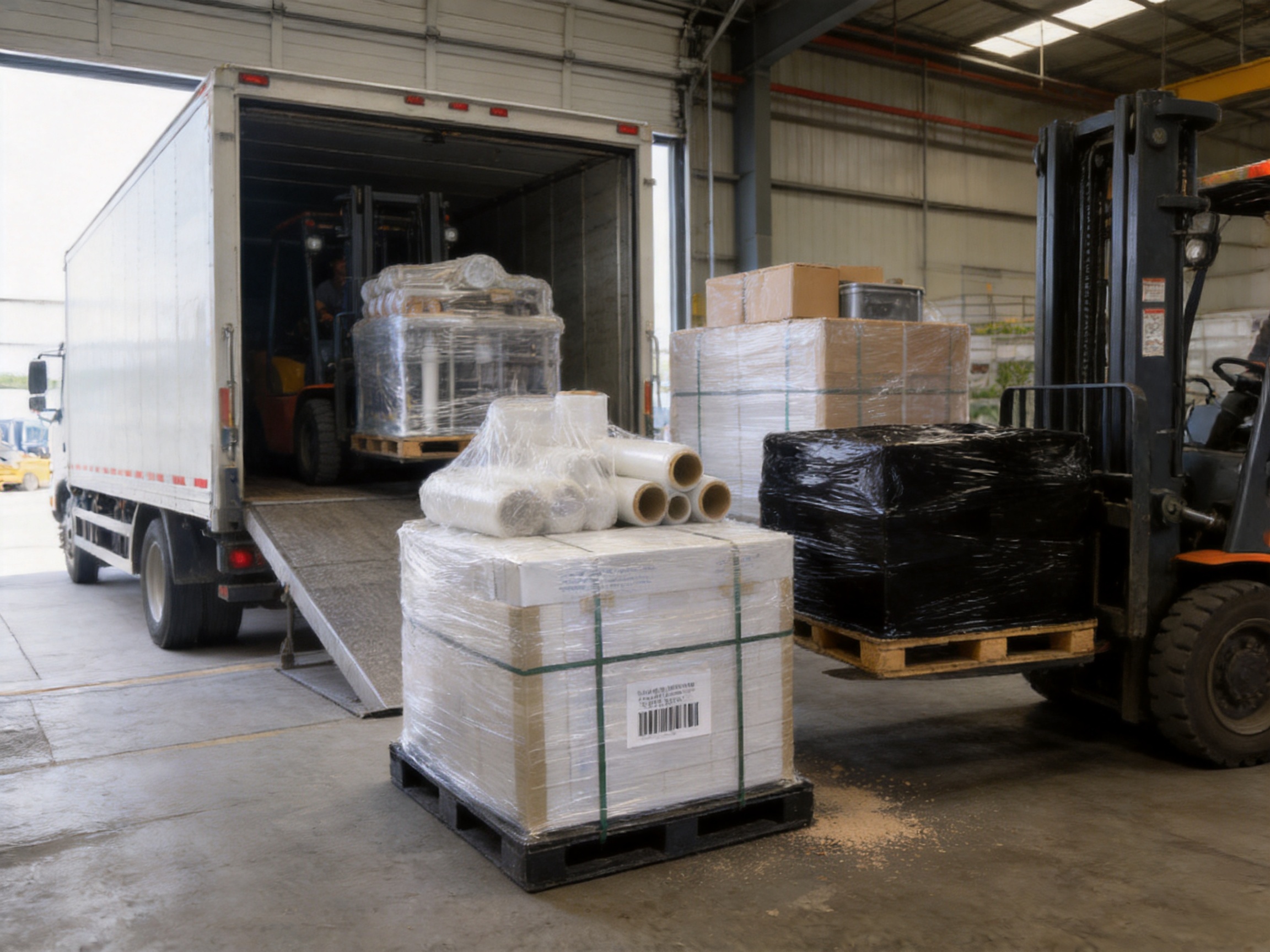
Logistics operations require packaging materials that can be applied quickly, stored easily, and adapted to different shipment sizes. Manual stretch film meets these needs in distribution centers, freight terminals, warehouses, transport companies, and loading areas.
It can stabilize cartons on pallets, combine small boxes into a shipment unit, secure loose products, and protect goods during loading and unloading. The film helps reduce the risk of carton displacement caused by vehicle vibration or sudden braking. Clear film also allows shipping personnel to verify package identity without opening the load.
For logistics businesses, application speed is a major consideration. Manual stretch film can be used immediately without warm-up time or machine setup. This is useful when urgent orders must be prepared, when different package sizes are processed in sequence, or when shipment volumes fluctuate throughout the day.
In warehouses, wrapped loads are easier to organize and move. Manual stretch film can help combine individual cartons into stable pallet units and reduce the chance of collapse during storage. It can also protect products from dust and floor-level contamination while they are waiting for shipment or further processing.
Wrapped pallets may be easier to identify visually, particularly when different film colors are assigned to different customers, product lines, destinations, or inventory statuses. Transparent film supports label visibility, while opaque film can distinguish goods awaiting inspection, dispatch, or special handling.
Warehouse operators should use a wrapping pattern appropriate to the load. Tall or unstable pallets may require more coverage near the base and between layers. Heavy products should not be stacked beyond the safe capacity of the cartons or pallet. Stretch film improves unit stability, but it cannot correct a fundamentally unsafe stacking arrangement.
Manufacturing facilities use manual stretch film for finished goods, work-in-progress items, component bundles, spare parts, and products awaiting shipment. The film can serve as a temporary fixing material on the production line or as a protective outer layer after assembly.
Because the film is flexible, it can wrap products with different shapes without requiring custom boxes for every item. This is useful for machinery components, metal assemblies, furniture parts, plastic products, appliances, and manufactured goods with exposed surfaces that need protection from scratches and dirt.
Manufacturers may also use film to group multiple cartons or parts into a single handling unit. This helps improve internal material flow and reduces the possibility of small packages becoming separated during movement between production, inspection, storage, and dispatch areas.
Retailers and wholesalers often need packaging materials that support both backroom efficiency and transport protection. Manual stretch film can bundle products, secure mixed cartons, and protect goods during transfer between stores, distribution centers, and customers.
Clear film is useful when package contents must remain visible for identification. Colored film can help employees distinguish replenishment units, promotional goods, returns, or products assigned to specific stores. Since the film can be removed without complex tools, it is also convenient when goods need to be unpacked shortly after delivery.
In agriculture, manual stretch film may be used to secure boxes, trays, bags, and grouped agricultural products during handling and transportation. It can help protect packages from dust and minor surface contamination while making them easier to move as a unit.
For food-related applications, the film specification must be selected carefully. Packaging materials that come into direct contact with food should comply with the applicable regulations and customer requirements for the destination market. Manual stretch film used around secondary packaging, pallets, or transport units may serve a different function from film intended for direct food contact.
Before using the product in a food environment, purchasers should confirm material composition, regulatory documentation, migration requirements, hygiene controls, and the intended contact conditions. Qida Tape can assist customers in selecting a suitable specification based on application data and compliance needs.
Manual stretch film can be used to secure secondary packaging, containers, drums, cartons, and industrial products in chemical supply chains. Its tear resistance and close-fitting structure can help reduce movement and protect outer packaging during transportation.
However, stretch film should not be assumed to provide complete chemical containment. Corrosive, flammable, volatile, or hazardous substances require packaging systems designed according to safety regulations and the chemical properties of the contents. The film must be evaluated for compatibility with the substances, storage temperature, exposure time, and required containment level.
In appropriate secondary-packaging situations, manual stretch film can help keep containers grouped, protect labels, reduce dust accumulation, and limit accidental displacement. It should be considered one part of a complete packaging and safety system.
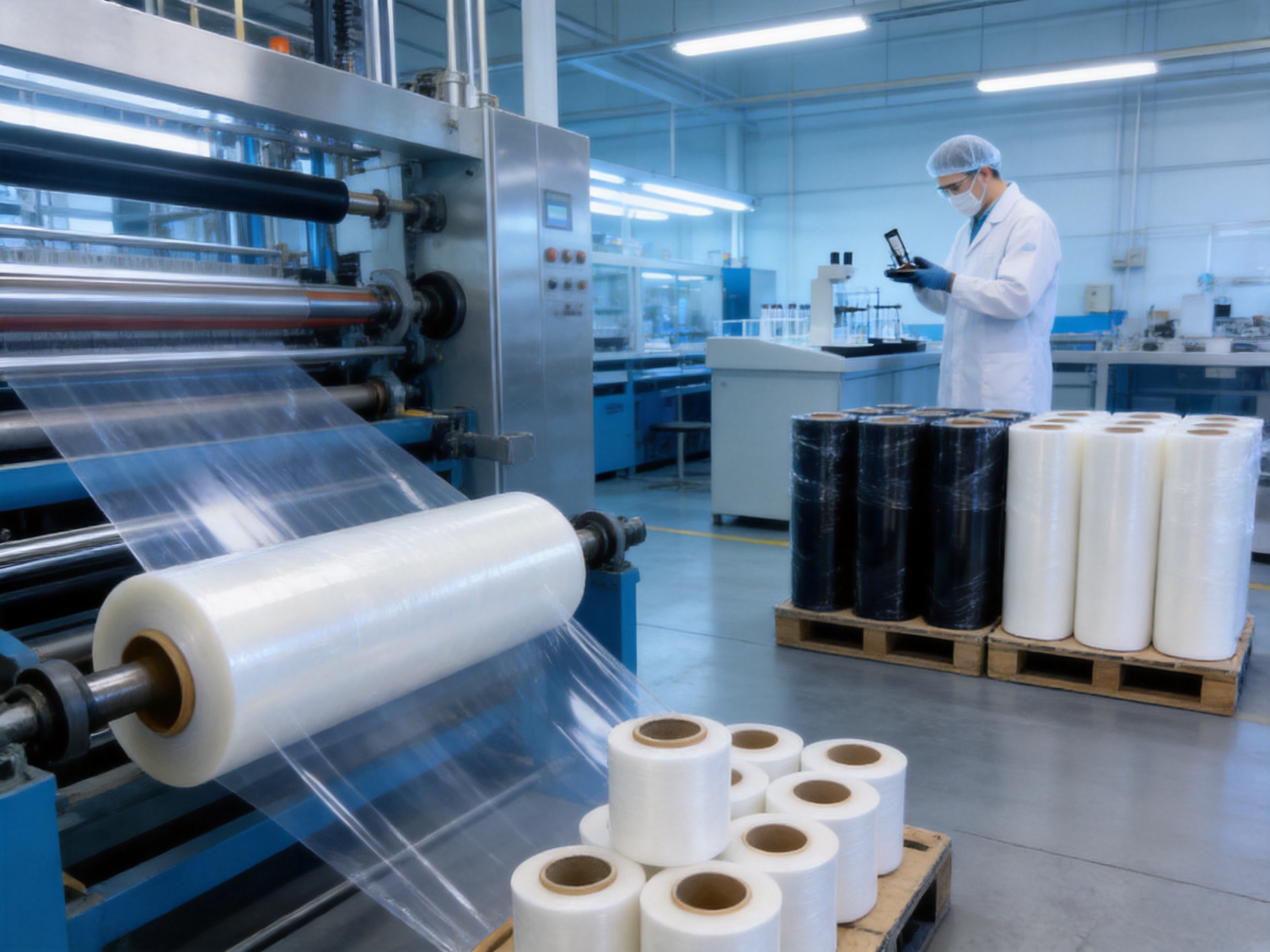
Product performance is closely connected to manufacturing capability. A supplier that only converts purchased material may have limited control over consistency, customization, and technical response. Wuxi Qida Tape Co., Ltd. operates as a factory specializing in protective films and surface protection solutions, with production processes designed to support quality, flexibility, and customer-specific development.
The company’s manufacturing activities include backing film production, adhesive coating, logo printing, rewinding, slitting, and packaging. Keeping these stages within the company’s own production system can improve process coordination and enable closer control of roll dimensions, packaging formats, and product specifications.
In-house production also supports faster communication between sales, engineering, production, and quality teams. When a customer needs a particular width, length, color, adhesive behavior, label format, or packaging configuration, the technical team can evaluate the requirement using its own manufacturing resources and testing capabilities.
Qida Tape has introduced advanced machines from Germany to support its manufacturing operations. Modern equipment can contribute to more precise coating, stable film handling, consistent winding, accurate slitting, and improved production efficiency. Equipment capability is particularly important for thin film products, where small variations in tension, thickness, coating, or winding may affect the customer’s application.
Well-controlled rewinding and slitting help produce rolls with uniform edges and consistent lengths. This reduces telescoping, uneven winding, edge damage, and difficulties during manual application. Stable roll construction is important because the operator must be able to unwind the film smoothly while maintaining tension around the load.
The company maintains an experienced technical team and works with research and development institutes to improve protective film products. This development approach allows Qida Tape to respond to changing market requirements, including higher performance, easier application, improved removability, environmental considerations, and customized adhesive behavior.
Customers may provide technical data sheets, drawings, samples, or descriptions of their existing packaging problems. Based on this information, the company’s engineers and technicians can help identify an appropriate material structure or recommend testing conditions. This consultative approach is especially valuable for customers whose loads are unusually heavy, irregular, sharp-edged, sensitive, or exposed to difficult storage environments.
Qida Tape operates under ISO 9001 and ISO 14001 management systems. ISO 9001 supports systematic quality management, process control, documentation, corrective action, and continuous improvement. ISO 14001 provides a framework for environmental management and encourages organizations to control environmental impacts, improve resource management, and comply with relevant requirements.
The company also maintains testing and inspection capabilities to evaluate product quality before shipment. Depending on the product and customer requirement, quality checks may involve dimensions, appearance, winding, adhesion, tensile behavior, elongation, and other relevant performance characteristics.
Integrated production gives the company control over more than one step of the supply chain. Film production creates the base material, coating adds the required adhesive functionality for applicable products, printing supports branding or identification, and slitting converts master rolls into customer-ready formats.
This structure can improve order coordination and reduce the risk of inconsistency between separate suppliers. It also supports private-label packaging, customized roll sizes, and different carton or pallet configurations. For distributors and industrial buyers, the ability to source related protective film products from one experienced manufacturer can simplify supplier management.
Packaging applications differ widely. A small retail warehouse may need narrow, lightweight rolls, while an industrial exporter may require wider film with higher puncture resistance and customized carton markings. Manual stretch film can be adapted to these differences through selection of thickness, width, length, color, packaging, and performance level.
Customization may include:
• Film thickness selected for lightweight, standard, or demanding loads.
• Roll width matched to the size of the products and preferred wrapping method.
• Roll length adjusted to packaging volume, storage space, and operator preferences.
• Clear, white, black, or other colors for visibility, concealment, or classification.
• Printed packaging or labels for distributor and customer identification.
• Handle dispenser options for more convenient manual application.
• Carton and pallet packaging suited to export transportation.
• Product development based on samples or technical data sheets.
Customization should be supported by application analysis rather than selected only for appearance. The supplier should understand load weight, dimensions, corner conditions, storage duration, transport distance, climate, handling equipment, and removal requirements before recommending a specification.
Consistent quality is essential for stretch film because packaging failures may occur after the product leaves the warehouse. A roll that appears acceptable at first may cause problems if its tensile behavior, cling, thickness, or winding changes during use. A structured quality program helps identify these issues before delivery.
Quality control begins with material selection and continues through production. During film processing, operators monitor equipment conditions and production parameters. During conversion, roll width, length, edge condition, winding tightness, and appearance are checked. Finished products are inspected according to internal procedures and customer specifications.
Laboratory testing can be used to compare film performance under controlled conditions. Typical evaluations may include elongation, tensile strength, tear behavior, puncture resistance, cling, unwind performance, and visual clarity. The most relevant tests depend on the intended use and the customer’s quality standard.
Traceability is also important. Production records, batch identification, inspection documentation, and packaging labels allow issues to be investigated more efficiently if a customer reports a concern. This supports corrective action and helps maintain reliable long-term supply.
Qida Tape supplies products throughout China and exports to Europe, North America, Australia, the Middle East, Japan, and other regions. Experience with international customers requires attention to packaging quality, documentation, communication, shipping schedules, and destination-market requirements.
The company’s stated compliance and testing framework includes ISO 9001, ISO 14001, SGS, RoHS, REACH, PFAS, and Prop 65 testing. The exact applicability of each document depends on the product, market, material composition, and customer request. Buyers should confirm the latest reports and declarations for the specific manual stretch film grade before placing an order.
International customers also benefit from clear technical communication. Specifications should state thickness, width, length, color, core size, roll weight, packaging quantity, adhesive or cling requirements, tolerances, and intended application. Clear documentation reduces the possibility of misunderstandings and supports repeatable purchasing.
Environmental performance is becoming increasingly important in packaging decisions. Manual stretch film can contribute to material efficiency because its stretchability allows the operator to cover a large load with a relatively small quantity of film when the correct grade and wrapping method are used.
Reducing film usage can lower packaging waste, transportation weight, and storage volume. The lightweight nature of the film also means that it adds limited mass compared with rigid packaging alternatives. Where local waste systems permit, polyethylene packaging may be collected and recycled through suitable channels.
Recyclability depends on local infrastructure, contamination levels, collection practices, and the precise film structure. Businesses should establish procedures for collecting used film separately from general waste and should follow applicable regulations. Material reduction, correct application, responsible disposal, and recycled-content strategies can all contribute to a more sustainable packaging program.
Qida Tape’s ISO 14001 environmental management framework supports a structured approach to environmental responsibilities. Customers seeking specific sustainability targets should discuss material options, production requirements, packaging reduction, and available compliance documentation with the manufacturer.
Selecting the correct film requires more than choosing a roll by price. The main factors include load weight, product shape, surface condition, pallet size, corner sharpness, desired wrapping speed, transport conditions, and storage duration.
Heavy loads generally need stronger containment and may require thicker film, more wrapping layers, or a higher-performance grade. Lightweight loads can often use thinner film, provided the film can maintain sufficient tension and resist puncture during application.
Regular cartons are comparatively easy to wrap, while irregular products require a film with good conformability and tear resistance. Sharp edges may need corner guards or special wrapping techniques to prevent puncture.
Long-distance transport, frequent handling, vibration, temperature changes, and temporary outdoor storage can increase packaging demands. UV-resistant film may be considered for limited outdoor exposure, but users should confirm the expected service conditions and test the actual product.
Clear film is appropriate when labels, barcodes, and product condition must remain visible. Black or colored film may be preferable for confidentiality, classification, or visual management.
Manual stretch film is suitable for low to medium packaging volumes, variable load sizes, and locations where a machine is not practical. High-volume operations may compare manual wrapping with machine stretch film, but manual film remains useful for exceptional loads, repairs, rework, and flexible packaging stations.
Testing a sample under actual conditions is the most reliable way to confirm suitability. Users should evaluate unwind behavior, stretching, cling, number of layers required, load stability, film breakage, removal, and overall packaging time. Qida Tape’s engineering team can use customer samples or technical data to assist with product selection and development.
Store rolls in a clean, dry area away from direct sunlight, excessive heat, sharp objects, and chemicals that could affect the film. Keep the original packaging intact until the product is ready for use. Allow film to reach the working environment before application if it has been stored under very different temperature conditions.
Inspect the load before wrapping. Confirm that cartons are stable, pallet boards are in good condition, and products are arranged without dangerous overhang. Remove protruding objects that may puncture the film or use suitable edge protection where necessary.
Begin wrapping from a stable lower section and ensure that the film connects the load to the pallet when palletized goods are being secured. Maintain steady tension and overlap each pass sufficiently. Use additional layers at the base, corners, joints, and unstable areas when needed.
Do not wrap so tightly that cartons collapse, products deform, or labels become unreadable. Do not leave loose film tails that could catch on equipment or create a trip hazard. After wrapping, check the package for gaps, loose layers, exposed sharp edges, and blocked handling points.
Training is important for consistent results. Two operators using the same film can produce different outcomes if their tension, overlap, wrapping speed, and coverage patterns vary. Simple work instructions can help standardize the process and reduce material waste.
A manufacturer with a broad protective film background can offer more than a standard catalog item. Qida Tape specializes in temporary surface protection films for stainless steel, aluminum, pre-coated metal, plastic panels, ceramic, carpets, decorative laminates, glass, and other surfaces. This experience requires knowledge of film substrates, adhesive systems, coating uniformity, surface compatibility, removability, and production control.
Although manual stretch film is used primarily for packaging and load stabilization, many of the same manufacturing disciplines apply. Consistent film handling, accurate slitting, reliable winding, quality inspection, technical support, and customized production are essential to both packaging films and surface protection products.
The company’s factory-based model allows it to manage development and production directly. Founded in 1999, Qida Tape operates a factory area of approximately 20,000 square meters, employs more than 95 experienced staff members, and reports annual production capacity exceeding 12,000 tons. Its export experience covers approximately 90 areas, giving it a substantial understanding of international customer expectations.
For buyers, these capabilities can provide several practical advantages: stable supply, flexible order specifications, technical assistance, controlled quality, competitive production costs, and more direct communication. The company can also support customers that purchase multiple protective film products for different manufacturing or packaging processes.
Distributors often need products that can serve a wide customer base without creating excessive inventory complexity. A manual stretch film range with several thicknesses, widths, lengths, and colors allows distributors to address different packaging requirements while maintaining a coherent product category.
Industrial buyers may prioritize consistent performance and supply continuity. In-house production and established quality procedures can help reduce variation between shipments. Technical support can also help the buyer avoid selecting a film that is too weak, too thick, too narrow, or unsuitable for the load.
Custom packaging is another advantage. Private-label cartons, printed labels, roll dimensions, and pallet configurations can help distributors present a consistent offering to their customers. For export orders, careful packaging and documentation can simplify warehouse receiving and product identification.
The economic value of manual stretch film should be calculated across the entire packaging process. A product that reduces wrapping time, breakage, rework, and cargo damage may provide better value than a lower-priced film that requires more layers or fails during transport.
The main purpose is to wrap and stabilize products, cartons, pallets, and bundles during storage and transportation. It also helps protect goods from dust, dirt, moisture, abrasion, and minor handling damage.
Yes. It is specifically designed for hand application. The operator can hold the roll directly or use an optional handle dispenser to improve control and comfort.
In many applications, no additional glue or tape is required because the film is self-adhering. Overlapping layers bond to one another, and the film tail can be pressed against a previous layer. Special loads may still require additional fastening.
The appropriate thickness depends on load weight, shape, sharp edges, transportation conditions, and the number of layers required. Thin film may suit lightweight loads, while heavy or irregular goods may require thicker or higher-performance film. Sample testing is recommended.
Neither is universally better. Clear film is preferred for visibility, label reading, and inspection. Black or white film may be selected for concealment, classification, light control, or warehouse organization.
Some grades offer UV resistance for temporary outdoor exposure of up to approximately three months, depending on conditions. Outdoor users should confirm the specific grade and evaluate sunlight, temperature, weather, and storage duration.
It can help reduce exposure to splashes, surface moisture, snow, and dirt when properly applied. It should not be considered a complete waterproofing system for prolonged outdoor exposure or immersion.
Polyethylene stretch film may be recyclable where suitable collection and processing systems are available. Users should keep used film clean and separate from incompatible waste and follow local recycling requirements.
Yes. The company can discuss customization of thickness, width, length, color, packaging, printing, and other requirements. Its engineers can work from customer samples, technical data sheets, or application information.
Qida Tape operates under ISO 9001 and ISO 14001 management systems and maintains testing and inspection capabilities. It also reports product compliance and testing support including SGS, RoHS, REACH, PFAS, and Prop 65, subject to the specific product and market requirement.
The buyer should wrap representative loads under normal operating conditions and evaluate tension, unwind, cling, film breakage, required layers, load stability, visibility, removal, and packaging time. Results should be compared with the customer’s transport and storage requirements.
Manual stretch film provides an efficient way to secure and protect goods without the cost or complexity of a machine-based packaging line. Its small-roll format, strong stretchability, self-adhering layers, puncture and tear resistance, low-noise performance, transparency, color flexibility, and optional dispenser make it suitable for a wide range of packaging operations.
Its advantages are most valuable when the film is selected and applied correctly. A suitable grade can reduce material consumption, improve wrapping speed, stabilize loads, and lower the risk of damage during storage and transport. Clear film supports identification and inventory management, while colored film provides concealment and visual classification. With appropriate environmental and regulatory evaluation, the product can also contribute to more efficient packaging programs.
Wuxi Qida Tape Co., Ltd. strengthens this product offering through integrated manufacturing, advanced equipment, experienced technical personnel, in-house converting, quality and environmental management systems, customization capability, and international supply experience. Its factory production model supports reliable quality control and direct technical cooperation, helping customers select manual stretch film according to actual load and operating conditions.
For warehouses, logistics companies, manufacturers, wholesalers, retailers, and industrial exporters, manual stretch film remains a versatile protective packaging solution. When supported by careful specification, practical testing, and consistent manufacturing, it can improve both product safety and packaging efficiency.
1. Wuxi Qida Tape Co., Ltd., Manual Stretch Film Product Specifications and Application Information.
2. Wuxi Qida Tape Co., Ltd., Protective Film Manufacturing, Quality Management, and Company Capability Information.
3. ISO 9001, Quality Management Systems—Requirements.
4. ISO 14001, Environmental Management Systems—Requirements with Guidance for Use.
5. General technical principles for polyethylene stretch films used in load stabilization and secondary packaging.
6. Packaging transport and storage practices for palletized goods, including load stability, wrapping coverage, and handling safety.
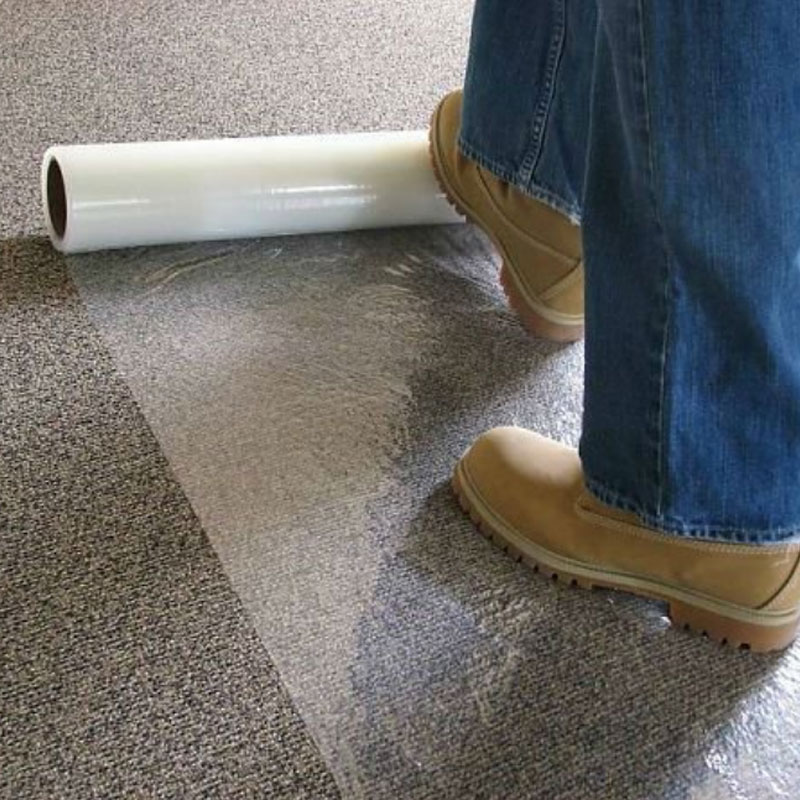
● Protects carpet against staining, paint spillage and dirt during painting, building, remodeling, plastering, tiling, decoration, general maintenance...
See Details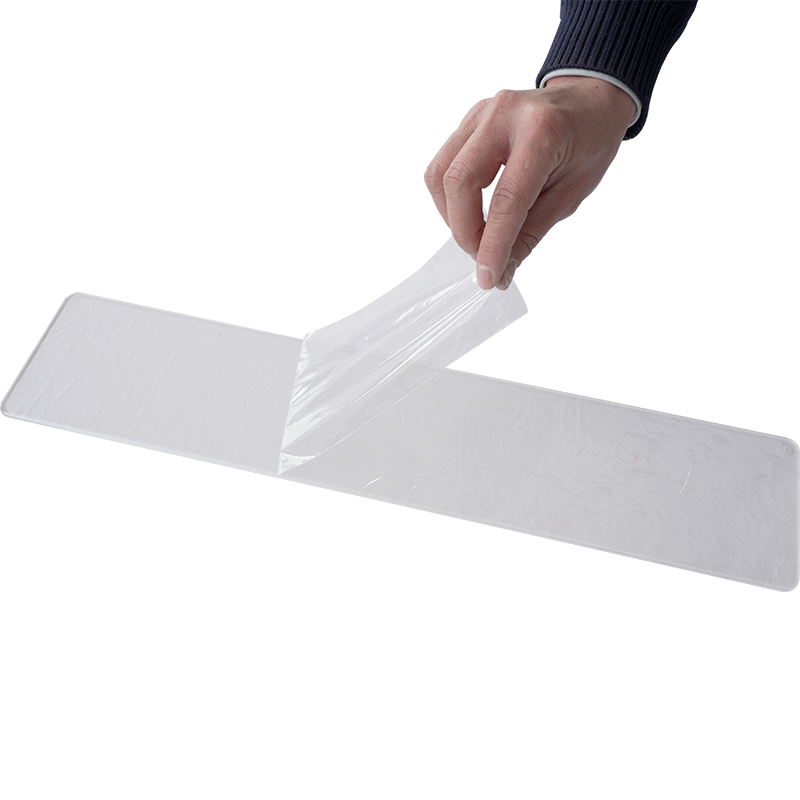
● No “ghost shadow” or “fish eye” after removal; ● Low gel content, soft and stable adhesion plus easy-peel removal with no surface damage or curling;...
See Details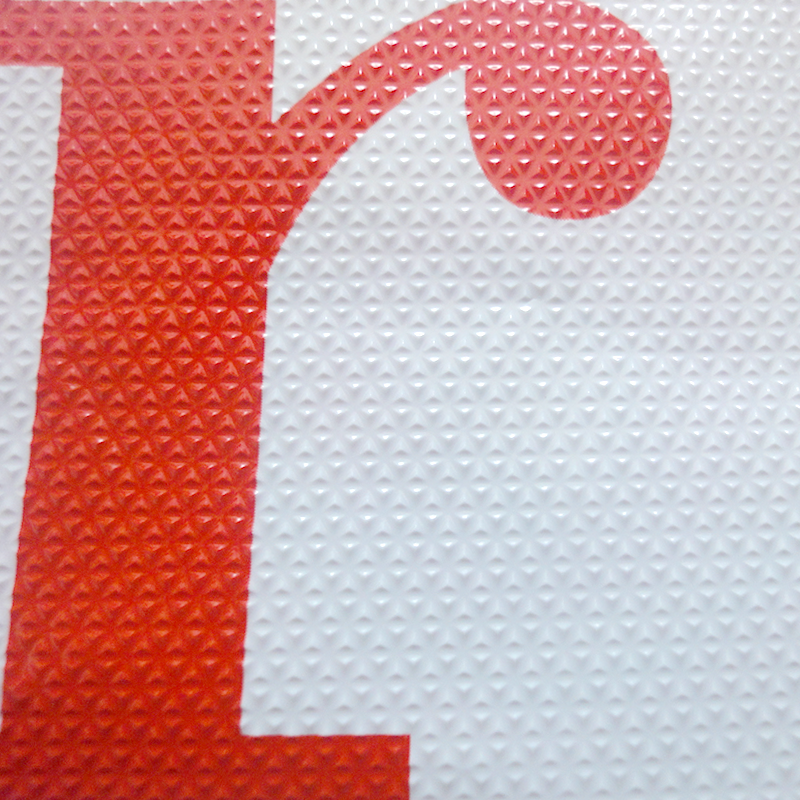
● Anti-slip; ● Embossed film surface to guarantee trip safety;● Tough puncture-resistant polyethylene film;● Can be coated with or without adhesive;● ...
See Details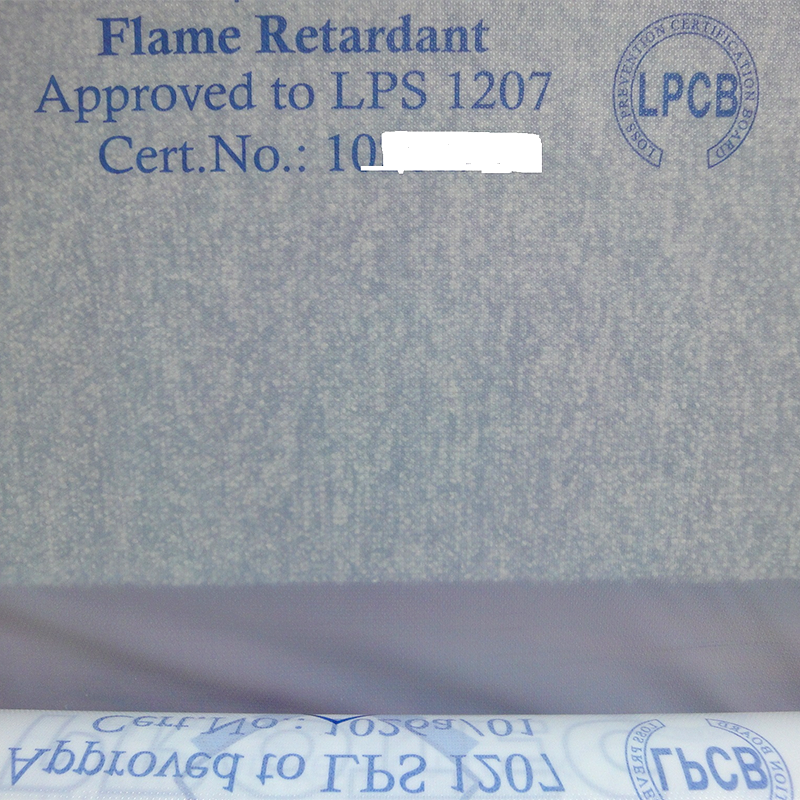
● Prevents costly damages in case of fire /flame;● Meet the strict international test standards of loss prevention; ● Extensive selection for flame re...
See Details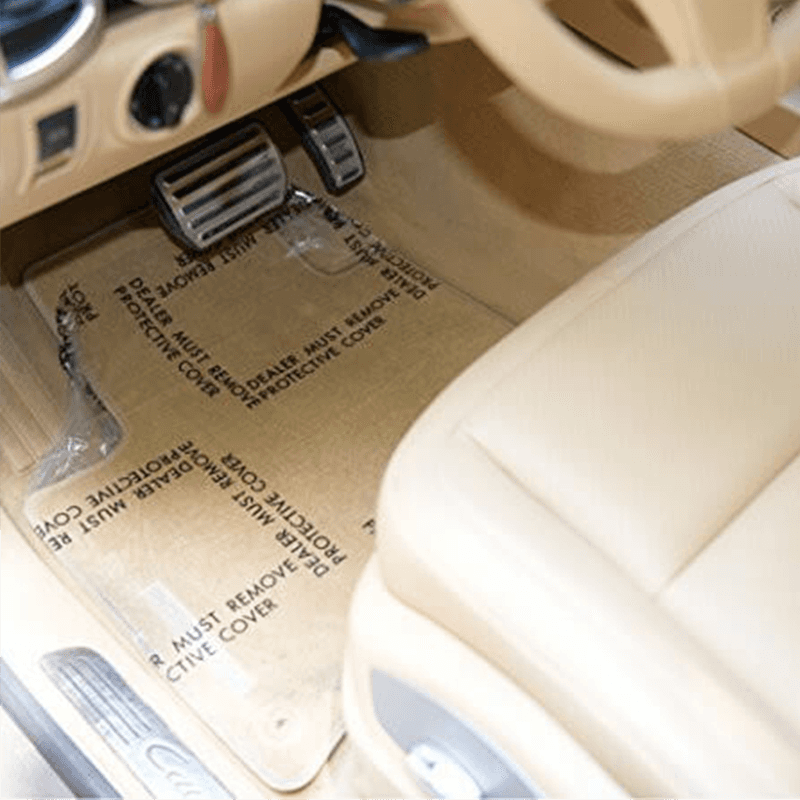
● Distance of each perforation die-cut ranges from 100mm to 1200mm;● Can peel off each die-cut piece of protective film at the perforated line easily;...
See Details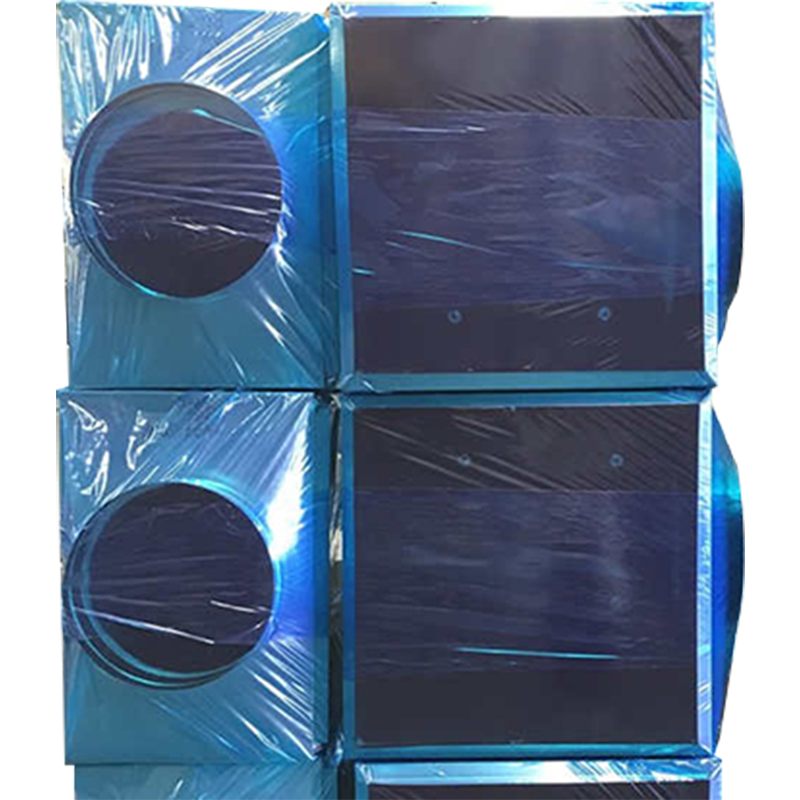
● The super-tough polyethylene film resists puncture and penetration by liquid and dirt during storage, transportation, and installation of the ductwo...
See Details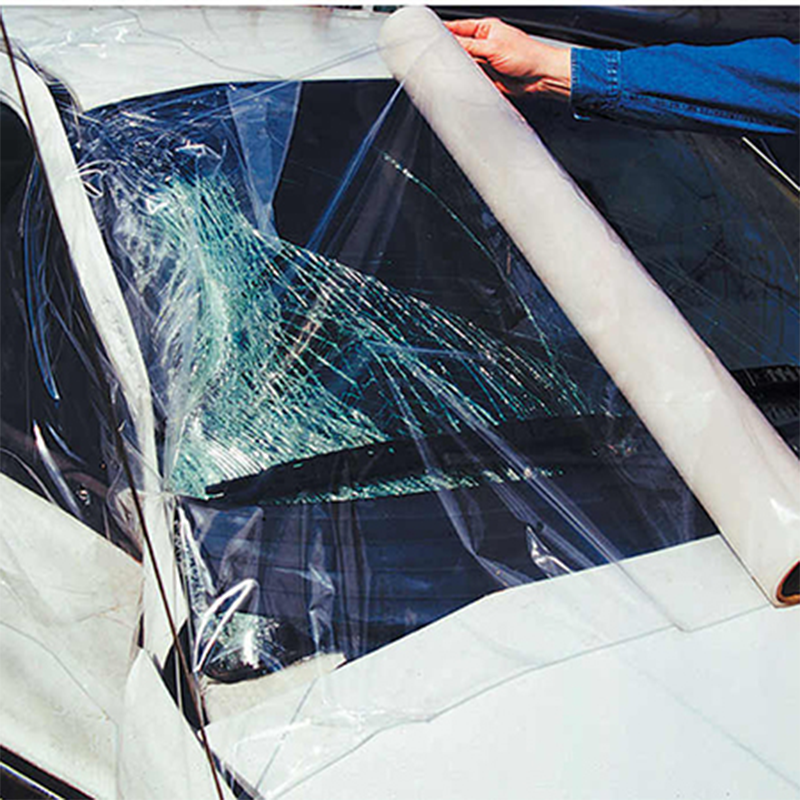
● The super-tough polyethylene film resists puncture and penetration by rain, snow, debris, and dirt during the transportation and storage of the cras...
See Details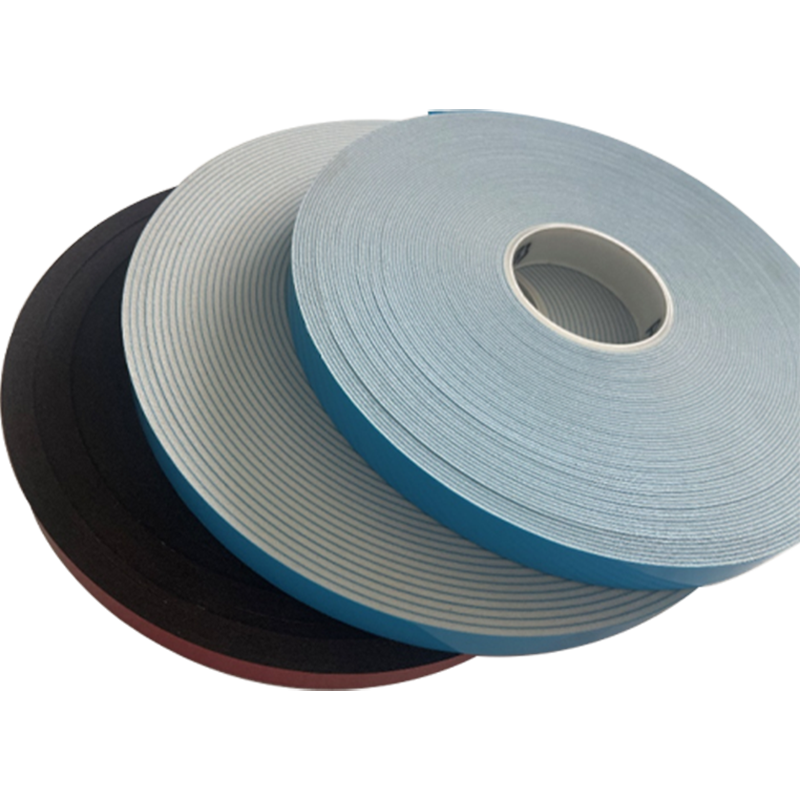
● Waterproof - the desirable material for waterproofing. ● Dust-proof - positive performance of dust prevention.● Low resilience - prevent the deforma...
See Details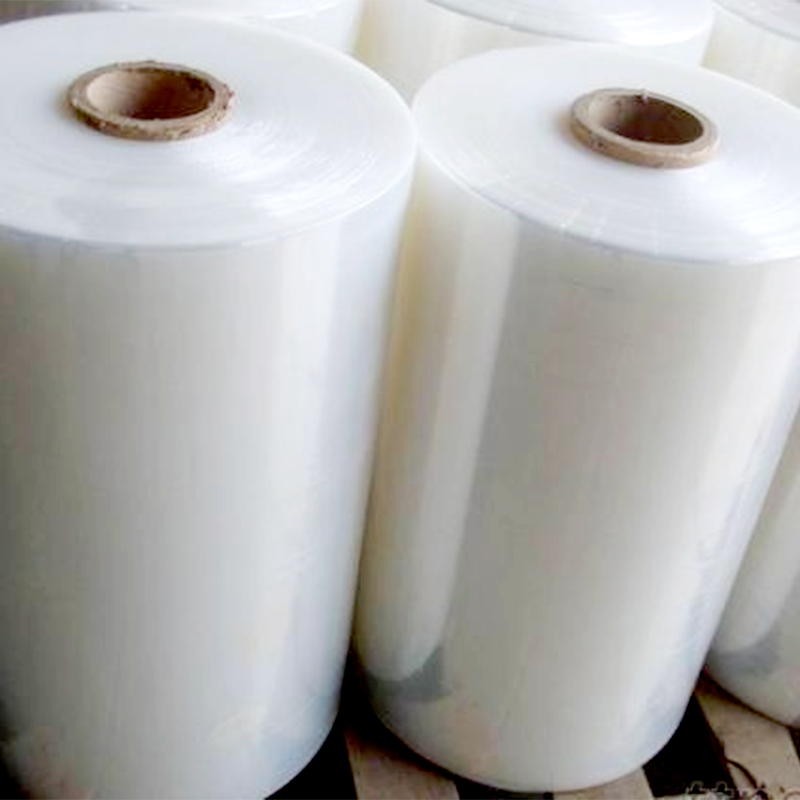
● Excellent puncture and tear resistance; ● Self-adhering-each layer of film bonds to the next for added strength; ● Big roll size to save cost and re...
See Details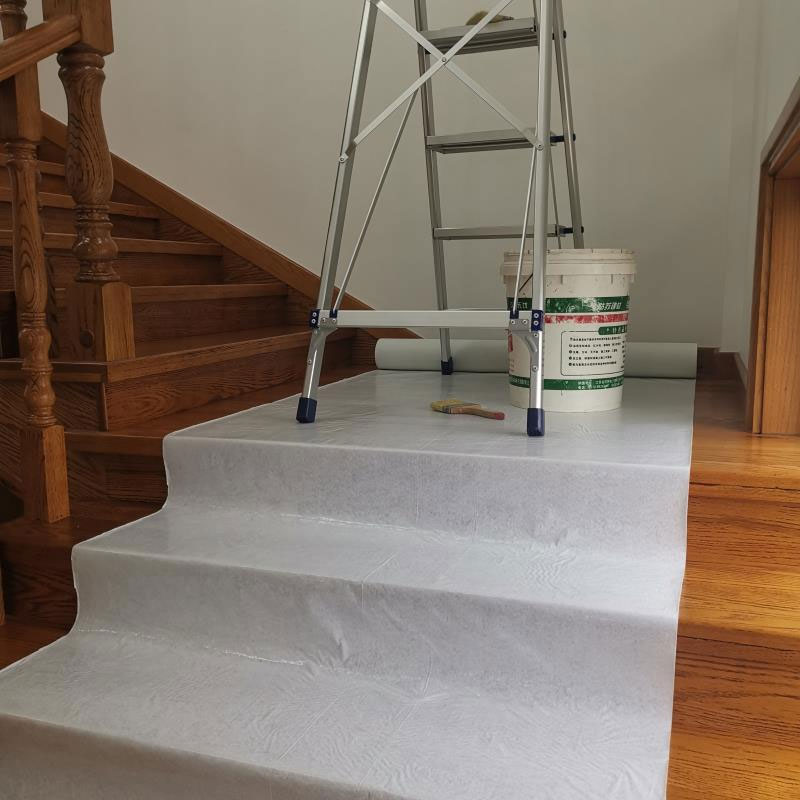
This product has non-woven synthetic fleece in middle; Breathable PE film adhered onto top of the non-woven fabric, which is coated with self adhesive...
See DetailsWe’re a reliable partner that shapes our expertise into success for your project.

Copyright 2024 Wuxi Qida Tape Co., Ltd. All Rights Reserved
 Wholesale Protective Film/Foil Manufacturers
Privacy
Wholesale Protective Film/Foil Manufacturers
Privacy