

 English
 English
 русский
 Français
 Español
 Português
 عربى
عربى

Cat:Glue -coated Protective Film
● Good weatherability for outdoor exposure; ● Stable adhesion level; ● UV resistance for up to 12 months; ● Can print customized logo or application i...
See Details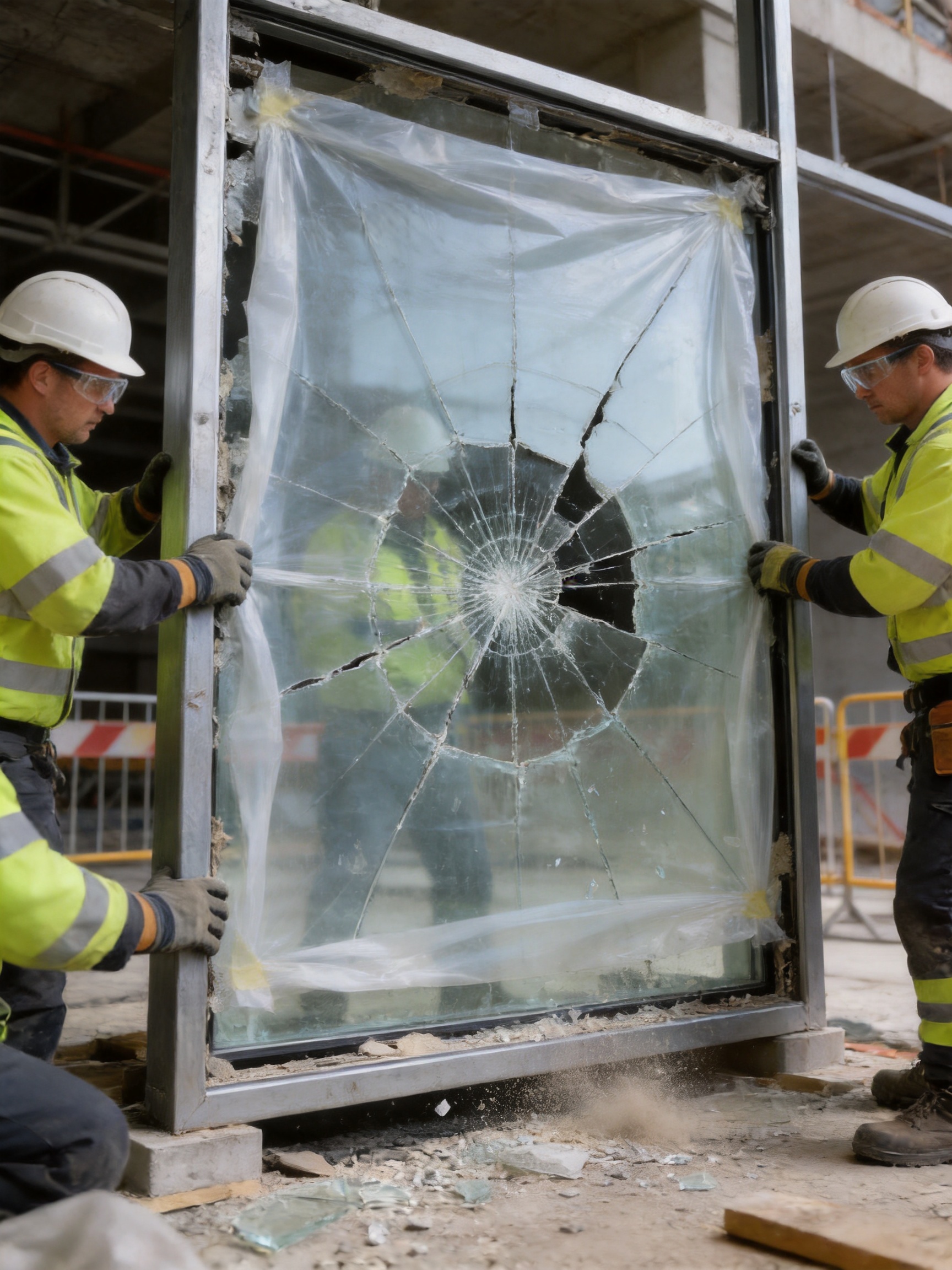
Demolition work creates a demanding protection environment. Glass panels, windows, doors, partitions, metal frames, finished walls, flooring, and other installed surfaces can be exposed to impact, vibration, dust, fragments, abrasion, moisture, and repeated movement during renovation or dismantling. Traditional coverings such as blankets, loose plastic sheets, tarpaulins, and temporary boards may provide basic coverage, but they can shift, tear, leave gaps, or require considerable time and labor to secure. A purpose-designed demolition film offers a more controlled and efficient method of protecting vulnerable surfaces during construction, renovation, and window glass removal.
Demolition Film is a super-tough polyethylene protective film developed for applications that require high tensile strength, substantial elongation, and very high adhesion. Its principal application is the protection and temporary retention of window glass during demolition. When correctly applied to a glass surface, the film helps hold cracked or broken glass together, reducing the chance of pieces splitting away and falling during dismantling operations. This makes it particularly useful for contractors, glaziers, façade specialists, renovation companies, property managers, and industrial maintenance teams.
The product combines a durable polyethylene backing with a specially formulated acrylic adhesive. The backing provides toughness and flexibility, while the adhesive creates a strong bond with suitable glass surfaces. The film can be supplied in several colors and may also be printed in up to three colors, allowing users to identify work zones, display warnings, apply project information, or support safety communication.
Beyond its immediate role in glass demolition, the product represents a broader surface-protection solution. Its customizable thickness, width, roll length, adhesive performance, color, and printing options allow it to be adapted to different project environments. Manufacturing is supported by integrated film production, adhesive coating, printing, rewinding, slitting, testing, and packaging capabilities, enabling consistent control from raw material processing to finished roll delivery.
Demolition film is a heavy-duty adhesive protective film used to cover and stabilize surfaces during demolition, dismantling, renovation, and construction work. Unlike a thin household plastic sheet, it is engineered for demanding jobsite conditions. The polyethylene film is designed to resist tearing and stretching under pressure, while its adhesive layer helps maintain contact with the protected surface.
In window glass demolition, the film is applied across the glass before dismantling begins. If the glass is cracked or receives additional impact, the film helps retain fragments in a more controlled area. It does not eliminate every hazard associated with broken glass, and it should not replace professional risk assessments, protective equipment, approved work procedures, or appropriate containment systems. Its value is that it adds a strong, continuous layer of control around a fragile and potentially hazardous material.
The product is described as a non-removable protective film for permanent use in the supplied specifications. This indicates that the adhesive is intended to create a durable, high-strength bond where long-term adhesion or firm retention is required. Because project conditions vary, users should confirm the required service period and removal expectations before ordering. Surface compatibility, exposure time, temperature, glass cleanliness, and installation technique all influence the final bond and the ease of removal.
For projects requiring temporary protection, the film should be evaluated through a sample application before full installation. A small test can confirm adhesion, appearance, compatibility, residue behavior, and removal performance under actual site conditions. This practical step is especially important when the film will remain on glass for an extended period or when the protected surface has a special coating.
The product is available in a range of dimensions and configurations to support different glass sizes, working methods, and project requirements. The following specifications summarize the principal options.
| Property | Available specification | Application significance |
|---|---|---|
| Film material | Polyethylene | Provides flexibility, toughness, and resistance to tearing during handling and demolition work. |
| Thickness | 150 to 200 micrometers | Allows users to select a balance between strength, handling, coverage, and project requirements. |
| Width | 500 to 1,200 millimeters | Supports narrow window sections as well as broad glass panels and larger surfaces. |
| Roll length | 25 to 500 meters, subject to order confirmation | Provides flexibility for small jobs, repeated installations, and large project quantities. |
| Elongation | At least 300% | Helps the film accommodate movement, contours, handling stress, and impact without immediate rupture. |
| Adhesion level | Super high | Helps maintain firm contact with suitable glass surfaces during demanding work. |
| Adhesive type | Acrylic | Offers a specialized adhesive system for strong bonding and consistent application. |
| Color options | Yellow, clear, blue, green, white, and others | Allows visual identification, work-zone differentiation, and project customization. |
| Printing | Zero to three colors | Supports warning messages, logos, handling instructions, and jobsite identification. |
The supplied roll-length information appears as “25m to 5,00m” in the original product data. In commercial communication, this should be confirmed with the manufacturer before production, with 500 meters treated here as the likely intended upper range. Exact specifications can be adjusted according to customer requirements, machinery capability, packing arrangements, and transportation considerations.
Glass demolition is not simply a matter of removing a solid panel from a frame. Glass may already contain invisible stress, edge damage, cracks, chips, or weakened points caused by age, weather, installation pressure, thermal movement, or previous impact. Once dismantling begins, vibration and mechanical force can cause damage to spread quickly. Fragments can separate from the main panel, fall into occupied areas, or create additional cleanup and safety problems.
A high-adhesion film helps by creating a continuous bonded layer over the glass. The adhesive keeps the film in close contact with the surface, while the polyethylene backing provides a flexible retaining structure. When the glass breaks, the film can help hold fragments together rather than allowing every piece to separate immediately. The result is not a substitute for controlled removal, but it can reduce uncontrolled fragmentation and improve the manageability of the work.
High adhesion is also important when the film is applied to vertical or inclined surfaces. A weakly bonded sheet may lift at the edges, form pockets, or fall away when exposed to vibration. A super-high-adhesion formulation is intended to keep the protective layer in position throughout the working period. This is especially useful on windows, glazed doors, façade panels, and other areas where gravity and movement make loose coverings ineffective.
At the same time, high adhesion must be matched to the substrate. Clean, dry glass normally provides the most reliable bonding surface. Dust, oil, silicone, moisture, condensation, loose coatings, and construction residue can reduce contact between the adhesive and the glass. Proper preparation is therefore essential. The adhesive performance of the film cannot compensate for a contaminated or unstable surface.
Tarpaulins, blankets, and loose plastic sheets often protect by creating a physical shield in front of a surface. They may leave open spaces between the covering and the glass. Dust, fragments, and moisture can enter these spaces, while air movement can make the material flap or shift. Adhesive demolition film remains in direct contact with the surface, creating a more continuous protective layer.
This close contact is particularly valuable for glass. If a loose covering moves away from a cracked panel, it may provide little assistance in containing fragments. A bonded film follows the surface and remains positioned across the area that needs protection. It can also be applied to vertical surfaces without the ropes, hooks, fasteners, or temporary framing often required for conventional coverings.
The polyethylene backing is designed to be substantially tougher than ordinary packaging film. A thickness of 150 to 200 micrometers provides a robust material that can withstand handling and jobsite activity better than lightweight sheet products. Its high elongation, specified at not less than 300%, allows the film to stretch considerably before failure.
High elongation is useful when a film experiences movement, localized force, or uneven contact. Instead of splitting immediately at the point of stress, the material can absorb some deformation. This does not make the film indestructible, and sharp tools or severe impacts can still cut or puncture it. However, the combination of toughness and elongation provides a meaningful performance advantage over thin, low-strength coverings.
Traditional coverings can shield a surface from dust and light abrasion, but they are not normally designed to retain broken glass. Demolition Film is specifically positioned for window glass demolition, where fragment control is a central concern. When applied across a glass panel before removal, it can help keep damaged sections together and reduce the uncontrolled dispersal of pieces.
In practical terms, this can help workers plan the removal sequence more effectively. It may also reduce the amount of loose debris reaching floors, adjacent rooms, equipment, or public areas. Contractors must still establish exclusion zones, use suitable gloves and eye protection, manage sharp edges, and follow local demolition and waste-handling requirements.
Loose coverings generally require additional securing methods. Workers may need to measure, fold, tie, tape, clamp, or fasten the material before it becomes effective. These steps consume time and can be difficult on tall windows, glass doors, or surfaces with limited access.
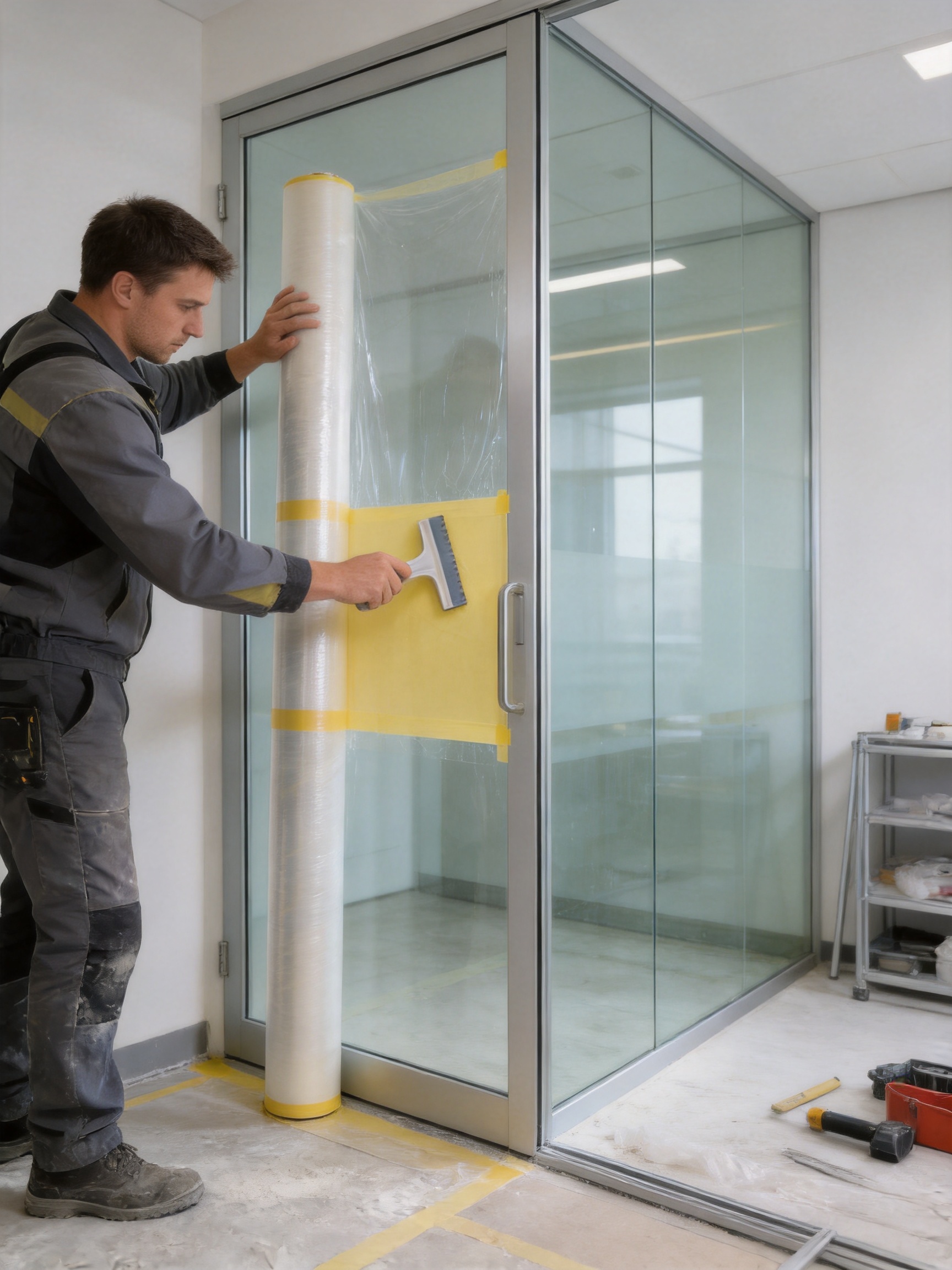
Adhesive-backed film simplifies the basic application process. After the surface is prepared, one edge can be aligned and the roll can be gradually applied across the glass. A squeegee or roller can be used to press the film into contact and remove air pockets. The resulting installation is thin, close-fitting, and less likely to obstruct nearby work than bulky blankets or tarpaulins.
Clear film allows users to maintain visibility through the protected surface, which may be helpful when daylight, room observation, or site supervision is required. Yellow, blue, green, or white options can create a visual barrier or distinguish a protected work zone from ordinary glass. Color selection may also help workers recognize the presence of a protective layer from a distance.
Printing in up to three colors provides an additional communication tool. Contractors may request warning text, project codes, handling instructions, directional information, or company identification. Printed film can support site organization while also reducing the likelihood that workers will mistake covered glass for an unprotected or open area. Artwork, ink durability, printing position, and minimum order quantities should be confirmed before production.
Tarpaulins and blankets frequently require ropes, ties, clips, nails, staples, or additional tape. These accessories may damage adjacent surfaces, create trip hazards, or become loose during work. A high-adhesion film is self-supporting once properly bonded to a compatible surface. This reduces the number of separate components required for installation.
Fewer components can also simplify inventory and transport. A roll of film occupies less space than a large collection of blankets or rigid protective boards. Workers can carry and unroll the material at the point of use, potentially reducing setup time and improving access in confined areas.
Polyethylene is widely used in protective-film applications because it offers a useful combination of flexibility, chemical resistance, processability, and cost efficiency. For demolition applications, the backing must also tolerate repeated handling, contact with edges, and localized stress. The specified thickness range provides a substantial material body while retaining enough flexibility for installation.
The backing film can be produced in different colors according to the customer’s functional or visual requirements. Clear film is appropriate where visibility is important. Colored film can make the protection more obvious and may be selected for warning, zoning, or brand communication. The appropriate choice depends on the work environment, lighting, visibility requirements, and project safety plan.
The adhesive system is acrylic and is formulated for very high adhesion. Acrylic adhesives are used in many protective-film applications because their performance can be engineered for specific bonding conditions. The formulation may be adjusted according to the desired balance of initial tack, holding power, temperature performance, aging characteristics, and substrate compatibility.
For demolition film, strong and stable bonding is a primary requirement. The film must remain attached while the surface is exposed to vibration, dust, handling, and changing site conditions. The adhesive should wet the glass surface sufficiently to create close contact, but application still depends on proper pressure and surface preparation.
Customers should communicate the type of glass, any low-emissivity or reflective coating, surface treatment, expected application duration, storage conditions, and removal requirements. These details help the technical team recommend the most suitable adhesive configuration. A sample trial is recommended whenever the substrate includes specialty coatings or when the film will be used beyond a standard temporary period.
Before installation, inspect the glass, frame, surrounding wall, floor, and access route. Identify cracks, loose pieces, damaged seals, sharp edges, unstable frames, and nearby equipment. Determine whether the film will be used to protect intact glass, retain cracked glass, or support a planned removal operation. Establish an exclusion zone and ensure that everyone involved understands the hazards.
The film is one element of a broader safety process. It should be used together with appropriate personal protective equipment, safe lifting methods, suitable tools, controlled access, and approved waste-disposal procedures. No film should be treated as permission to handle unstable glass without professional judgment.
The glass should be clean and dry before application. Remove dust, loose particles, grease, oil, silicone contamination, labels, and other residues that may interfere with adhesion. If a cleaning solution is used, allow the surface to dry completely. Condensation or trapped moisture can weaken the bond and may create bubbles beneath the film.
Do not apply the film over loose coatings, unstable paint, flaking sealants, or damaged surfaces that cannot support the adhesive. If the film must extend beyond the glass onto a frame or adjacent material, test those areas separately because adhesive performance may differ from glass performance.
Measure the area and determine whether one roll width will provide complete coverage. The available width range of 500 to 1,200 millimeters allows the product to serve both relatively narrow panes and broad panels. For larger surfaces, plan the position of overlaps before removing the release liner or beginning application.
Cut manageable lengths when the installation area is tall, exposed to wind, or difficult to access. Long sections may be efficient on open, stable surfaces, but shorter sections can provide better control during application. Ensure that enough film is available to cover the intended area without excessive stretching or unnecessary seams.
Align one edge of the film with the chosen starting point. Expose a limited section of adhesive and press it onto the glass. Continue by gradually unrolling the material while smoothing it with a clean plastic squeegee, roller, or similar tool. Work from the applied area toward the open area to reduce air entrapment.
Avoid pulling the film excessively during installation. Although the film has high elongation, excessive tension can create recovery forces, edge lifting, wrinkles, or uneven adhesive contact. Moderate tension and consistent pressure normally produce a more uniform result.
Use overlapping strokes to press the film firmly against the glass. Small air bubbles may sometimes be worked toward an edge, while large trapped pockets should be addressed before the installation is completed. Wrinkles can create stress concentrations and may reduce the quality of contact.
When the film is used to help retain cracked glass, inspect the entire surface to confirm that the film extends over the damaged area and is bonded around its perimeter. If the glass is severely unstable, do not rely solely on the film. Additional containment, support, or controlled removal methods may be necessary.
When more than one section is required, overlap adjacent pieces by several inches. The overlap should be continuous and firmly pressed down. For applications involving dust containment or hazardous-material control, use a compatible sealing tape or adhesive strip where required by the project procedure.
Edges should be inspected for lifting, contamination, or incomplete contact. If the project involves prolonged exposure, high humidity, temperature variation, or significant vibration, edge security becomes especially important. The installation team should establish an inspection schedule and repair or replace damaged sections promptly.
Walk around the protected area and check for gaps, loose corners, punctures, wrinkles, exposed cracks, and areas where the film does not contact the glass. Confirm that access routes remain clear and that the film does not interfere with tools, lifting equipment, ventilation, or emergency exits.
Document the completed installation if the work is part of a commercial project. Photographs, inspection records, material batch information, and application dates can help demonstrate that protection procedures were followed and can support quality management.
The supplied product description identifies the film as suitable for non-removable, permanent-use protection. In some projects, the film may remain in place as part of a longer protection strategy. In other projects, it may be removed after the demolition stage. The correct approach depends on the adhesive configuration and the customer’s requirements.
Before removal, test a small corner. Pull the film back slowly at a controlled angle rather than tearing it sharply away from the surface. If the film has been exposed for a long period or has bonded strongly, follow the manufacturer’s technical guidance. Avoid using excessive force or unsuitable solvents that could damage glass coatings, seals, painted frames, or adjacent finishes.
If adhesive residue appears, do not immediately scrape the surface with a sharp metal tool. Use a compatible cleaning method approved for the substrate. The removal procedure should always be validated through a test area, particularly when dealing with coated or treated glass.
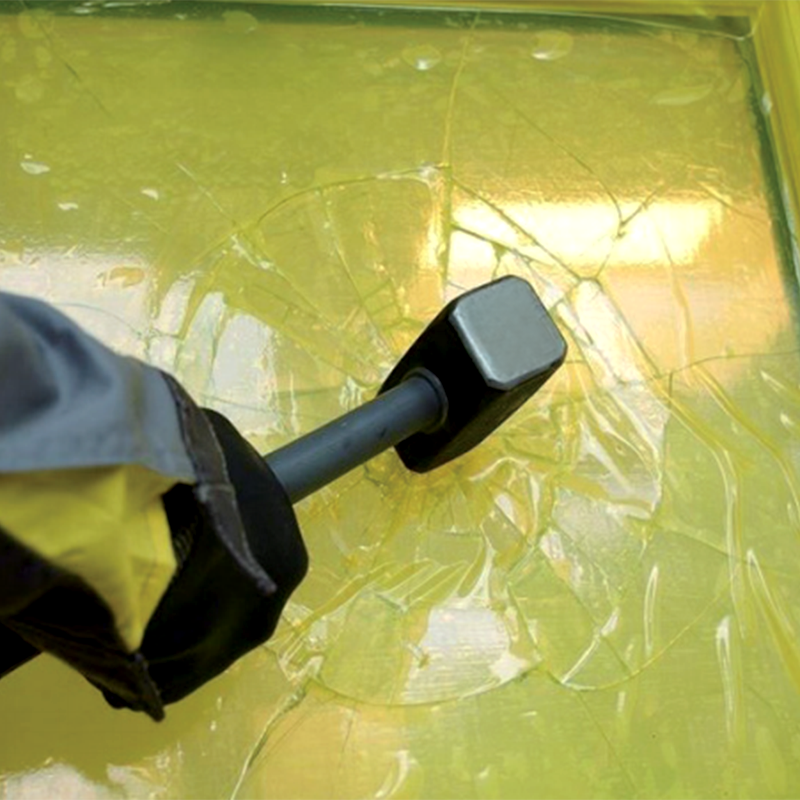
Demolition Film
The primary application is the controlled dismantling of window glass. Film can be applied before workers loosen frames, remove beads, cut sealants, or handle damaged panes. Its high adhesion and tough backing are intended to help reduce uncontrolled fragment movement during the process.
This application is relevant to commercial buildings, residential renovation, retail properties, office fit-outs, schools, hospitals, factories, warehouses, and public facilities. The colored options can make protected windows visible to workers and visitors, while clear film can preserve visibility where appropriate.
Glass doors and internal partitions are frequently located in high-traffic areas. During refurbishment, they may be close to finished floors, furniture, electrical equipment, or occupied rooms. Applying a protective film before dismantling can help establish a more controlled work area and reduce the risk of fragments spreading across a wide space.
Building façades may contain large glazed sections that are difficult to isolate using loose coverings. Adhesive film can be applied directly to suitable surfaces, reducing movement caused by wind or vibration. Widths up to 1,200 millimeters can help cover broad sections, while multiple rolls can be arranged with sealed overlaps for larger areas.
Renovation work often takes place around existing finishes that the owner intends to retain. Demolition Film can be used as part of a wider protection plan for glass, doors, partitions, and selected smooth surfaces. It helps separate the active work zone from finished areas and may reduce cleanup associated with dust and fragments.
After accidental damage, a high-adhesion film may be considered as one temporary measure for controlling a cracked or broken glass area while professional replacement is arranged. The condition of the glass must be assessed first. Film should not be applied over a dangerously unstable panel without suitable expertise, and it should not be considered a replacement for boarding, isolation, or emergency repair when those measures are required.
Product selection is not based only on material strength. Contractors also consider labor, scheduling, storage, consistency, safety communication, waste, and the ability to obtain repeatable results across multiple projects. Demolition Film addresses these practical factors through its combination of high adhesion, flexible dimensions, color choices, and manufacturing customization.
Installation can be faster than securing a tarp or blanket because the film is supplied in rolls and bonds directly to the surface. A smaller team may be able to prepare a protected area with fewer accessories. The thin profile also helps preserve access around windows and doors, which can be important when several trades are working in the same space.
Standardized rolls support more consistent coverage. Instead of improvising with materials of different sizes, a project manager can specify a film thickness and width suitable for the application. Printed instructions or warnings can support site communication, while colored film can help identify areas that require special handling.
Durable film can also reduce repeated replacement during a project. A covering that tears, shifts, or becomes detached must be repaired or installed again, creating unplanned labor. The polyethylene backing and strong adhesive are intended to improve retention under normal application conditions. Actual service life depends on exposure, handling, substrate condition, and the severity of site activity.
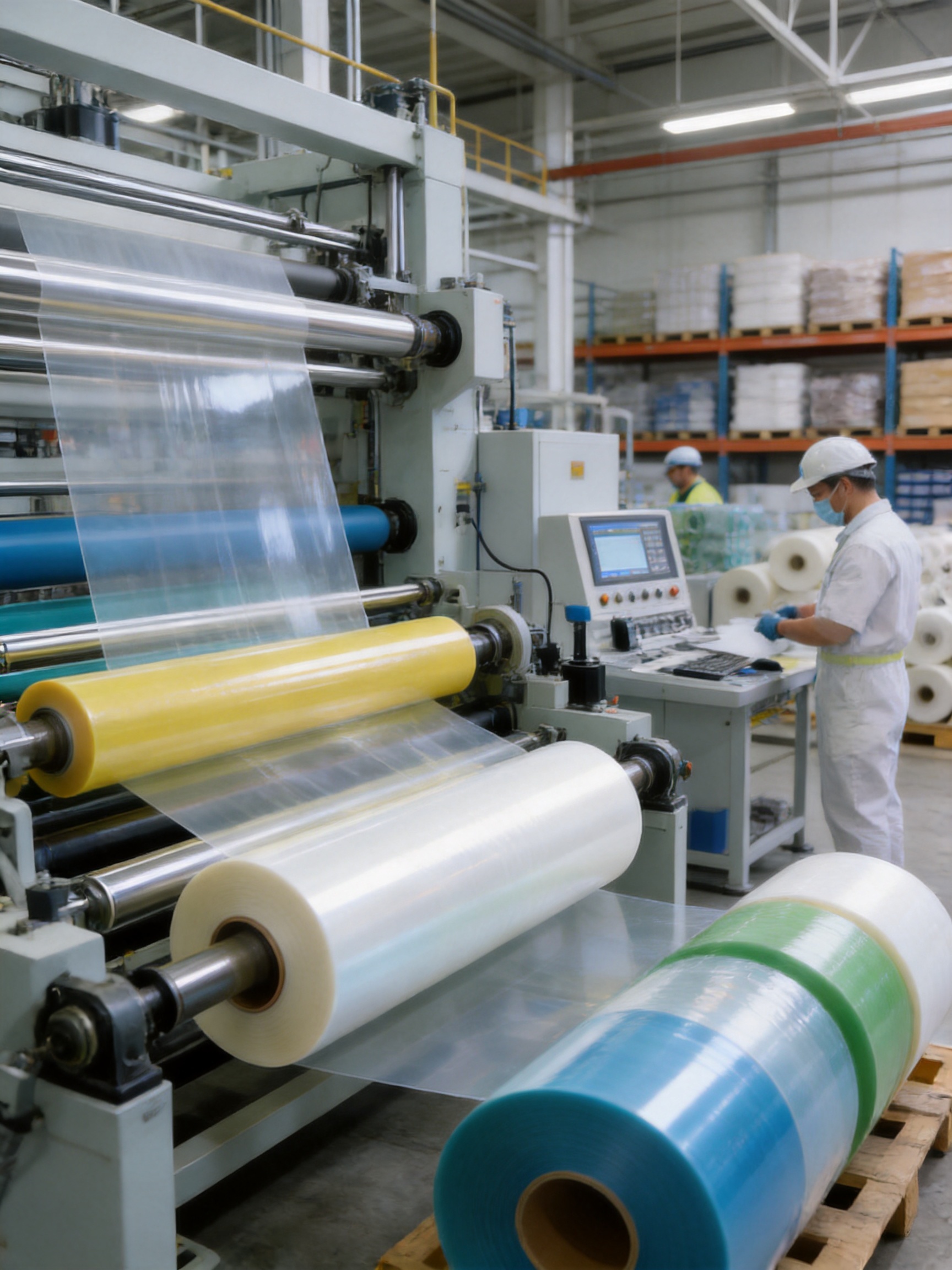
The product’s performance depends on more than the selected resin and adhesive formula. Consistent film thickness, uniform coating weight, stable winding, accurate slitting, clean printing, and secure packaging all influence whether the final product performs as expected. Integrated manufacturing allows these stages to be managed as one coordinated process.
The backing film is produced using industrial equipment selected for stable polyethylene processing. Control of material flow, thickness, width, cooling, and winding helps create a consistent base for later adhesive coating. A uniform film is important because localized thin areas can become weak points, while excessive variation can affect handling and application.
The acrylic adhesive is applied under controlled production conditions. Coating uniformity is essential to achieve predictable adhesion across the roll. Inadequate coating can cause weak bonding, while excessive coating may affect handling, release-liner separation, residue behavior, or conversion efficiency.
Technical personnel can adjust adhesive options according to the customer’s application. The company’s broader adhesive portfolio includes acrylic water adhesive, acrylic solvent adhesive, and natural rubber adhesive. For this demolition film, the supplied specification identifies acrylic adhesive, while the exact formulation should be selected according to the intended substrate and service conditions.
After coating, the material may be printed with up to three colors. Printing must be coordinated with film appearance, adhesive orientation, roll direction, and customer artwork. The product can then pass through rewinding, slitting, and packaging operations to create rolls appropriate for the customer’s equipment and installation practices.
Slitting accuracy is important for construction use. Consistent roll width makes it easier to align film on windows and calculate material consumption. Proper rewinding also helps prevent telescoping, loose edges, blocking, and uneven unwinding at the jobsite.
The manufacturer operates a testing laboratory and uses inspection equipment to evaluate product quality. Relevant checks may include film thickness, width, appearance, tensile behavior, elongation, adhesive performance, roll condition, and print quality. The precise test methods and acceptance criteria should be confirmed in the customer’s technical specification.
Quality control is particularly important for high-adhesion products. Adhesion must be strong enough to maintain the protective layer, but the product must also be manufactured consistently from roll to roll. Batch records, retained samples, process monitoring, and final inspection help support repeatable supply for large projects.
The manufacturer is a protective-film specialist with a factory focused on the development, production, and marketing of surface-protection solutions. Its product range serves stainless steel, aluminum, pre-coated metal, plastic panels, ceramic, carpets, decorative laminates, glass, and other surfaces that may be exposed to scratches, marks, dirt, or damage during processing, transportation, and installation.
Its manufacturing process is vertically coordinated. Backing-film production, adhesive coating, logo printing, rewinding, slitting, and packaging are completed within its own factory. This structure provides greater control over production scheduling, process communication, customization, and quality tracking than a supply chain that depends entirely on unrelated subcontractors.
The factory has an area of approximately 20,000 square meters and employs more than 95 experienced staff members. Its reported annual production capacity exceeds 12,000 tons. This scale can support both regular repeat orders and larger project requirements, subject to production planning and product specifications.
Advanced machines introduced from Germany contribute to the company’s production capabilities. Equipment alone does not guarantee product quality, so it is combined with experienced technicians, engineers, inspection personnel, and research cooperation. The company works with research and development institutes to improve existing products and develop new protective-film solutions.
Customization is a significant advantage for professional buyers. Customers may provide technical data sheets, drawings, samples, or application descriptions. The engineering and technical teams can then evaluate suitable film thickness, width, adhesive performance, color, printing, packaging, and roll format. This approach is more useful than forcing every project to use one standard product.
The company operates under ISO 9001 and ISO 14001 management systems. ISO 9001 relates to quality-management processes, while ISO 14001 relates to environmental-management practices. The company also reports product compliance and testing associated with SGS, RoHS, REACH, PFAS, and Prop 65 requirements. Buyers should request current certificates, test reports, and applicability details for the specific product and shipment.
International supply experience is another operational strength. The company reports sales across China and exports to Europe, North America, Australia, the Middle East, Japan, and other regions, serving customers in approximately 90 export areas. Experience with different markets can help with packaging, documentation, communication, production coordination, and export requirements.
| Protection method | Typical strengths | Common limitations during demolition | Demolition Film advantage |
|---|---|---|---|
| Loose plastic sheet | Low cost and easy availability | Can shift, tear, flap, and leave gaps; usually offers limited fragment retention. | Adhesive bonding and a tougher backing provide more stable, continuous coverage. |
| Tarpaulin | Suitable for broad temporary shielding | Bulky, harder to fit precisely, and often requires ropes, clips, or other fasteners. | Roll format, multiple widths, and direct surface contact simplify installation on glass. |
| Blanket or fabric covering | Can absorb some impact and protect against scratches | May collect dust, become heavy when wet, and cannot normally retain broken glass. | High-adhesion film conforms closely to the glass and helps contain fragments. |
| Rigid board | Provides strong impact resistance | Heavy, difficult to cut and transport, and may obstruct access or require a support structure. | Lightweight roll material is faster to deploy and occupies less storage space. |
| Low-tack protective film | Often easy to apply and remove | May not remain attached under vibration or provide sufficient retention for cracked glass. | Super-high adhesion is designed for demanding retention requirements. |
| Demolition Film | Strong adhesion, tough polyethylene backing, high elongation, and customizable formats | Requires clean surfaces, correct application, and professional safety procedures. | Combines direct bonding, fragment-control support, customization, and industrial manufacturing consistency. |
No single covering is ideal for every construction condition. Rigid boards may be preferable where severe impact from heavy objects is expected. Fire-rated barriers or certified containment systems may be necessary for specific regulatory applications. However, for adhesive protection and glass demolition support, the product offers a practical combination of performance and convenience that loose coverings generally cannot match.
Demolition projects can generate fine dust, chips, fragments, and other contaminants. A closely applied film can help protect a surface from direct contamination and can reduce openings through which debris passes. Overlaps and edges must be sealed properly when the purpose is to create a more complete barrier.
Some demolition projects involve asbestos, lead-based paint, mold, chemical residues, or other hazardous materials. In such cases, the film may form part of a containment strategy, but it must not be represented as a complete hazardous-material control system without appropriate certification and project design. Qualified specialists must determine the required barrier class, pressure control, filtration, disposal method, and regulatory procedures.
For ordinary renovation dust, the film can help reduce cleaning demands around protected glass and surfaces. This benefit is strongest when the installation is continuous, edges are sealed, and workers inspect the covering throughout the project. A punctured or lifted film should be repaired promptly rather than left as an incomplete barrier.
Protective film should be stored in a clean, dry location away from direct sunlight, excessive heat, moisture, and sharp objects. Rolls should remain supported and should not be crushed under heavy materials. Packaging should be kept intact until the product is ready for use.
Before application, allow the film to reach the site’s working temperature where practical. Sudden temperature differences can affect flexibility, adhesive behavior, and condensation. The recommended storage period and temperature range should be obtained from the manufacturer for the selected adhesive formulation.
Workers should handle rolls carefully to prevent edge damage. A crushed roll edge can make unwinding difficult and may create wrinkles during application. Use clean tools and avoid dragging the adhesive side over dusty floors or other contaminated surfaces.
Material planning should account for overlaps, trimming, damaged sections, and future repairs. Ordering only the calculated glass area may result in shortages if the project includes irregular shapes or multiple installation attempts. A measured allowance can improve productivity and reduce schedule interruptions.
Protective-film selection increasingly includes environmental and regulatory considerations. The manufacturer reports operation under ISO 14001 and offers products associated with testing for RoHS, REACH, PFAS, Prop 65, and other requirements. Customers should review the current documentation for the exact product, adhesive, ink, packaging, and destination market.
Use of film can reduce waste in some situations by preventing damage to finished materials that would otherwise require replacement. At the end of its service life, however, the film must be collected and managed according to local waste rules. Adhesive-coated polyethylene may require separate handling from clean plastic waste, particularly if it has become contaminated with construction dust, paint, chemicals, or hazardous substances.
Environmental performance should be evaluated across the full application. Efficient roll dimensions, accurate slitting, proper installation, and careful removal can reduce offcuts. Customers may also discuss packaging optimization, recycled-content options where available, and disposal guidance with the manufacturer.
Professional buyers should provide more than a requested width and quantity when asking for a quotation. Useful information includes the type and condition of the glass, whether it is coated or treated, the expected application duration, the project temperature range, the required adhesion level, the preferred color, printing requirements, roll length, core size, packaging format, and delivery destination.
For printed film, provide artwork in an agreed file format and specify the desired print colors, repeat distance, orientation, and location. Warning messages should be reviewed carefully before production. If the film is intended for safety communication, wording should be clear, durable, and suitable for the language of the jobsite.
Ask for a technical data sheet and, when necessary, a sample roll. Evaluate application on the actual substrate rather than relying only on general laboratory values. Record the test temperature, surface-cleaning method, application pressure, dwell time, removal method, and any residue observed. This information can help both the buyer and manufacturer optimize the final specification.
Packaging can be customized for export and project use. Rolls may require individual wrapping, palletization, moisture protection, identification labels, batch information, or special carton dimensions. Clear communication at the quotation stage reduces the risk of incorrect roll formats or unexpected handling requirements.
Its main purpose is to protect and help stabilize window glass during demolition and dismantling. The tough polyethylene backing and super-high-adhesion acrylic adhesive help keep the film attached to the glass and can reduce uncontrolled separation of broken fragments when the panel is damaged.
Yes. It can be applied before demolition begins to protect intact glass from dust, impact, scratches, and fragment movement associated with nearby work. The surface should be tested and properly prepared before full application.
No. It can assist with fragment retention, but it does not eliminate the risk of sharp edges, falling glass, frame failure, or unexpected breakage. Professional personnel must use appropriate protective equipment, exclusion zones, tools, support methods, and disposal procedures.
The stated range is 150 to 200 micrometers. The correct thickness depends on the required toughness, handling method, surface dimensions, impact exposure, and project specifications.
The stated width range is 500 to 1,200 millimeters. Custom widths or other conversion formats may be possible and should be confirmed with the manufacturer.
The product specification identifies an acrylic adhesive with super-high adhesion. The exact formulation should be selected according to the glass type, expected service period, temperature, and removal requirements.
Clear is one available option, along with yellow, blue, green, white, and other colors. Clear film preserves visibility, while colored film can improve visual identification and work-zone awareness.
Yes. Printing of zero to three colors is available according to the supplied information. Printing can be used for warnings, instructions, project identification, or approved customer artwork.
Clean the glass thoroughly and ensure that it is dry, free from dust, grease, loose particles, condensation, and incompatible residues. A small test area should be used when the glass has a special coating or treatment.
Apply the film gradually and use a clean plastic squeegee or roller to press the material onto the surface. Work from the bonded section toward the uninstalled area. Avoid excessive tension, which can create wrinkles or edge recovery.
Outdoor use may be possible depending on the adhesive formulation, weather exposure, temperature, ultraviolet radiation, moisture, and expected service period. Confirm outdoor suitability and conduct a field test before large-scale use.
The supplied product description identifies it as non-removable protective film for permanent use. If removal is required after a temporary project, the customer should request a suitable configuration and test it on the actual substrate. Removal performance can change with time, temperature, contamination, and glass coatings.
The manufacturer offers integrated production, adhesive coating, printing, rewinding, slitting, packaging, laboratory inspection, customization, experienced technical personnel, and substantial production capacity. It also reports ISO 9001 and ISO 14001 certification and international export experience.
Yes. The company reports that its engineers can develop protective films according to customer technical data sheets or samples. Buyers should provide complete application information so the technical team can recommend an appropriate construction.
Confirm thickness, width, roll length, core size, adhesive type, color, printing, packaging, application duration, surface compatibility, storage conditions, delivery terms, and current compliance documents. The roll-length range should be clarified because the original specification contains an apparent typographical ambiguity.
Demolition Film is a specialized adhesive protective solution for challenging construction and renovation environments. Its super-tough polyethylene backing, elongation of at least 300%, super-high adhesion, and acrylic adhesive system are designed to support the controlled protection of window glass during demolition. Compared with loose sheets, tarpaulins, blankets, and other traditional coverings, it provides closer surface conformity, more stable positioning, easier application on vertical surfaces, and better support for fragment retention.
The product is also adaptable. Thicknesses from 150 to 200 micrometers, widths from 500 to 1,200 millimeters, multiple color choices, and printing of up to three colors allow contractors and industrial users to match the material to their worksite needs. Proper preparation, application, overlap sealing, inspection, and removal planning are essential to achieving reliable performance.
Manufacturing capability is an important part of the product proposition. Integrated backing-film production, adhesive coating, printing, rewinding, slitting, packaging, laboratory testing, experienced engineering support, and quality-management systems provide a strong foundation for consistent supply. The manufacturer’s customization capability and international experience further support customers who require protective film for specific surfaces, project conditions, and markets.
For the best result, buyers should treat product selection as a technical decision rather than a simple material purchase. Confirm the glass type, application period, expected hazards, environmental conditions, installation method, and removal expectations. With the correct specification and professional work procedures, Demolition Film can become an effective component of a comprehensive glass-protection and demolition-control plan.
1. Product specification sheet for Demolition Film, including thickness, width, roll length, elongation, adhesive type, color, and printing options.
2. Manufacturer technical information concerning polyethylene protective films and acrylic adhesive-coated surface protection products.
3. ISO 9001, Quality Management Systems—Requirements.
4. ISO 14001, Environmental Management Systems—Requirements with Guidance for Use.
5. General industry guidance for safe handling, containment, dismantling, and disposal of broken architectural glass.
6. General technical principles for pressure-sensitive adhesive application, surface preparation, adhesion testing, and controlled film removal.
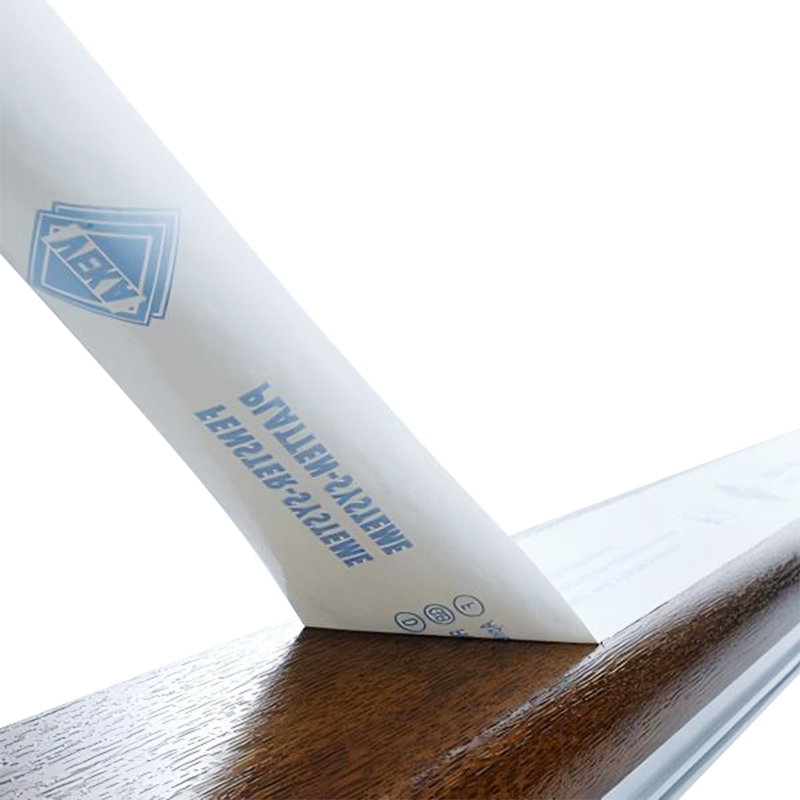
● Good weatherability for outdoor exposure; ● Stable adhesion level; ● UV resistance for up to 12 months; ● Can print customized logo or application i...
See Details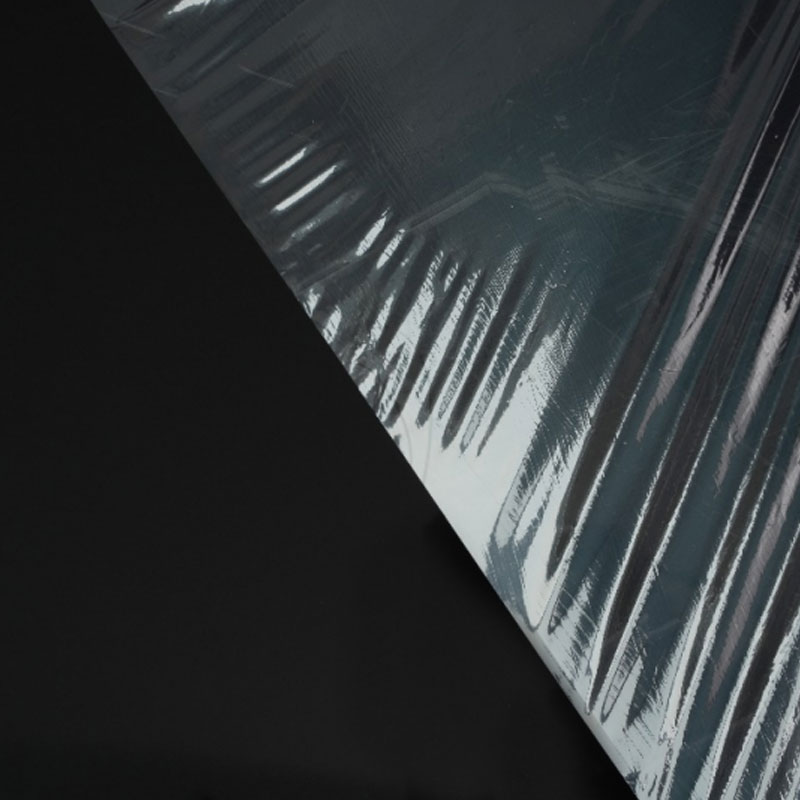
● No “ghost shadow” or “fish eye” after removal; ● Stable adhesion level; ● UV resistance for up to 6 months; ● Can print customized logo or applicati...
See Details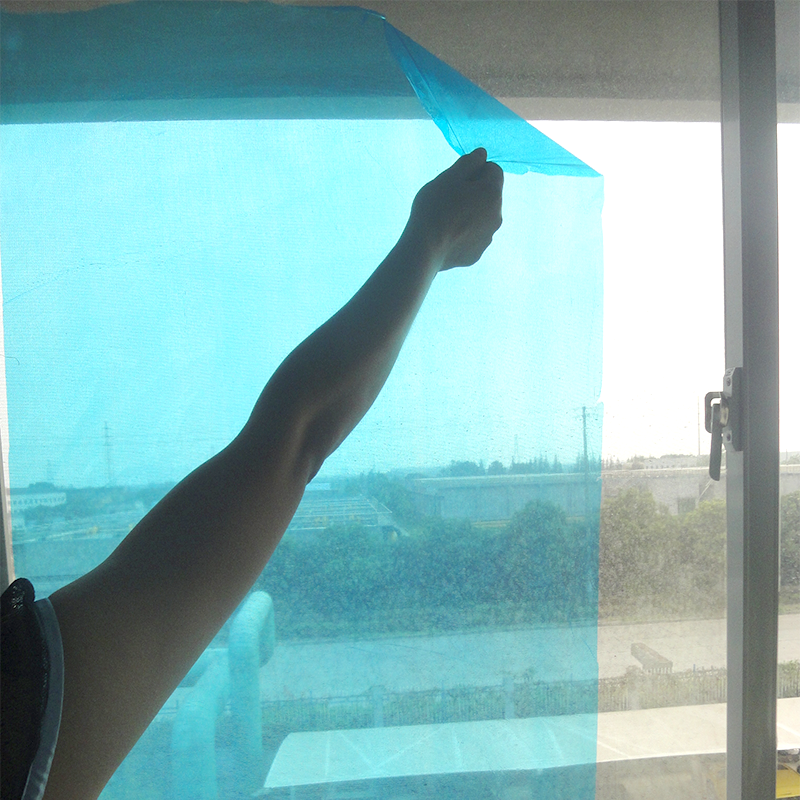
● Protect window glass against paint splatters, dirt, staining, and spillages during painting, building, plastering, tiling, general maintenance and r...
See Details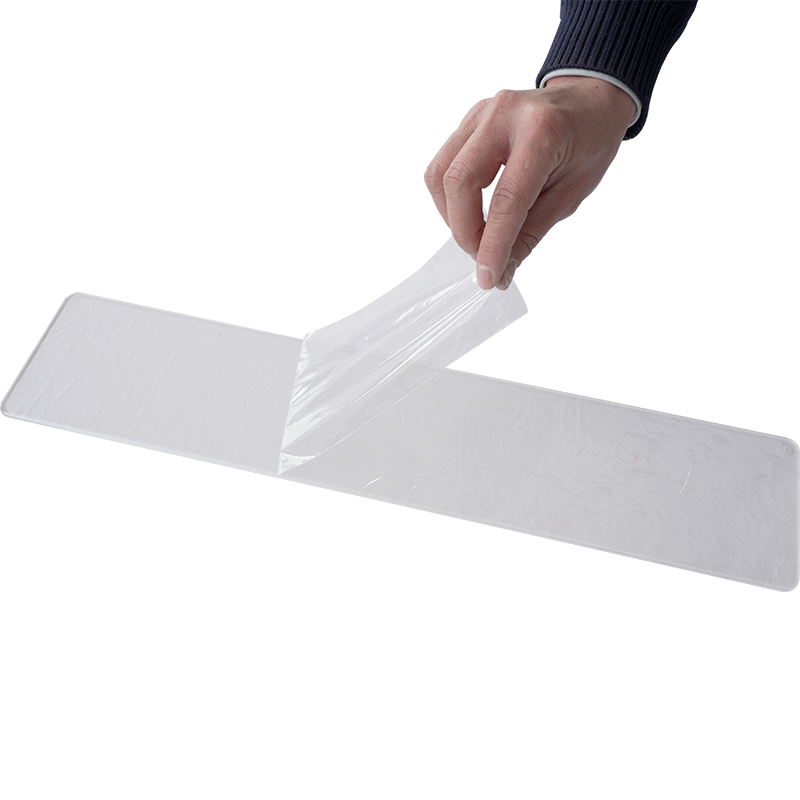
● No “ghost shadow” or “fish eye” after removal; ● Low gel content, soft and stable adhesion plus easy-peel removal with no surface damage or curling;...
See Details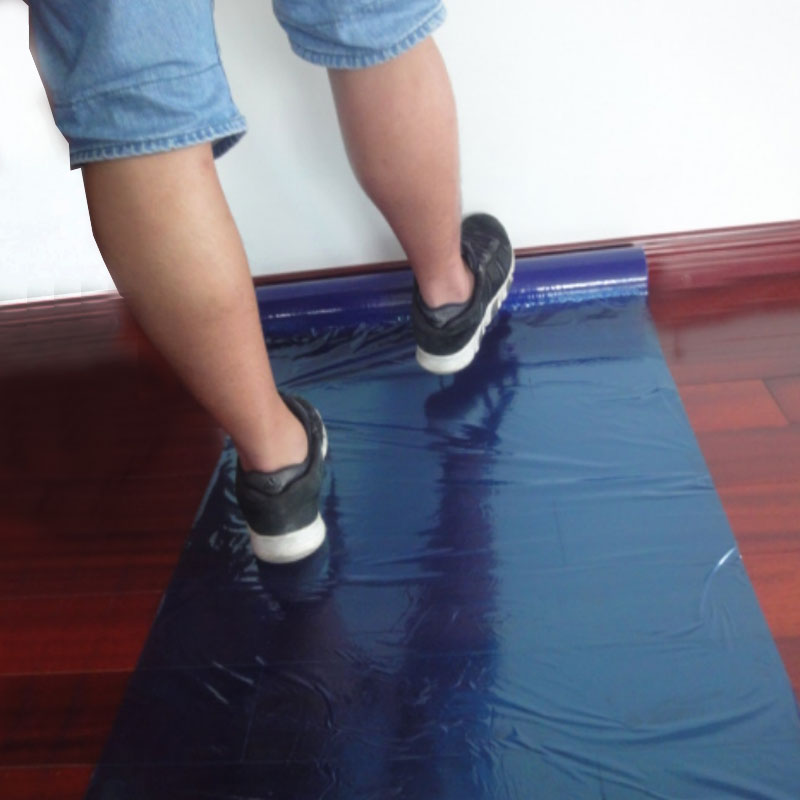
● Patented adhesive formula suits all hard surfaces such as hardwood floors, laminate floors, ceramic, marble, tile, granite, vinyl, worktops, and gla...
See Details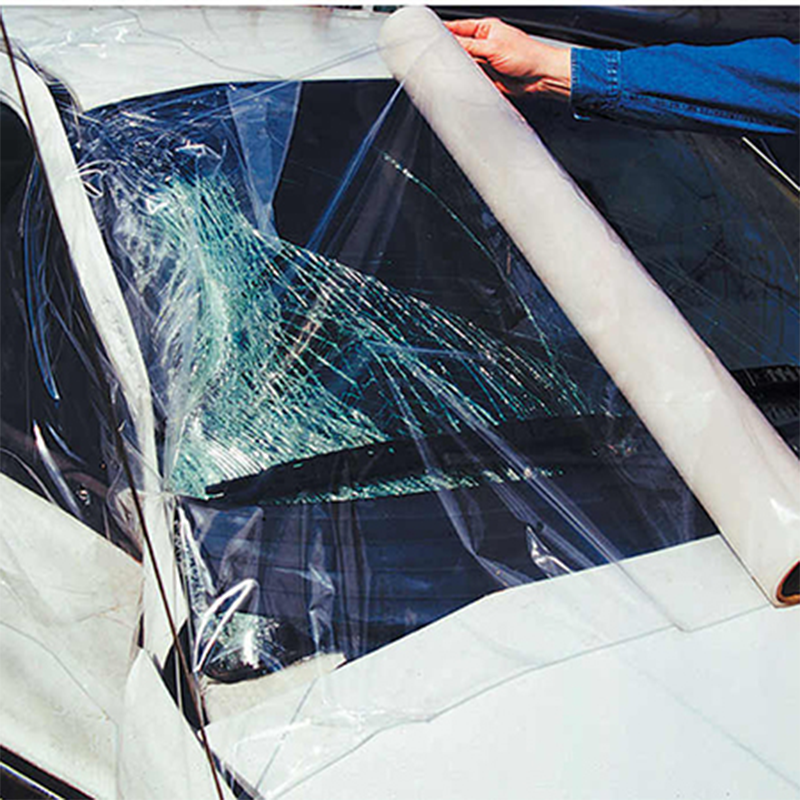
● The super-tough polyethylene film resists puncture and penetration by rain, snow, debris, and dirt during the transportation and storage of the cras...
See Details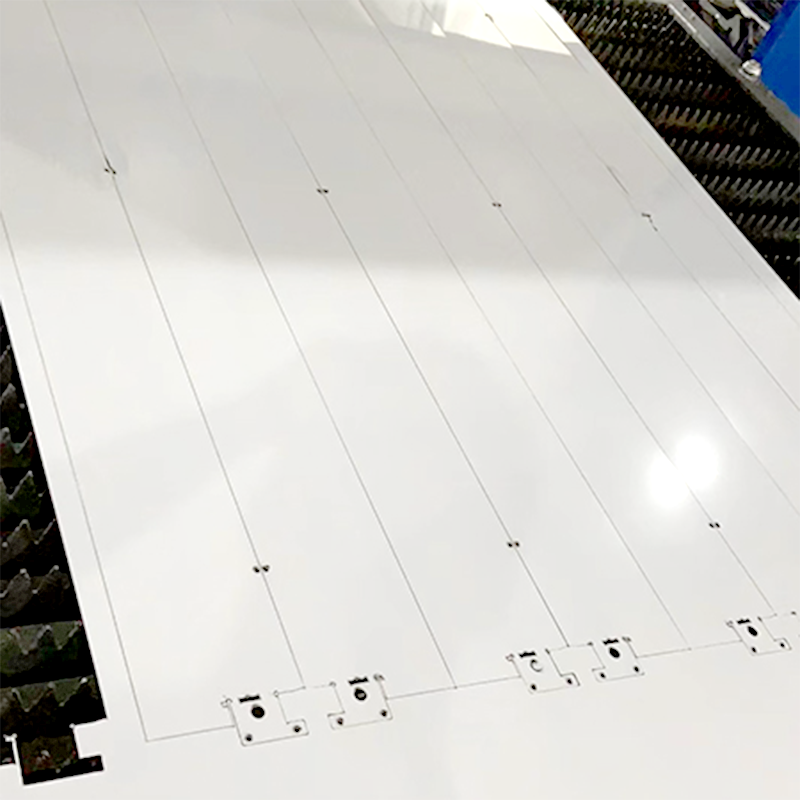
● The specially formulated natural rubber adhesive suitable for both CO2 and Fiber laser cutting processes;● High cutting quality without burr or trac...
See Details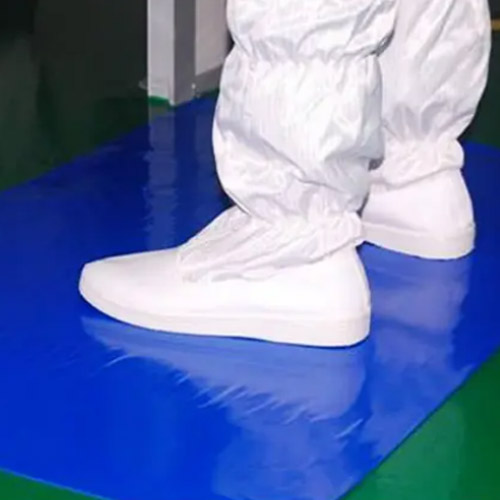
● Options for either 30 or 60 layers per mat; can be packed with four mats, eight mats, or ten mats per carton;● Remove dirt effect: ≥99.9% (5 steps);...
See Details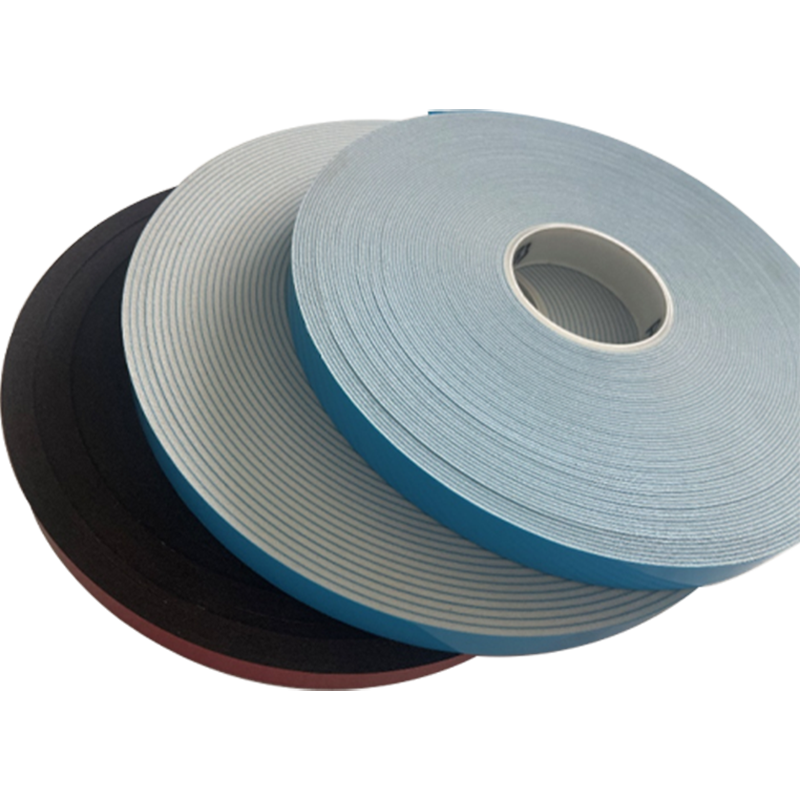
● Waterproof - the desirable material for waterproofing. ● Dust-proof - positive performance of dust prevention.● Low resilience - prevent the deforma...
See Details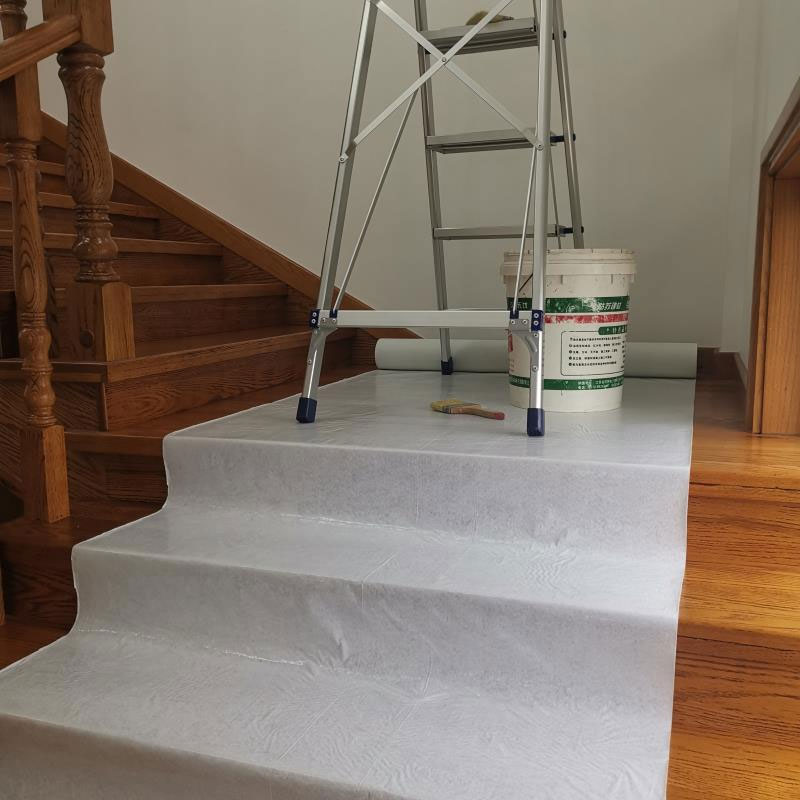
This product has non-woven synthetic fleece in middle; Breathable PE film adhered onto top of the non-woven fabric, which is coated with self adhesive...
See DetailsWe’re a reliable partner that shapes our expertise into success for your project.

Copyright 2024 Wuxi Qida Tape Co., Ltd. All Rights Reserved
 Wholesale Protective Film/Foil Manufacturers
Privacy
Wholesale Protective Film/Foil Manufacturers
Privacy