

 English

 English
 русский
 Français
 Español
 Português
 عربى


Cat:Glue -coated Protective Film
● Protect window glass against paint splatters, dirt, staining, and spillages during painting, building, plastering, tiling, general maintenance and r...
See Details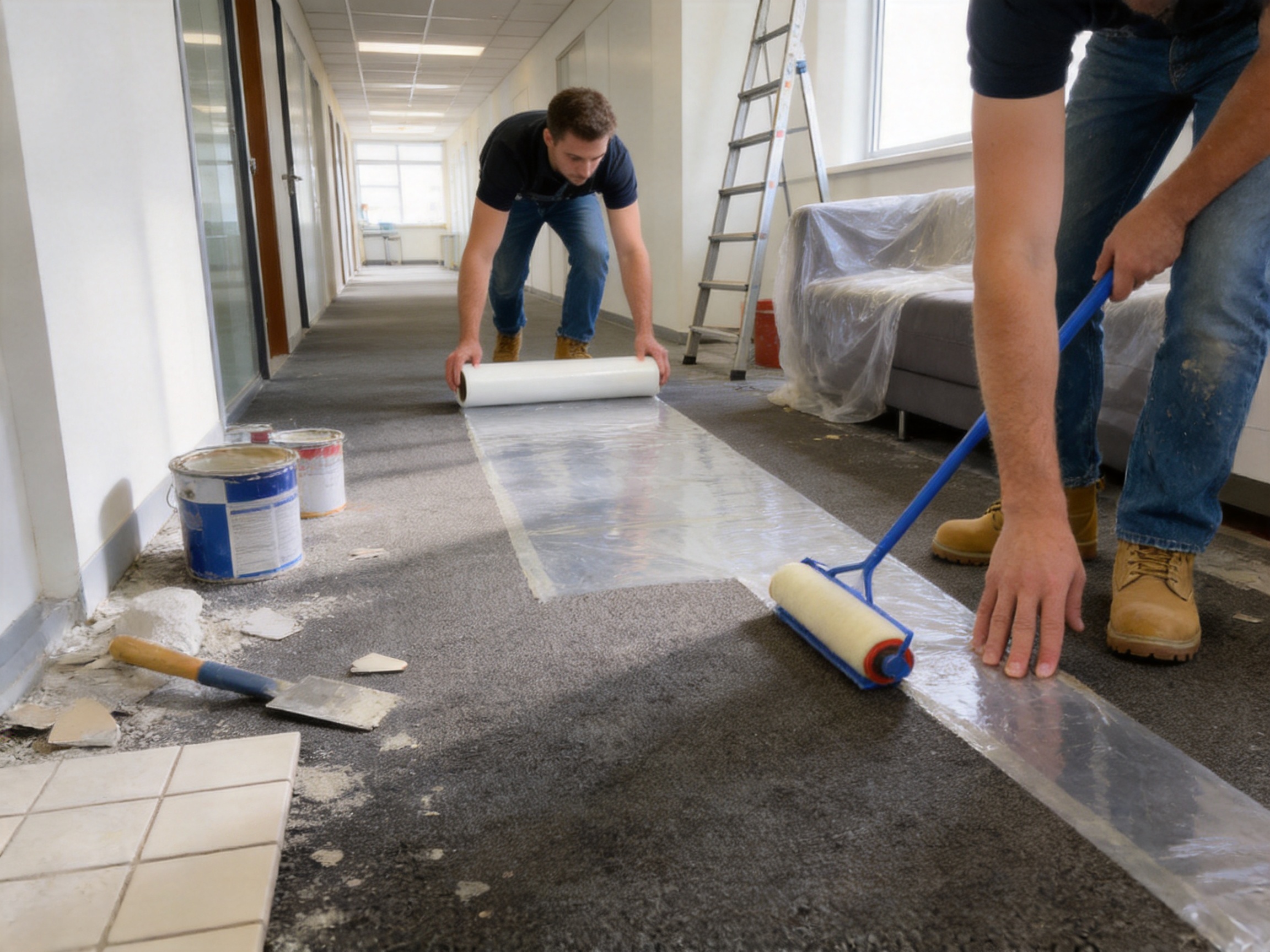
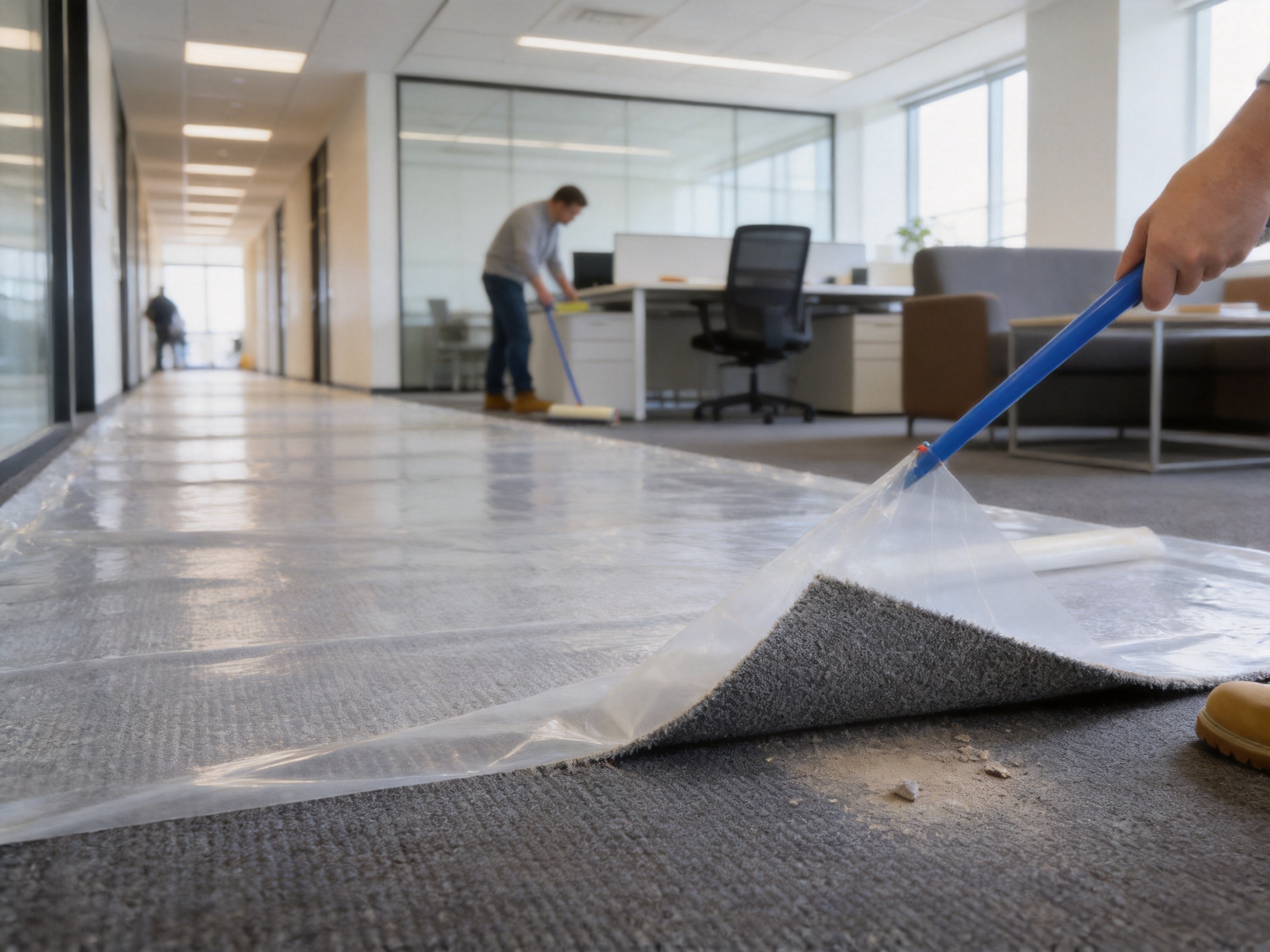
Carpet is one of the most vulnerable finished surfaces during painting, remodeling, construction, decoration, plastering, tiling, moving, and general maintenance work. Even a small amount of paint, plaster dust, mud, oil, moisture, or abrasive debris can permanently affect carpet fibers. Furniture movement and repeated foot traffic can also create compression, tearing, staining, and premature wear. Once a carpet has been damaged, restoration may be expensive, time-consuming, or impossible.
Protective film for carpet provides a practical temporary barrier between the carpet and the surrounding work environment. The film is designed to cover the carpet surface, resist liquid penetration, reduce contamination, and remain securely positioned during normal work activity. After the project is completed, it can be removed quickly so that the carpet is ready for inspection, cleaning, or use.
A high-quality carpet protective film combines a tough polyethylene backing with a specially formulated pressure-sensitive adhesive. This combination gives the film strength, flexibility, puncture resistance, and dependable adhesion while still allowing clean and easy removal. The right product can protect short-pile and long-pile synthetic carpets in residential, commercial, industrial, and institutional environments.
Manufactured as a customized surface protection solution, carpet film can be supplied in different thicknesses, widths, roll lengths, colors, winding directions, and printing configurations. This flexibility allows contractors, distributors, retailers, flooring professionals, and project managers to select a format that matches the carpet type, application method, work duration, and operating conditions.
Carpet is made from thousands or millions of individual fibers attached to a backing layer. Depending on the construction, those fibers may be highly absorbent, loosely arranged, textured, or difficult to clean. Dirt that appears to be located only on the surface can quickly work its way between the fibers. Liquid spills can spread through the carpet pile and reach the backing, while paint and plaster may harden around the fibers.
During construction or refurbishment, the risk of contamination is significantly higher than during ordinary daily use. Workers may carry dust, sand, cement particles, metal fragments, or wet materials across a finished floor. Paint equipment may drip, tools may be placed on the carpet, and ladders or wheeled equipment may create concentrated pressure. Without a suitable barrier, the carpet becomes exposed to multiple types of damage at the same time.
Carpet protective film helps reduce these risks by creating a continuous temporary covering. The film separates the carpet from dust, dirt, wet coatings, liquid spills, and light mechanical contact. It can also reduce the time required for final cleaning because contaminants are collected on the film rather than becoming embedded in the carpet.
Protection is especially important when new carpet has already been installed before other work is finished. In many building projects, flooring is completed before painting, joinery, electrical work, decorating, or final equipment installation. Replacing or repairing the carpet at this stage can delay handover and increase project costs. Applying protective film immediately after installation gives the floor a practical layer of defense throughout the remaining work.
The carpet protective film described in this article is a glue-coated polyethylene film intended for temporary protection of synthetic carpet surfaces. Its adhesive side is designed to attach to the carpet, while the exposed polyethylene surface forms a barrier against dirt, paint, and many common construction contaminants.
The adhesive formulation is developed to provide strong holding power without leaving glue residue when the film is removed correctly within the recommended application period. The product is suitable for professional contractors as well as retail users who require a convenient and efficient way to cover carpet before maintenance or renovation.
Both forward-wound and reverse-wound versions are available. Winding direction affects how the film is applied and can be selected according to the user’s preferred dispensing method. A forward-wound roll may be convenient for some manual installation procedures, while a reverse-wound roll may be better suited to other application tools or working positions.
The film can be manufactured in clear, yellow, white, blue, and other requested colors. Clear film allows the original appearance of the carpet to remain visible, while colored film can improve the visibility of covered areas, help distinguish protected zones, or support product branding. Customized printing of logos, handling information, safety reminders, and application instructions is also available.
Item |
Typical Specification or Availability |
Product type |
Glue-coated polyethylene carpet protective film |
Film thickness |
Approximately 50 to 150 micrometers |
Width |
Approximately 500 to 1,200 millimeters |
Roll length |
Approximately 10 to 500 meters, subject to product design |
Elongation |
At least 300 percent according to the supplied specification |
Adhesive type |
Acrylic adhesive |
Adhesion |
High adhesion for secure positioning on suitable synthetic carpets |
Color options |
Clear, yellow, white, blue, and customized colors |
Printing |
Up to three colors, depending on design and order requirements |
Winding direction |
Forward wound and reverse wound |
Specifications may be adjusted according to carpet construction, application conditions, packaging requirements, and customer performance targets. Before mass production, users should confirm the exact thickness, width, roll length, adhesion level, color, printing, and recommended application period with the manufacturer.
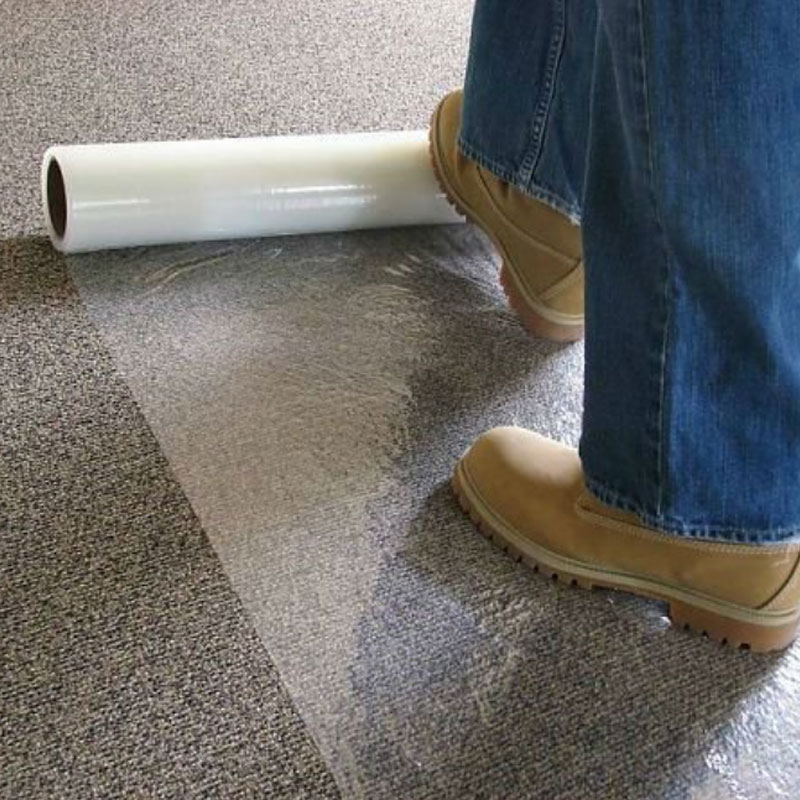
Protective Film For Carpet
One of the most important advantages of polyethylene carpet film is its resistance to liquid penetration. The film forms a continuous plastic barrier that helps prevent paint, water-based coatings, plaster slurry, cleaning liquids, and other common materials from reaching the carpet fibers.
Ordinary fabric sheets, paper coverings, or loosely placed plastic sheets may absorb liquid, allow seepage at seams, or move during work. In contrast, adhesive-backed film is intended to remain in contact with the carpet surface. When properly applied with overlapped seams and sealed edges, it offers more complete coverage and better control of accidental spills.
The film is not intended to replace safe work practices or protect against every chemical or mechanical hazard. Nevertheless, its tough polyethylene construction provides a substantially more reliable temporary barrier than uncoated paper or unsecured loose coverings for many general renovation applications.
Construction environments contain many sharp or abrasive objects. Screws, nails, tile fragments, metal edges, tools, and rough footwear can puncture weak coverings. Once a covering has been pierced, dirt and liquids can travel directly to the carpet underneath.
The super-tough polyethylene film is designed to resist tearing, ripping, and puncture during ordinary handling and work activity. Its high elongation allows it to flex and stretch around minor surface irregularities rather than immediately splitting. This is particularly useful when the film is rolled out over large carpeted areas or around corners and thresholds.
Although the film is heavy duty, it should still be applied to a clean and dry carpet surface. Sharp objects should not be deliberately dragged over the film, and areas exposed to concentrated loads may require additional layers or protective boards.
A covering that shifts, curls, or forms bubbles cannot provide consistent protection. Loose edges may expose the carpet to dust and paint, while moving film can create trip hazards. The adhesive layer on carpet protective film is designed to hold the product firmly to suitable synthetic carpet surfaces during the intended use period.
The adhesive formula is also developed with clean removal in mind. When the carpet type, environmental conditions, storage period, and application duration are appropriate, the film can be peeled away without leaving troublesome glue residue. This balance between adhesion and removability is one of the main differences between professional carpet film and general-purpose adhesive plastic.
Adhesive performance depends on the carpet construction and the surrounding environment. Temperature, humidity, surface contamination, exposure to sunlight, application pressure, and storage time can all influence results. A small compatibility test should be performed before covering a large or valuable area.
The easy-peel adhesive is intended to simplify installation. Workers can unroll the film, align it with the carpet, press it into contact, and continue across the required area. Compared with repeatedly laying and repositioning loose sheets, adhesive film can reduce installation time and improve the consistency of coverage.
Fast application is especially valuable for contractors who must protect several rooms, hallways, offices, hotel areas, or retail spaces within a limited schedule. The film can also be cut to fit around doorways, columns, built-in furniture, stairs, and other structural features.
For best results, the installation team should plan the direction of application, avoid trapping large folds, smooth the film progressively, and press down edges and overlaps. When the work is complete, the film can be peeled back in a controlled direction and disposed of or managed according to local waste requirements.
Different users apply protective film in different ways. Some installers prefer the adhesive surface to be exposed as the roll is unwound in one direction, while others need an opposite winding configuration for their tools or workflow. Offering forward-wound and reverse-wound formats helps customers select the roll style that best matches their application method.
This option can improve productivity and reduce handling errors. It is also useful for distributors who serve different professional markets, because the same basic protective film can be supplied in formats adapted to contractor use, retail packaging, or specialized dispensing equipment.
Contractor-grade products may prioritize large roll dimensions, high output, fast installation, and durable packaging. Retail products may require smaller rolls, clear usage instructions, barcode labels, attractive graphics, and easy-to-understand application guidance.
Customized production allows the film to be matched to these different sales channels. Customers can request suitable roll lengths, widths, colors, core sizes, packaging styles, and printed information. This makes the product more practical for professional job sites while also supporting organized retail presentation.
Printing on the film can identify the product, communicate correct use, and support brand recognition. Logos can help contractors demonstrate a professional approach to site protection. Application instructions can remind workers to install the film on a clean surface, smooth out wrinkles, overlap seams, and remove the film within the recommended period.
Warning messages may also be printed where appropriate. For example, visible text can indicate that the surface is temporarily protected, that the film should not be used as a permanent floor covering, or that the area requires careful walking. Up to three printing colors are available according to the supplied product specification and design requirements.
Short-pile carpet generally has relatively low and compact fibers. A thinner film may be suitable when the application requires a close fit, low profile, and easy handling. The film should provide adequate adhesion without creating excessive resistance during removal.
Short-pile carpet is often found in offices, corridors, hotel rooms, commercial facilities, and residential areas. It may receive frequent foot traffic, so the selected product should have sufficient toughness for the anticipated work period. If heavy equipment or concentrated loads will pass over the area, a thicker film or an additional rigid covering may be advisable.
Long-pile carpet contains taller or more flexible fibers. The adhesive must make reliable contact with the upper surface without becoming trapped too deeply in the pile. A thicker or more strongly adhering film may be considered when the carpet texture makes it difficult to maintain continuous contact.
Installers should apply the film gradually and press it firmly into the carpet surface. Large wrinkles may prevent the adhesive from contacting the fibers evenly. In some cases, small test sections should be evaluated over the planned application period to confirm holding power and clean removability.
Decorative carpet may include printed patterns, multiple colors, or special surface textures. Clear protective film is often preferred because it allows the carpet’s appearance to remain visible during construction. This can help identify room layouts, directional patterns, or areas that require special care.
Even when the film is transparent, the carpet should be inspected before application. Loose fibers, existing stains, moisture, or surface treatments may influence adhesion and removal. The film should not be used to conceal pre-existing damage or moisture problems.
The supplied adhesive formula is intended to suit synthetic carpets. Synthetic fibers can include polypropylene, nylon, polyester, and other materials, each with different textures and surface treatments. Since carpet manufacturers use a wide range of backing systems and finishes, compatibility testing remains an important step.
The test should be performed in an inconspicuous area. Apply a small piece of film using the same pressure and conditions expected during the full installation. After the planned dwell period, remove the test piece slowly and inspect the carpet for residue, fiber disturbance, discoloration, or change in appearance.
Film thickness affects handling, strength, flexibility, and puncture resistance. A 50-micrometer film may be appropriate for lighter protection, short-duration work, and areas with limited mechanical stress. Thicker options up to approximately 150 micrometers can provide greater durability for demanding applications.
Thickness should be selected according to the expected hazards rather than simply choosing the thickest available option. A heavy film may offer additional resistance, but it can also be less economical or more difficult to handle in confined spaces. The best selection balances required protection, installation speed, removal convenience, and project cost.
Widths from approximately 500 to 1,200 millimeters allow users to adapt the film to narrow walkways, room-sized areas, corridors, and larger open spaces. Narrow rolls may be easier for one person to handle and may fit around furniture or architectural details. Wider rolls can reduce the number of seams and accelerate installation across broad floors.
When choosing width, users should consider the number of workers available, the room layout, access restrictions, and the need to minimize seams. Wide film can be efficient in open areas, while narrower film may provide better control in rooms with many obstacles.
Roll lengths can be customized for different markets and applications. Shorter rolls are convenient for retail users, small rooms, minor repairs, and occasional household work. Longer rolls are generally more efficient for contractors, building projects, and repeated use across large areas.
Long rolls reduce the frequency of roll changes, but they may require two workers or a dispensing tool. Distributors should select roll lengths that match customer expectations and shipping limitations. The final roll length should be confirmed because actual capacity depends on film thickness, winding method, core dimensions, and packaging design.
Before applying the film, remove loose dirt, grit, and debris from the carpet. A vacuum cleaner can help remove particles that might interfere with adhesion or create uneven points beneath the film. The carpet should be dry, and any existing liquid contamination should be addressed before covering.
Inspect the carpet for loose fibers, damaged seams, raised edges, or areas requiring repair. Protective film is not a substitute for carpet installation correction. If there is moisture beneath the carpet, the source should be identified and resolved before the film is applied.
Apply a small piece of film in a discreet location. Press it firmly and leave it in place for a period representative of the expected application. Remove it slowly and check for adhesive residue, fiber transfer, discoloration, or changes to the carpet finish.
The test is particularly important for expensive carpet, recently treated carpet, carpets with unusual backing, areas exposed to direct sunlight, and projects requiring long-term protection. If the result is unsatisfactory, consult the supplier before covering the entire surface.
Measure the area and decide where the film will start and finish. It is often useful to begin at the farthest point of the room and work toward the exit so that installers do not walk repeatedly over unprotected carpet. Plan overlaps at joints and allow sufficient material for edges, thresholds, and irregular shapes.
Where practical, seams should overlap enough to reduce the possibility of dirt or liquid entering between adjacent sheets. Edges may require additional attention in high-traffic areas. The film should not block emergency exits, ventilation openings, drainage points, or required access routes.
Unroll the film gradually while maintaining alignment. Avoid pulling it excessively or allowing large folds to form. Press the film from the center toward the edges to promote contact and reduce trapped air. Firm pressure is particularly important along seams, corners, doorways, and perimeter areas.
For large rooms, one worker can control the roll while another smooths the film. A suitable soft-edged roller or hand applicator may improve contact, provided it does not damage the carpet or puncture the film. Cutting should be performed carefully so that tools do not contact the carpet beneath the film.
During the project, inspect the film periodically. Look for lifting edges, punctures, excessive dirt accumulation, liquid pooling, and shifting caused by heavy traffic. Damaged sections should be replaced or reinforced promptly so that contaminants do not reach the carpet.
In areas exposed to substantial impact, wheeled equipment, ladders, or heavy material storage, use additional protection as necessary. Carpet film provides a temporary surface barrier, but it is not designed to distribute unlimited concentrated loads.
When the work is complete, begin at an accessible corner or edge. Peel the film back slowly and at a low angle rather than pulling it vertically with sudden force. Controlled removal helps reduce the possibility of fiber disturbance and allows the installer to observe the carpet condition as the film is removed.
If the film has been exposed to unusually high heat, direct sunlight, moisture, or an extended application period, removal may require additional care. Any remaining residue should be addressed with a cleaning method approved for the specific carpet. Strong solvents should not be used without confirming compatibility.
Painting activities create a high risk of drips, splashes, roller spatter, and accidental spills. Carpet protective film helps isolate the floor from water-based and many commonly used decorative coatings. It is useful beneath ladders, around room perimeters, along corridors, and near paint mixing areas.
Workers should still use suitable paint trays, containers, and edge protection. Large spills should be contained immediately. If paint remains on the film for an extended period, it may harden and become more difficult to remove, so damaged or heavily contaminated sections should be replaced during the project.
Plaster, joint compound, gypsum dust, and sanding debris can settle deep into carpet fibers. The polyethylene surface helps keep these materials above the carpet rather than allowing them to become embedded. The film also makes final cleanup more efficient when walls and ceilings are being prepared.
Dry materials may create a slip risk on the exposed film surface. Work areas should be inspected regularly, and loose dust or fragments should be removed in accordance with site safety procedures.
Tile installation involves adhesive, grout, cement particles, sharp tile fragments, and repeated movement of tools and materials. Protective film can help shield carpeted areas adjacent to the installation zone. It is especially useful when a project involves replacing hard flooring in one area while leaving carpeted rooms or corridors in service.
Where sharp fragments or heavy equipment present a higher risk, the film may be used as one layer within a broader protection system. Rigid boards, mats, or specialized impact protection may be added above the film when required.
Moving furniture can expose carpet to dirt from wheels, metal feet, packaging debris, and accidental liquid contamination. Protective film can help keep routes clean during delivery and installation. It may also reduce cleaning requirements in offices, hotels, retail outlets, and residential properties.
Furniture should not be dragged aggressively across the film. Heavy loads should be lifted or moved using suitable equipment. If the film becomes stretched, punctured, or displaced, the affected section should be replaced.
Commercial offices, hospitals, schools, hotels, shopping facilities, and public buildings may require renovation while parts of the building remain occupied. In these environments, clean presentation and controlled work areas are especially important. Colored film can make protected routes clearly visible, while transparent film can maintain a more discreet appearance.
Project managers can use printed instructions to communicate handling requirements to workers and visitors. The film should be checked frequently in high-traffic locations because repeated foot traffic can wear the covering more quickly than in residential areas.
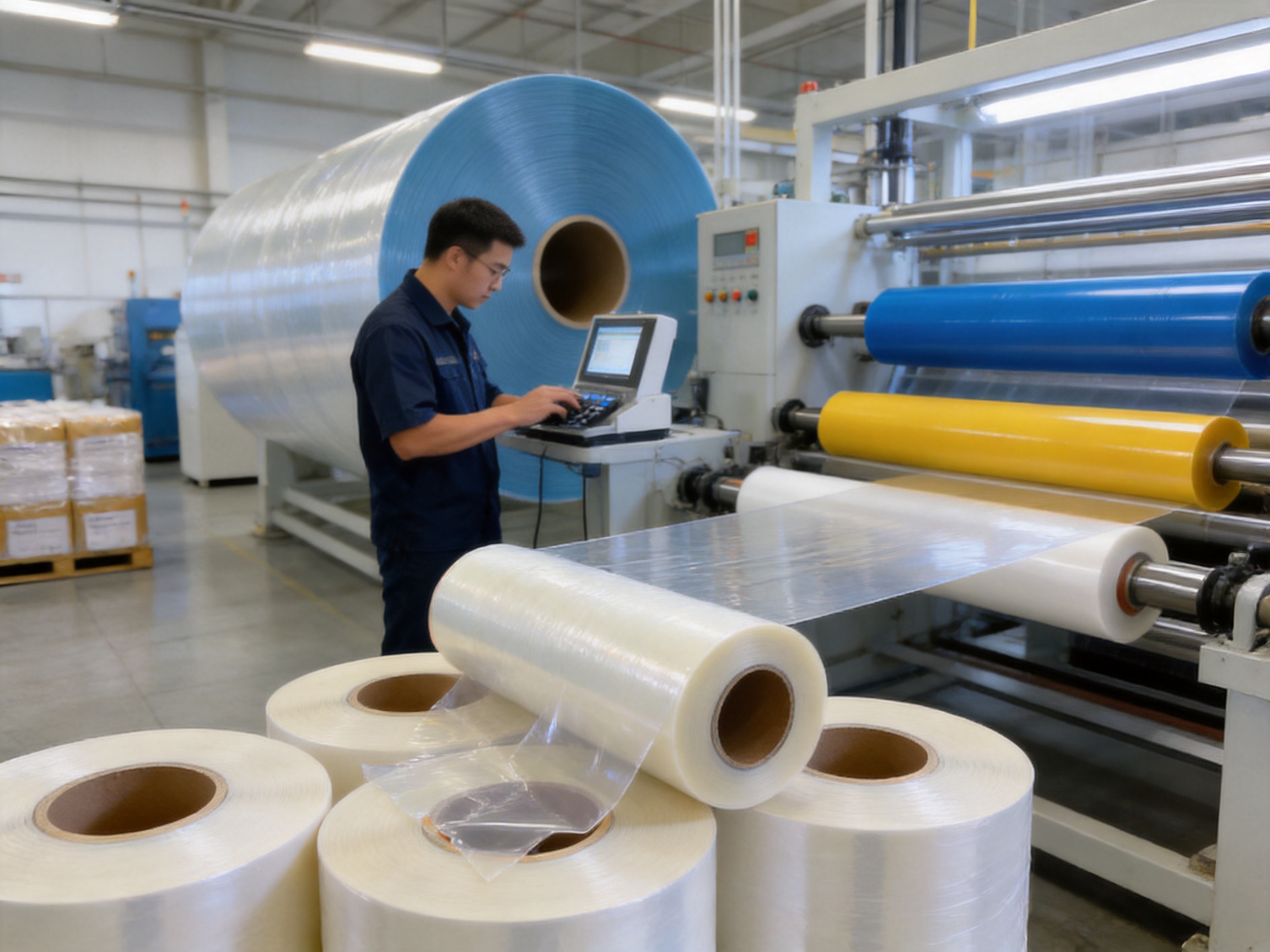
Reliable protective film depends not only on the raw materials but also on process control. A manufacturer with integrated production capabilities can manage the film backing, adhesive coating, printing, rewinding, slitting, inspection, and packaging in a coordinated system. This improves consistency and makes it easier to customize the product for different customers.
Wuxi Qida Tape Co., Ltd. operates as a factory specializing in protective films and surface protection products. Its product range covers protection for stainless steel, aluminum, pre-coated metal, plastics, ceramics, carpets, decorative laminates, glass, and other finished surfaces. The company’s manufacturing experience across multiple substrates supports the development of adhesive solutions for different surface conditions.
Integrated production allows the manufacturer to coordinate polyethylene film characteristics with adhesive performance. Film thickness, elongation, surface treatment, coating weight, winding tension, and adhesive composition can influence final performance. Managing these factors within one production system helps reduce variation between batches.
The company offers acrylic water-based adhesive, acrylic solvent-based adhesive, and natural rubber adhesive options for different industry requirements. For carpet protection, the adhesive must balance strong holding power with clean removal. Selection can be adjusted according to carpet type, expected exposure period, environmental conditions, and customer testing requirements.
The company has introduced advanced machines from Germany and maintains a technical team of experienced technicians and engineers. Modern equipment supports controlled coating, accurate rewinding, stable slitting, consistent roll formation, and improved production efficiency.
Technical development is supported through cooperation with research and development institutes. This approach helps the manufacturer study adhesive behavior, film performance, surface compatibility, and changing customer requirements. Continuous development is particularly important because temporary protection films must perform across many combinations of substrate, temperature, humidity, pressure, and application time.
Customers may require different roll widths, winding directions, labels, colors, and printing layouts. In-house printing and converting capabilities make it possible to complete these operations within the factory rather than relying entirely on outside suppliers.
Slitting equipment can convert jumbo rolls into customer-specific widths. Rewinding equipment helps provide forward-wound or reverse-wound products and supports consistent roll tension. Packaging operations can be adapted for contractor cartons, retail units, export shipments, or private-label programs.
The company maintains a testing laboratory and advanced inspection equipment to evaluate product quality. Typical evaluation areas for carpet protective film may include film thickness, width, roll length, tensile properties, elongation, adhesive adhesion, residue, puncture resistance, appearance, winding quality, and printing accuracy.
Testing is important because protective film performance cannot be judged by appearance alone. A film may look smooth but have insufficient adhesion, uneven coating, weak edges, or poor removal characteristics. Regular inspection helps identify process deviations before products are released to customers.
The manufacturer is certified under ISO 9001 quality management and ISO 14001 environmental management systems. These systems support documented procedures, process monitoring, corrective action, resource management, and environmental responsibility.
Product and management compliance may include SGS, RoHS, REACH, PFAS, and Prop 65 testing or documentation, depending on the applicable product and customer requirement. Compliance expectations vary by market and application, so customers should confirm the specific documents required for their destination country and intended use.
Founded in 1999, the company operates a factory of approximately 20,000 square meters, employs more than 95 experienced staff members, and has an annual production capacity exceeding 12,000 tons. Its products are sold in China and exported to Europe, North America, Australia, the Middle East, Japan, and other regions.
Experience serving international markets can support customers with export packaging, product documentation, private-label requirements, and shipment coordination. A broad export background also gives the manufacturer exposure to different technical standards, purchasing practices, and application environments.
Protective film buyers may require more than a standard roll. OEM and ODM programs can include customized thickness, width, length, color, core size, adhesive characteristics, winding direction, printed logo, packaging, carton markings, and application instructions.
For distributors, customized branding can strengthen product recognition and separate a professional product from generic plastic coverings. For contractors, printed instructions can help standardize application across multiple work teams. For retailers, convenient roll sizes and clear packaging can improve customer understanding and reduce misuse.
Product development can begin with a technical data sheet, a carpet sample, a drawing, an existing film sample, or a description of the intended application. Engineers can review the carpet surface, work conditions, protection period, required adhesion, and removal expectations before recommending a product structure.
Samples should be tested under realistic conditions whenever possible. Laboratory testing is valuable, but field trials reveal additional factors such as foot traffic, cleaning schedules, temperature fluctuation, humidity, furniture movement, and installation skill.
Protection method |
Main strengths |
Common limitations |
Adhesive carpet protective film |
Fast application, secure positioning, liquid barrier, customized formats, easy removal when compatible |
Requires surface testing and correct installation; not intended for unlimited heavy impact |
Loose plastic sheet |
Low initial cost and broad availability |
May move, wrinkle, expose edges, and allow liquid to travel underneath |
Paper or cardboard sheet |
Simple handling and useful for dry debris |
Can absorb liquid, tear easily, and provide limited protection against spills |
Fabric drop cloth |
Reusable and suitable for some light-duty work |
May absorb paint or moisture and can shift without additional fastening |
Rigid board protection |
Good load distribution and impact resistance |
Heavier, slower to install, and often more expensive as a complete covering system |
Reusable floor mat |
Durable for repeated use in defined areas |
May not conform to large or irregular surfaces and may require frequent repositioning |
In many projects, adhesive film works best as part of a layered protection strategy. It can provide the first barrier directly on the carpet, while rigid boards or mats can be added where heavy traffic or concentrated loads are expected. The correct system depends on the hazards, duration, floor layout, and budget.
Protective film should be stored in a clean, dry location away from direct sunlight, excessive heat, moisture, and sharp objects. Rolls should remain in their original packaging until use. Improper storage can affect adhesive performance, film flexibility, printing quality, and roll shape.
Do not place heavy objects on rolls for long periods, as compression can deform the cores or create telescoping. Rolls should be handled carefully to prevent dents and edge damage. Before application, allow the product to reach the temperature of the installation environment when practical.
The film should be used only for its intended temporary protection purpose. It is not a substitute for a certified anti-slip surface, fall protection system, fire barrier, or structural load-distribution board. Users should evaluate whether the exposed film surface changes slip characteristics, especially in areas where moisture, dust, or loose materials may be present.
Never cover wet carpet, active moisture damage, or a surface that requires ventilation unless the installation has been specifically evaluated. Trapped moisture can contribute to odor, staining, or deterioration. The recommended application period should be observed, and the film should be removed promptly when protection is no longer required.
Temporary protection products can support more efficient construction by reducing cleaning chemicals, labor time, rework, and replacement of damaged carpet. At the same time, users should manage used film responsibly because polyethylene is a plastic material.
Where recycling facilities accept the material, used film should be separated from paint-contaminated waste and other construction debris. Clean film may be easier to recycle than heavily contaminated film. Local waste rules should always be followed, particularly when the film has contacted coatings, solvents, oils, or other regulated substances.
Environmental management also includes selecting the correct thickness and quantity. Using a product that provides adequate protection without unnecessary excess material can reduce waste. ISO 14001 environmental management practices can help manufacturers improve resource use, production controls, and environmental performance.
Customers seeking specific environmental documentation should request current information regarding raw materials, adhesive composition, recyclability, restricted substances, packaging, and compliance testing. Requirements may differ between regions and end-use sectors.
The most visible cost advantage of carpet protective film is the reduction of cleaning and repair work. A protected carpet generally requires less intensive post-project cleaning than an exposed carpet contaminated by paint, plaster, dust, and mud. In severe cases, protection can prevent replacement of carpet sections or entire rooms.
Fast application can also reduce labor costs. Workers can cover a large area with continuous rolls instead of cutting and repositioning many loose sheets. Secure adhesion reduces the need for repeated adjustment during the project, while customized roll widths can minimize seams and material waste.
Protection also helps maintain project schedules. Cleaning, stain treatment, repair, and replacement may delay handover. By reducing the probability of damage, carpet film supports more predictable completion and allows other trades to continue working without unnecessarily exposing finished flooring.
For distributors and retailers, customization creates additional commercial value. Private-label packaging, printed instructions, and market-specific roll sizes can support product differentiation. Reliable manufacturing, competitive cost, and consistent quality can make the product suitable for recurring procurement programs.
Buyers should review the film’s technical specifications before placing an order. Important points include thickness tolerance, width tolerance, roll length, adhesive type, adhesion level, elongation, color consistency, printing accuracy, core dimensions, packaging, and recommended storage conditions.
It is also useful to request samples and evaluate the film on the actual carpet type. Testing should include application, foot traffic, exposure to the expected work environment, removal, and inspection for residue. If the film will remain on the carpet for an extended period, the trial should reflect that duration.
For large projects, buyers may request a quality agreement or inspection plan. This can define sampling frequency, test methods, batch identification, packaging inspection, and procedures for handling nonconforming goods. Clear technical communication helps avoid misunderstandings between the manufacturer, distributor, contractor, and final user.
Packaging should protect the film from moisture, dust, compression, and impact during transportation. Export cartons should be suitable for the shipment method and destination conditions. Printed labels can include product name, dimensions, lot number, quantity, storage guidance, and handling information.
It is used to temporarily protect carpet from paint, liquid spills, plaster, dust, dirt, debris, and light mechanical contact during painting, renovation, construction, decoration, moving, maintenance, and repair work.
The product is designed primarily for suitable synthetic carpets, but carpet construction, surface treatment, fiber type, pile height, and backing can vary. A small compatibility test should always be completed before full application, especially on expensive or unusual carpet.
The adhesive formula is designed for clean removal without residue when applied to compatible carpet under suitable conditions and removed within the recommended period. Excessive heat, direct sunlight, contamination, long dwell time, or an incompatible surface may affect removal performance.
It may be suitable for some long-pile carpets, but the installer should confirm that the adhesive can make stable contact with the fiber surface. A thicker or higher-adhesion version may be considered depending on the pile structure and application requirements.
Common options include clear, yellow, white, and blue. Other colors may be available for customized projects. Clear film is often selected when users want the carpet appearance to remain visible.
Yes. Customized logos, handling information, application instructions, and other messages can be printed. The supplied specification allows printing in up to three colors, subject to design review and order requirements.
The difference is the direction in which the film is wound on the roll and presented during application. The preferred format depends on the user’s dispensing method, equipment, and workflow.
Typical thickness options range from approximately 50 to 150 micrometers. The best thickness depends on the expected level of traffic, puncture risk, protection period, and handling requirements.
Typical widths range from approximately 500 to 1,200 millimeters. Customized widths may be available depending on production capability and order quantity.
The suitable application period depends on the carpet, adhesive, temperature, humidity, sunlight, traffic, and project conditions. Users should follow the manufacturer’s recommendation and conduct a long-duration compatibility test when necessary.
The film provides a barrier against dirt, liquids, and ordinary handling, but it is not a complete load-distribution or impact-protection system. Heavy equipment, sharp wheels, ladders, and concentrated loads may require rigid boards, mats, or additional protection above the film.
Yes. Roll length, width, color, packaging, printing, labeling, and application instructions can be customized for retail products. Contractor-grade formats can also be produced with larger rolls and job-site-oriented packaging.
The manufacturer offers acrylic water-based adhesive, acrylic solvent-based adhesive, and natural rubber adhesive options for different applications. The appropriate adhesive depends on the surface, required adhesion, removal expectations, and environmental conditions.
Start at an edge or corner and peel the film slowly at a low angle. Avoid sudden vertical pulling. Inspect the carpet during removal and address any unusual residue or fiber disturbance using an approved cleaning method.
The product can help reduce cleaning chemicals, rework, and replacement by preventing contamination. Used film is still a plastic material, so it should be collected, separated, recycled where facilities exist, or disposed of according to local regulations. Customers should request current compliance and environmental documentation for specific projects.
Customers can provide the carpet type, application environment, required protection period, width, thickness, roll length, color, winding direction, printing design, packaging requirements, and target market. Samples, drawings, or technical data sheets can help engineers recommend and develop the appropriate specification.
Protective film for carpet is an efficient and reliable solution for temporary floor protection during construction, renovation, painting, decorating, moving, maintenance, and repair work. Its polyethylene backing helps resist puncture, tearing, liquid penetration, paint contamination, and ordinary job-site debris. Its specially formulated adhesive helps keep the film positioned while supporting clean and easy removal from suitable synthetic carpets.
The product offers advantages over loose plastic sheets, paper, fabric coverings, and other basic protection methods because it combines secure adhesion, convenient application, durable film construction, customizable dimensions, and optional printing. Forward-wound and reverse-wound formats make the film adaptable to different working methods, while various thicknesses, widths, lengths, and colors support contractor and retail applications.
Manufacturing capability is equally important. Integrated film production, adhesive coating, printing, rewinding, slitting, packaging, laboratory testing, and inspection help maintain quality and support OEM and ODM requirements. With advanced equipment, experienced engineers, international management certifications, multiple adhesive options, and substantial production capacity, the manufacturer can develop carpet protection products for different surfaces, markets, and project conditions.
Correct product selection and application remain essential. Users should evaluate carpet compatibility, clean and dry the surface, apply the film smoothly, inspect it during use, avoid exceeding its mechanical limits, and remove it carefully within the recommended period. When these practices are followed, carpet protective film can reduce cleaning labor, prevent costly damage, improve site organization, and help projects reach completion with finished flooring in better condition.
1. Internal product specification for glue-coated protective film for carpet, including film thickness, width, roll length, adhesive type, color options, printing availability, and winding direction.
2. Wuxi Qida Tape Co., Ltd. company information concerning protective film manufacturing, adhesive coating, converting, quality control, production capacity, certifications, and export markets.
3. ISO 9001, Quality Management Systems—Requirements.
4. ISO 14001, Environmental Management Systems—Requirements with Guidance for Use.
5. General technical guidance for pressure-sensitive adhesive application, temporary surface protection, storage, handling, and removal.
6. General carpet maintenance and textile-flooring care principles for construction, renovation, and post-project cleaning.
7. General polymer film testing principles covering thickness, tensile performance, elongation, puncture resistance, appearance, and dimensional stability.
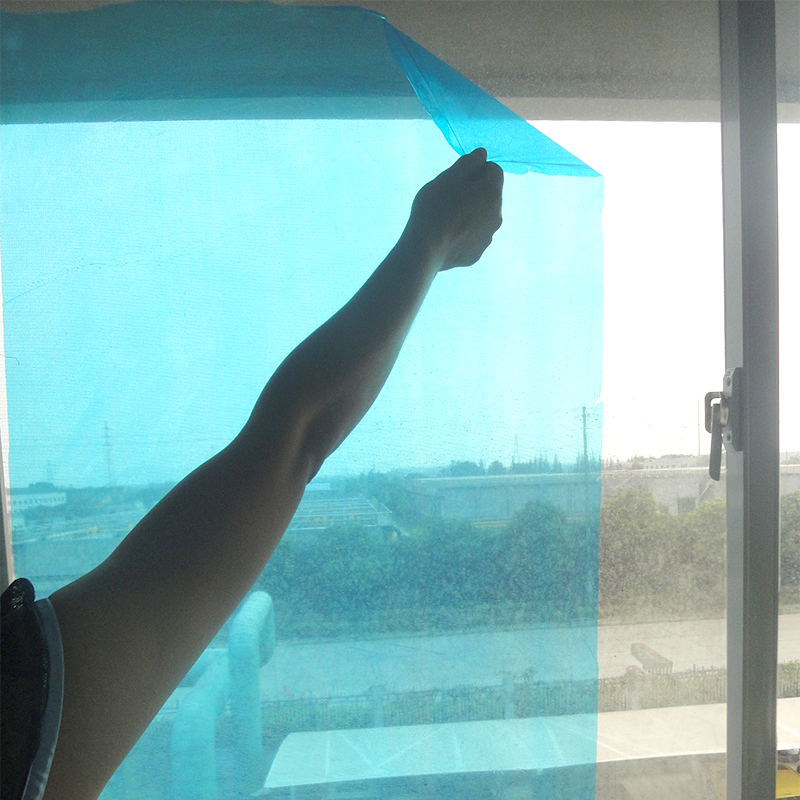
● Protect window glass against paint splatters, dirt, staining, and spillages during painting, building, plastering, tiling, general maintenance and r...
See Details
● Protects carpet against staining, paint spillage and dirt during painting, building, remodeling, plastering, tiling, decoration, general maintenance...
See Details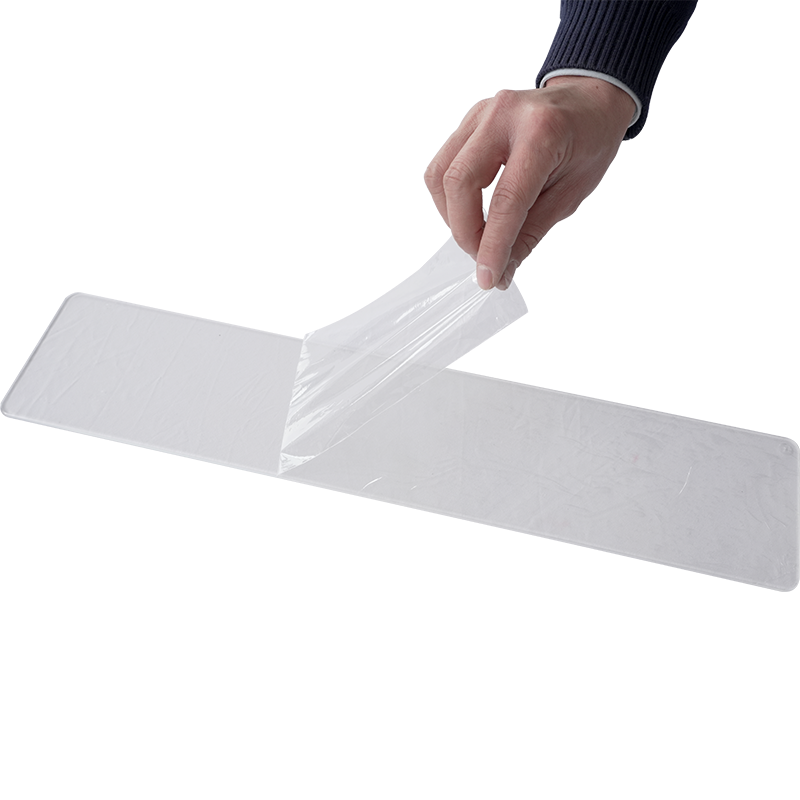
● No “ghost shadow” or “fish eye” after removal; ● Low gel content, soft and stable adhesion plus easy-peel removal with no surface damage or curling;...
See Details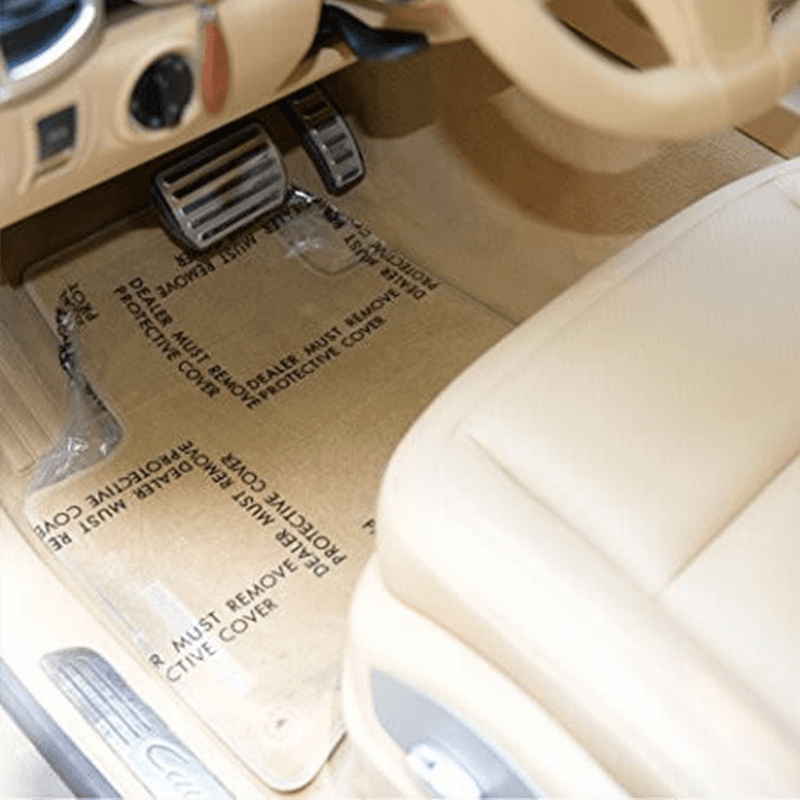
● Distance of each perforation die-cut ranges from 100mm to 1200mm;● Can peel off each die-cut piece of protective film at the perforated line easily;...
See Details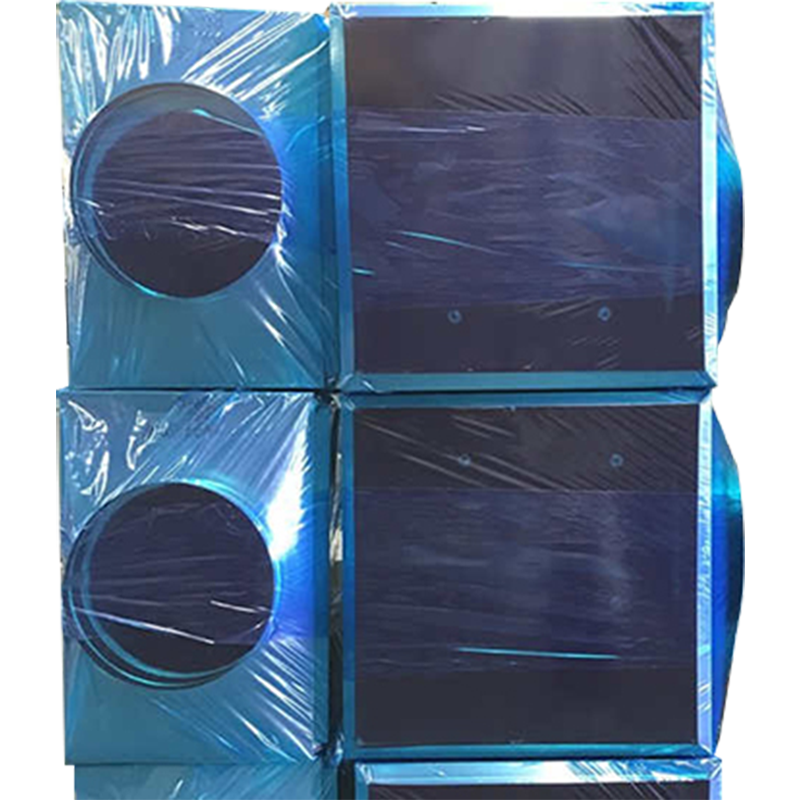
● The super-tough polyethylene film resists puncture and penetration by liquid and dirt during storage, transportation, and installation of the ductwo...
See Details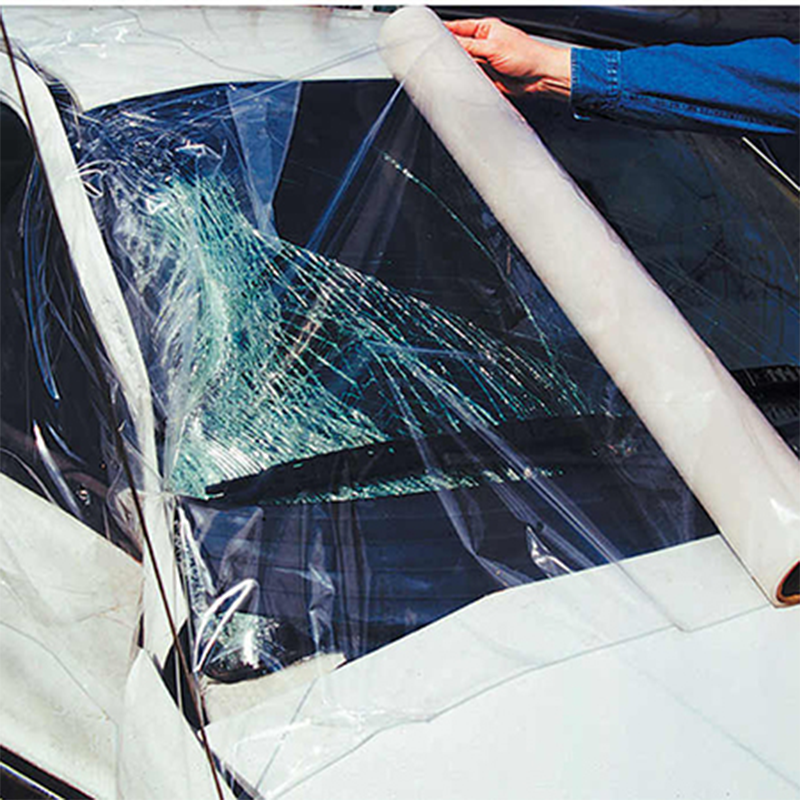
● The super-tough polyethylene film resists puncture and penetration by rain, snow, debris, and dirt during the transportation and storage of the cras...
See Details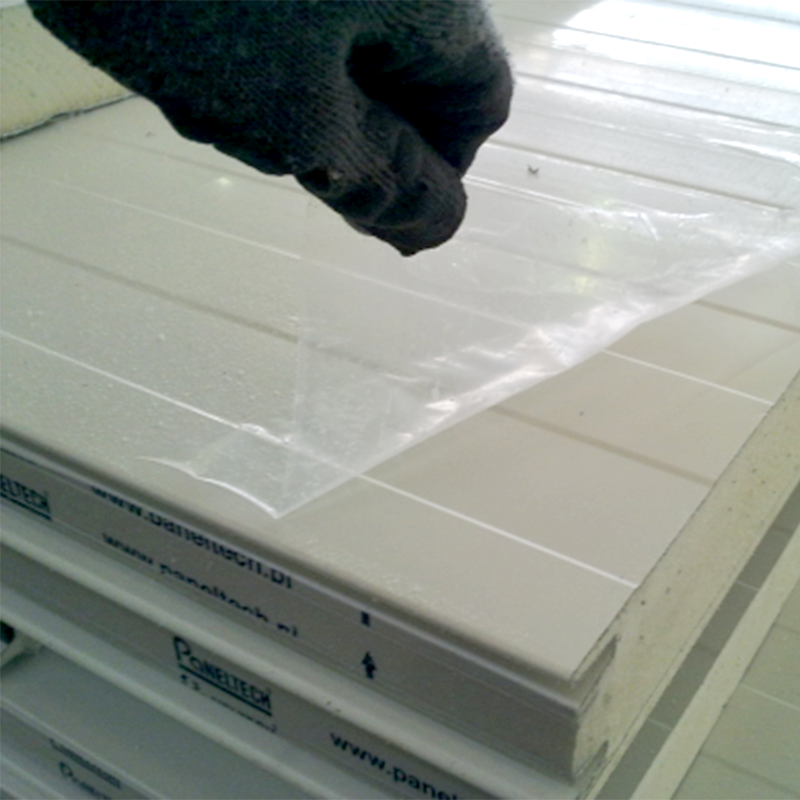
● The specially formulated adhesive ensures easy application and removal without leaving residue glue on the sandwich panels; ● The super-tough polyet...
See Details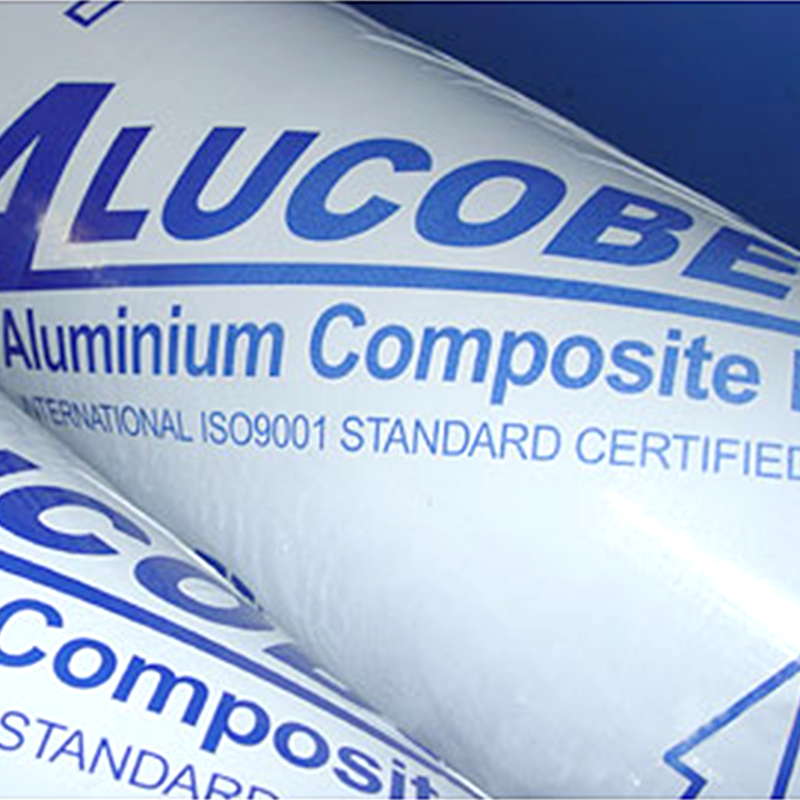
● The specially formulated adhesive ensures easy application and removal without leaving residue glue; ● The super-tough polyethylene film protects ag...
See Details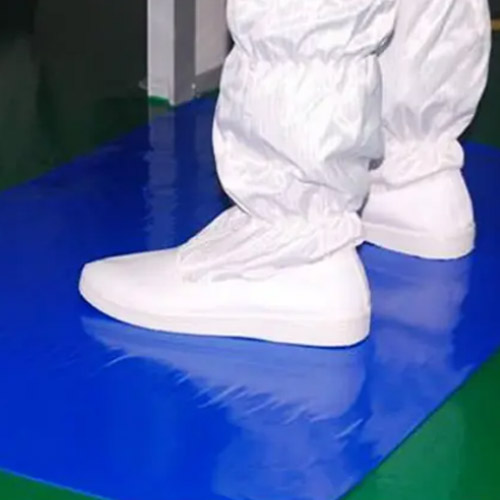
● Options for either 30 or 60 layers per mat; can be packed with four mats, eight mats, or ten mats per carton;● Remove dirt effect: ≥99.9% (5 steps);...
See Details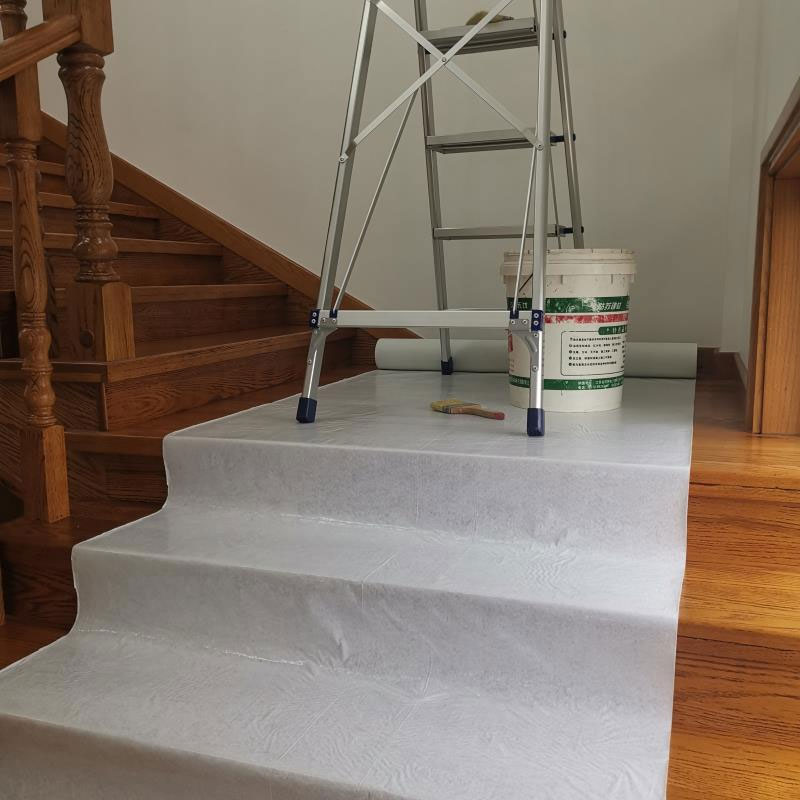
This product has non-woven synthetic fleece in middle; Breathable PE film adhered onto top of the non-woven fabric, which is coated with self adhesive...
See DetailsWe’re a reliable partner that shapes our expertise into success for your project.
Copyright 2024 Wuxi Qida Tape Co., Ltd. All Rights Reserved
 Wholesale Protective Film/Foil Manufacturers
Privacy