

 English
 English
 русский
 Français
 Español
 Português
 عربى
عربى
Cat:Glue -coated Protective Film
● Good weatherability for outdoor exposure; ● Stable adhesion level; ● UV resistance for up to 12 months; ● Can print customized logo or application i...
See Details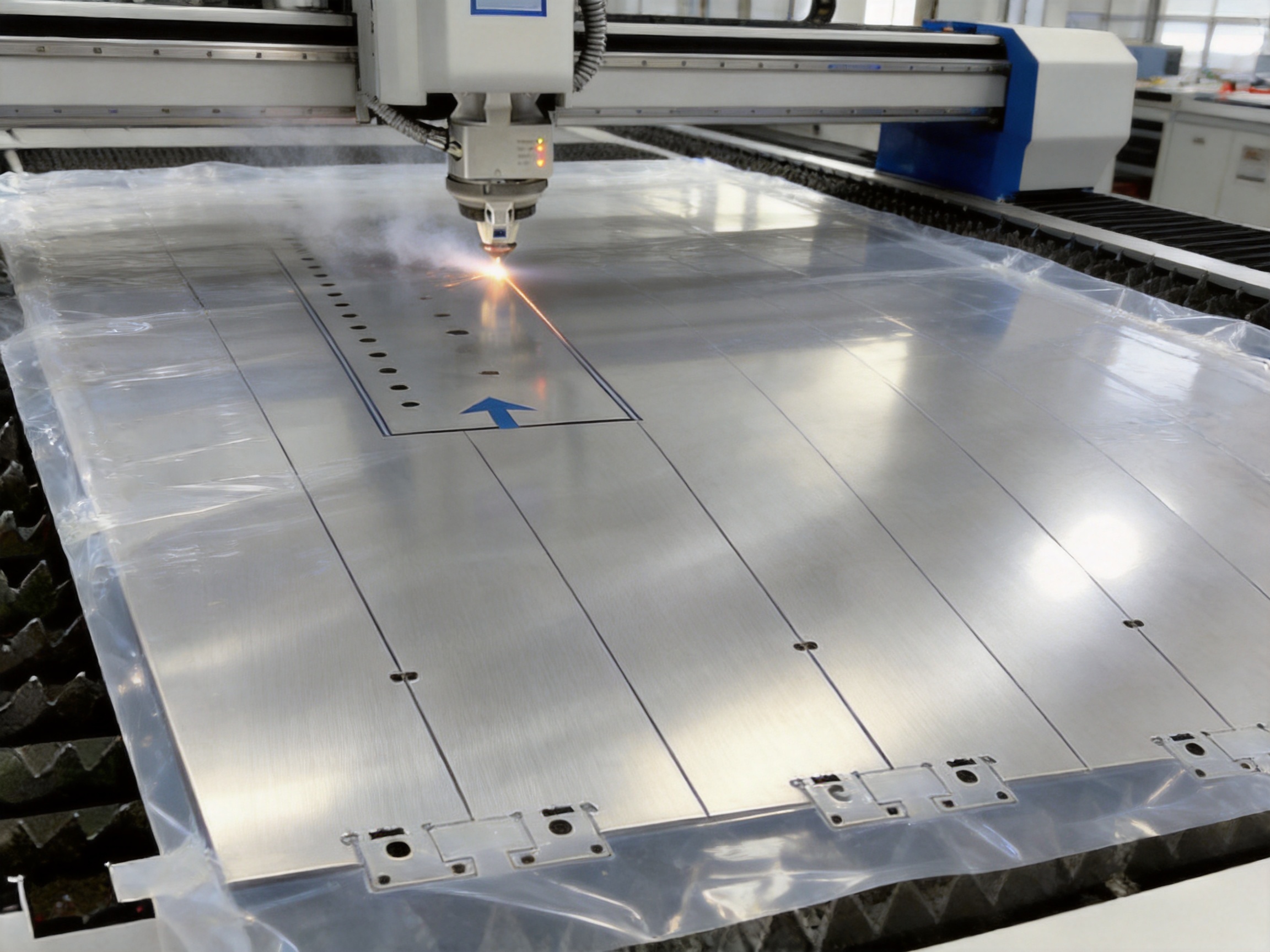
Laser cutting has become one of the most important technologies in modern metal fabrication. It enables manufacturers to process stainless steel, aluminum, galvanized steel, coated panels, and other materials with high speed, accuracy, and flexibility. However, the same process that creates precise contours can also expose valuable surfaces to scratches, dust, heat, handling marks, and contamination. A suitable protective film is therefore essential for maintaining the appearance and performance of finished or semi-finished metal products.
Laser Cutting Protective Film is a specialized self-adhesive film developed for surface protection during laser cutting and related manufacturing operations. It is designed to adhere securely to a metal surface while allowing the laser beam to cut through the protected material with minimal interference. After processing, the film can be removed efficiently, ideally without adhesive residue, surface staining, bubbling, or damage.
The product described in this article uses a specially formulated natural rubber adhesive suitable for both CO2 and fiber laser cutting processes. It combines high cutting quality, controlled adhesion, easy application, reliable removal, and flexible customization. These characteristics make it suitable for stainless steel sheet processing, aluminum fabrication, architectural panels, precision components, and other applications where surface appearance is commercially or technically important.
For buyers, the performance of a laser cutting protective film depends on much more than the film thickness. Adhesive chemistry, coating uniformity, backing-film quality, cutting compatibility, surface cleanliness, storage conditions, and quality control all influence the final result. A manufacturer with integrated production capability can control more of these factors and provide a more consistent product than a supplier that relies entirely on outside processing.
Laser Cutting Protective Film
Laser Cutting Protective Film is a temporary surface protection material applied to a metal sheet or component before cutting, forming, transportation, installation, or other processing. It generally consists of a polymer backing film and a pressure-sensitive adhesive layer. The backing film provides physical protection, while the adhesive keeps the film in position during handling and fabrication.
The film is not intended to become part of the finished product. Its purpose is to protect the original surface until the manufacturing or installation stage is complete. Once the protected component reaches the appropriate processing point, the film can be peeled away by hand or with simple tools, depending on the shape of the product and the adhesion level selected.
In laser cutting applications, the film must be carefully balanced. If adhesion is too low, the film may lift, wrinkle, bubble, or move during cutting. Such movement can affect alignment and may allow dust or cutting by-products to reach the metal surface. If adhesion is too high, removal may become difficult, and the adhesive may leave residue or become harder to separate from the substrate.
A high-quality product must also be compatible with the operating conditions of the cutting machine. CO2 and fiber laser systems use different wavelengths and may generate different heat distributions and cutting behaviors. The film must therefore be selected and formulated according to the process, the metal surface, the laser settings, and the intended cutting pattern.
Metal products can be damaged at many points in the production cycle. Before cutting, sheets may be stacked, moved by cranes, lifted by suction equipment, or placed on worktables. During cutting, small particles, smoke, heat, and mechanical contact may affect the surface. After cutting, components may be sorted, bent, welded, transported, stored, or installed. Each stage creates a possible source of scratching or contamination.
Stainless steel and aluminum are especially sensitive in applications where visual quality is important. Architectural panels, elevator components, kitchen equipment, decorative surfaces, doors, windows, and high-end industrial enclosures may be rejected because of minor marks that do not affect structural performance but reduce appearance value. Reworking or replacing damaged panels can increase production costs and extend delivery times.
Protective film creates a temporary barrier between the metal and the surrounding environment. It can reduce contact with worktables, tools, packaging materials, dust, dirt, and handling equipment. When the film is removed at the correct stage, the original surface remains cleaner and more presentable, reducing the need for polishing, washing, or corrective treatment.
Surface protection is also important for maintaining process efficiency. A protected sheet can move through multiple operations with less risk of cosmetic damage. This allows manufacturers to postpone final cleaning and inspection until the product is closer to delivery. In high-volume manufacturing, that reduction in rework can contribute to better throughput and lower material waste.
The film is formulated for use with both CO2 and fiber laser cutting processes. This broad compatibility helps manufacturers standardize protection across different machines and product lines. It also gives purchasing teams greater flexibility when selecting film for facilities that operate more than one type of laser system.
Actual performance depends on laser power, cutting speed, nozzle height, gas pressure, material type, sheet thickness, and other operating factors. Nevertheless, a film designed specifically for laser processing can provide a more reliable starting point than a general-purpose protective film that has not been developed for laser-related conditions.
One of the major product objectives is to support clean cutting without creating burrs or visible carbon traces on the protected surface. A stable film surface helps maintain consistent contact with the metal and reduces the risk of unwanted movement during the cutting cycle. When the film is properly matched to the machine and substrate, the finished cut can retain a clean appearance.
Clean cutting is particularly valuable when components will be used without extensive post-processing. It can reduce the amount of secondary cleaning and help manufacturers maintain consistent visual standards. It also supports more efficient nesting and production planning because operators spend less time correcting surface-related defects.
Film formulation and coating quality influence the amount of material that may be released during laser cutting. A suitable product is designed to minimize contamination around the laser nozzle and cutting area. Lower contamination can help reduce interruptions for cleaning and inspection while supporting stable machine operation.
No protective film can eliminate the need for proper machine maintenance. Operators should still follow the laser equipment manufacturer’s recommendations for nozzle inspection, lens care, ventilation, and fume extraction. However, a well-engineered film can complement these procedures and help create a cleaner working environment.
Uniform adhesion is essential for protecting a metal surface. The film should remain attached during handling and cutting, but it should not form bubbles, wrinkles, or loose edges. Bubbling can interfere with visual alignment, create uneven contact, and affect how the laser interacts with the film and substrate.
The adhesive system is designed to provide a high adhesion level while supporting practical application and removal. Proper application technique remains important. The metal should be clean, dry, and free from oil, dust, moisture, and loose particles. Applying the film under suitable temperature and pressure conditions helps the adhesive achieve a more consistent bond.
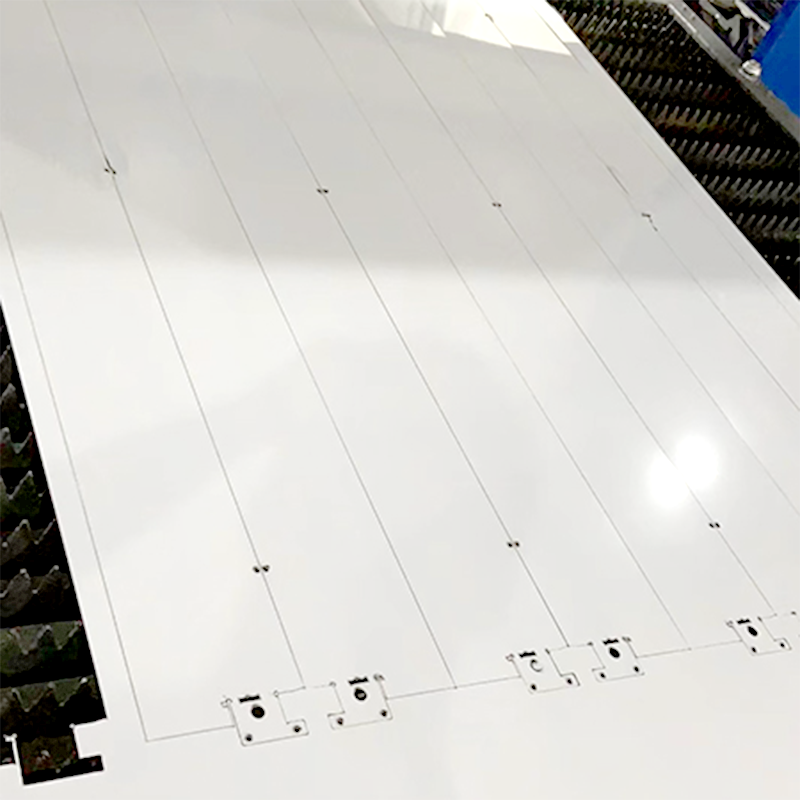
Many metal sheets have a visible grain direction, brushed finish, decorative pattern, or printed design. Correct alignment is important for maintaining a consistent appearance across adjacent panels. The protective film can be positioned to help operators identify and follow the direction of the grain or design during cutting and handling.
Clear alignment also supports accurate nesting. Operators can position shapes according to the material’s visual direction, reducing the possibility of installing panels with inconsistent grain orientation. This is especially useful for stainless steel decorative sheets, brushed aluminum, and other materials where directional appearance is part of the design specification.
The film can be applied to the surface before processing and removed after the appropriate manufacturing or installation stage. Its temporary nature allows manufacturers to protect products throughout production without introducing a permanent coating or treatment.
Clean removal is one of the most important purchasing criteria. When the film is removed correctly and within the recommended service period, it is designed to leave no adhesive residue. This can reduce cleaning labor and help prevent the use of aggressive solvents that might damage coatings or finishes.
Available film colors include black and grey, black and white, and other combinations according to customer requirements. Color selection can support product identification, process separation, and brand or project organization. Different colors may be assigned to different surfaces, material grades, production lines, or removal stages.
Printing is available in zero to three colors. Printed information can include handling instructions, process reminders, batch identification, directional marks, or customer-specific graphics. Printing should remain clear and stable during application and cutting without interfering with the protective function of the film.
The following specifications represent the available product range. Exact values and configurations can be discussed according to the metal surface, laser process, application method, and customer requirements.
| Specification | Available Range or Description |
| Film thickness | 70 micrometers to 110 micrometers |
| Film width | 500 millimeters to 1,500 millimeters |
| Roll length | 100 meters to 2,000 meters |
| Elongation | At least 300 percent |
| Adhesion level | Very high, subject to application requirements |
| Adhesive type | Natural rubber |
| Color availability | Black and grey, black and white, and other options |
| Printing | Zero to three colors |
| UV resistance | Approximately three to six months, depending on conditions |
| Primary laser compatibility | CO2 and fiber laser cutting processes |
Thickness selection should be based on the expected handling conditions, substrate texture, level of abrasion, and required flexibility. A thinner film may be suitable for smooth surfaces and lighter handling, while a thicker film may provide increased physical protection for demanding applications. The appropriate choice should balance protection, conformability, cutting behavior, and cost.
Width and roll length can be selected according to the dimensions of the sheets and the equipment used for application. Wider rolls can reduce the number of overlaps on large panels, while shorter rolls may be more convenient for smaller production batches or specialized applications. Custom slitting and rewinding can help match the product to the customer’s production equipment.
Elongation of at least 300 percent provides flexibility during application and handling. This characteristic can be useful when the film must follow moderate curves, corners, or irregular profiles. Operators should avoid excessive stretching because over-tension can create shrinkage, wrinkles, or uneven adhesive contact after application.
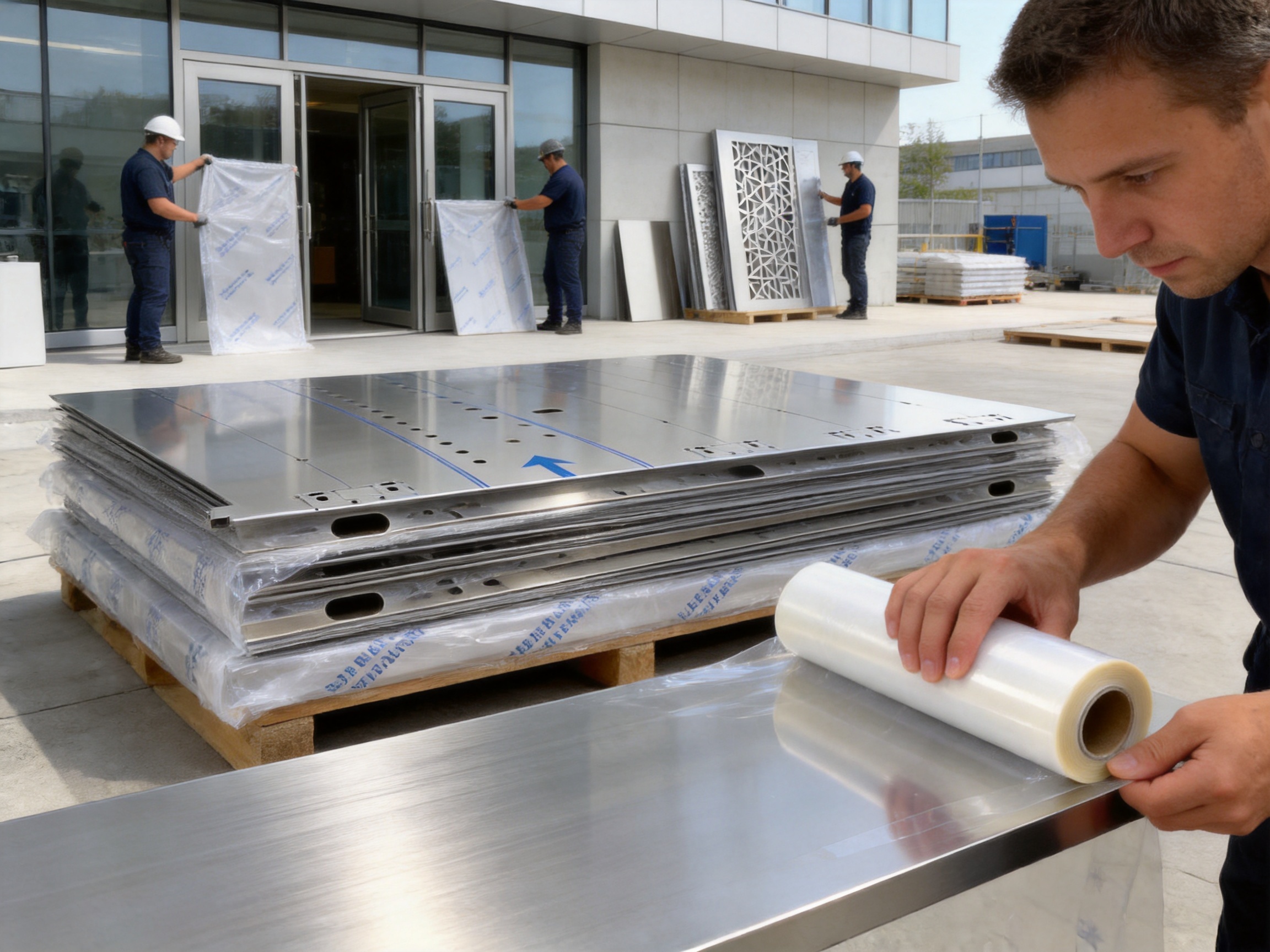
Stainless steel sheets are widely used in architectural, commercial, industrial, and consumer products. Their reflective and decorative surfaces can show scratches very easily. During laser cutting, stamping, bending, and transportation, a protective film can help preserve the finish and reduce the risk of visible marks.
The product is suitable for applications involving brushed, polished, and other commonly processed stainless steel surfaces, provided that the adhesive level is matched to the finish. It can protect sheets used for elevator panels, kitchen equipment, commercial furniture, wall cladding, machinery housings, and decorative metalwork.
Aluminum alloy profiles and panels are often processed through cutting, drilling, bending, assembly, and installation. They may be exposed to dust, tools, handling equipment, and contact with other building materials. Protective film helps keep the visible surface cleaner throughout these stages.
For doors and windows, the film can remain in place during transportation and installation, allowing workers to complete construction activities without directly contacting the finished surface. It can then be removed before final inspection or handover. This approach is particularly useful in projects where multiple trades are working in the same area.
Decorative metal panels require consistent appearance across large areas. Scratches, dirt, and inconsistent grain direction can become highly visible after installation. Protective film can assist with surface preservation, panel identification, and directional alignment from fabrication through installation.
Printed film may also help distinguish front surfaces from back surfaces or identify panels belonging to a specific project area. When used with proper installation procedures, it can reduce the risk of accidental damage during site handling.
Precision components often have close dimensional tolerances and carefully finished surfaces. Even when a scratch does not affect the dimensions, it may affect corrosion resistance, appearance, sealing performance, or customer acceptance. A protective film can provide a temporary barrier during machining support operations, sorting, packaging, and transportation.
Because precision components may have complex shapes, the film should be evaluated for conformability, edge adhesion, and clean removal. Testing on representative samples is recommended before full production use.
Pre-coated metal sheets and composite panels may contain painted, laminated, or decorative surfaces that require protection from abrasion. The adhesive must be compatible with the coating and should not cause gloss change, staining, lifting, or transfer after removal.
For these applications, the film selection process should include an adhesion test, aging test, and removal test. The results may vary depending on coating formulation, surface energy, storage temperature, and exposure duration.
General-purpose protective films may be adequate for simple transportation protection, but laser cutting introduces additional requirements. The material must remain stable near the cutting path, support accurate positioning, and avoid causing excessive contamination or visible cutting defects. A film designed for laser cutting is more likely to address these process-specific challenges.
Compared with a low-adhesion film, the product offers stronger resistance to lifting and movement during handling. This is important when sheets are transferred between storage racks, cutting tables, and downstream equipment. A more secure bond can also reduce the chance of dust entering beneath the film.
Compared with an excessively aggressive adhesive film, the optimized natural rubber adhesive is intended to provide a practical balance between holding power and removability. This balance helps protect the surface without making removal unnecessarily labor-intensive. It can also reduce the likelihood of residue when the product is used within its recommended conditions.
Compared with films without printing or color control, customized color and printing options can improve production organization. Clear identification may reduce operator errors, support batch traceability, and help customers apply different protection strategies to different materials.
Compared with products supplied only in standard sizes, the available width, length, slitting, and printing options provide greater flexibility. Customers can select rolls that fit their application equipment and production scale, potentially reducing material waste and handling time.
Performance should always be judged through practical testing rather than marketing claims alone. Surface type, coating condition, temperature, storage period, laser parameters, and removal timing all affect results. A responsible supplier should support sample evaluation and technical communication before large-scale orders.
The production process begins with the selection of suitable backing-film and adhesive materials. The backing film must offer adequate tensile strength, flexibility, elongation, dimensional stability, and resistance to handling damage. The adhesive must provide the required adhesion profile and remain compatible with the intended surface.
Material selection is influenced by the application. A smooth stainless steel sheet may require a different adhesive balance from a textured aluminum panel or a coated composite board. The manufacturer’s technical team can review the customer’s substrate, processing conditions, storage period, and removal requirements before recommending a configuration.
Before coating, the backing film is prepared through controlled handling, cleaning, and inspection. The material must be free from dust, moisture, oil, and other contaminants that could affect coating uniformity. Stable material tension is also important because uneven tension may cause wrinkles or dimensional variation during later processing.
Film properties are monitored to ensure that the material can withstand winding, slitting, application, and removal. A consistent backing film supports stable adhesive coating and helps the finished roll unwind smoothly.
The natural rubber adhesive is specially formulated for the requirements of laser cutting protection. Formulation work involves selecting raw materials and adjusting the adhesive to achieve the desired balance of adhesion, tack, cohesion, flexibility, and removability.
An adhesive with insufficient cohesion may transfer or leave residue. An adhesive with excessive cohesion may be difficult to remove or may damage a sensitive coating. The formulation must therefore be evaluated against the actual surface and service conditions rather than treated as a universal solution for every substrate.
After preparation, the adhesive is applied to the backing film using controlled coating equipment. Coating weight, speed, temperature, viscosity, and drying conditions must be monitored carefully. Uniform coating is critical because variations can create areas of weak adhesion, excessive adhesion, bubbles, streaks, or inconsistent removal.
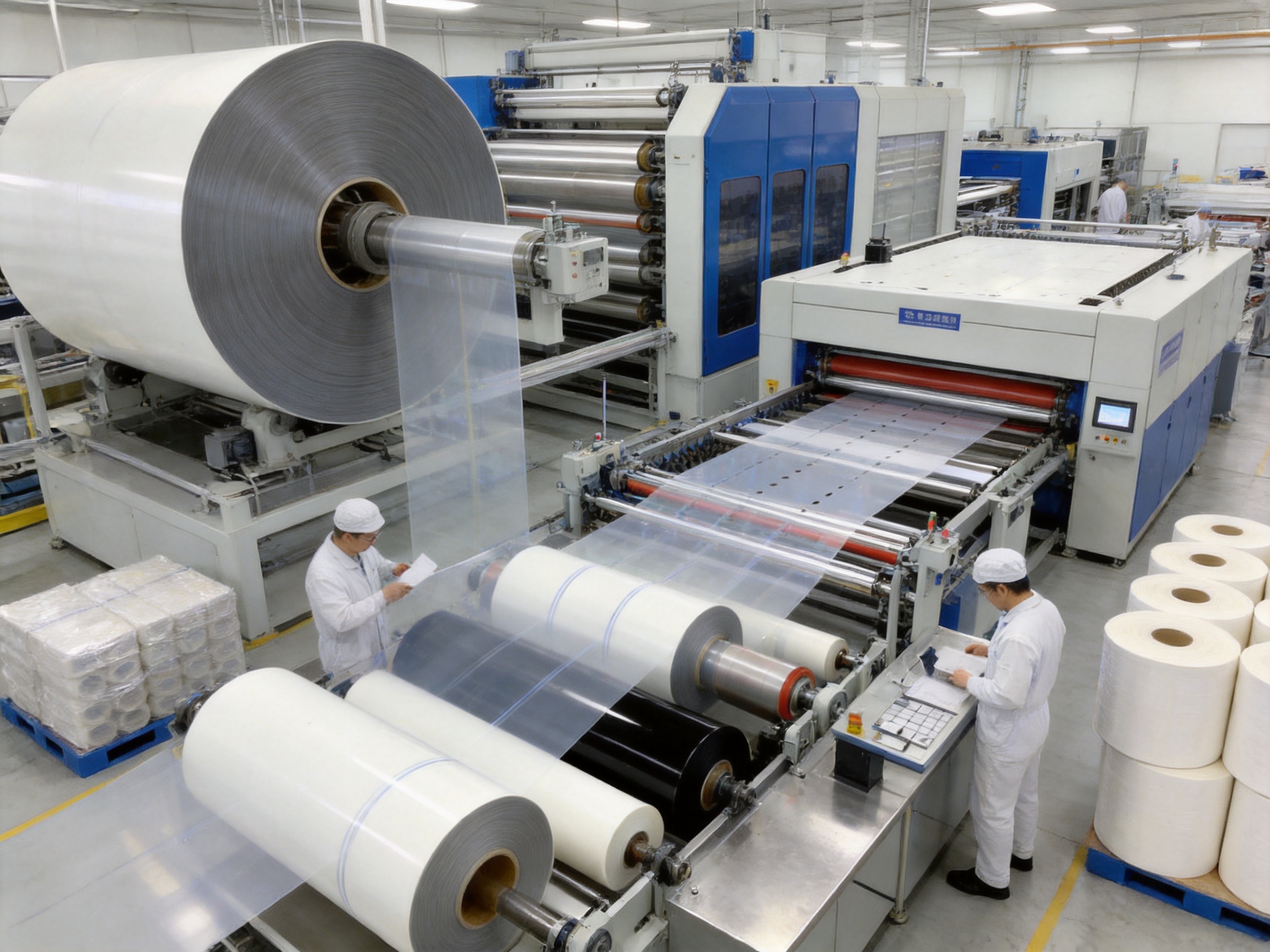
Advanced production equipment supports better control of these variables. The manufacturer’s integrated factory processes include backing-film production, adhesive coating, logo printing, rewinding, slitting, and packaging. Controlling these stages within one production system can reduce handover risks and improve batch consistency.
After coating, the adhesive layer undergoes drying or stabilization under controlled conditions. This stage helps remove volatile components and allows the adhesive to develop its intended physical properties. Temperature and residence time must be managed carefully to avoid under-drying, over-drying, uneven bonding, or backing-film deformation.
The finished adhesive film may then require a conditioning period before final conversion. This allows the material to stabilize and supports more reliable testing. Storage conditions should be controlled because extreme heat, cold, humidity, or direct sunlight may affect adhesive performance.
When printing is required, the film is processed with customer-approved graphics, text, or identification marks. Printing can be completed in up to three colors. Registration, ink adhesion, legibility, and resistance to handling are checked during production.
Printed information should be designed so that it does not obstruct important visual areas or interfere with application. It may communicate product direction, usage instructions, customer identification, or production information.
Large master rolls are rewound and slit into customer-specified widths. This process requires careful control of web tension, roll hardness, edge quality, and winding alignment. Poorly converted rolls may telescope, wrinkle, unwind unevenly, or create application problems.
Accurate slitting helps the film fit automated or semi-automated application systems. It also ensures that roll dimensions correspond with customer equipment and packaging requirements. Finished rolls are inspected for edge damage, telescoping, contamination, and other visible defects.
After inspection, the rolls are packaged to prevent dust, moisture, impact, and deformation during storage and transportation. Packaging materials should be durable and suitable for the weight and dimensions of the rolls. Product labels can include specifications, batch information, roll length, width, color, and customer identification.
Before shipment, finished goods are checked again to confirm that the order matches the customer’s requirements. Proper packaging is especially important for export shipments, where products may experience extended transit, changes in temperature, and multiple handling operations.
Quality control should cover raw materials, production conditions, finished rolls, and application performance. A film that meets a thickness specification but fails during removal is not suitable for the intended use. For this reason, technical assessment should consider both measurable physical properties and practical performance on representative substrates.
Film thickness is checked to confirm that it falls within the specified range. Width, roll length, edge quality, and winding condition are also inspected. Stable dimensions help customers maintain predictable application and reduce production interruptions.
Adhesion testing evaluates the force required to remove the film from a selected substrate under defined conditions. Results can vary according to surface finish, temperature, dwell time, and removal angle. Testing should therefore use the customer’s actual metal or coating whenever possible.
A high adhesion level is valuable for demanding handling, but it must remain compatible with clean removal. The target is not simply the strongest possible bond; it is the most suitable bond for the complete manufacturing cycle.
After the film is removed, the surface is examined for adhesive residue, staining, gloss change, discoloration, coating transfer, and other effects. Testing may be performed after different aging periods to understand how performance changes over time.
Customers should communicate their expected maximum application duration. A film used for a few days in an indoor factory may have different requirements from one used for several months on a construction site.
Laser compatibility should be evaluated on the intended metal grade and thickness using the customer’s machine parameters. The assessment may include cut quality, burr formation, carbon traces, smoke generation, nozzle contamination, edge lifting, and film removal after cutting.
These tests help identify the correct combination of film, laser power, cutting speed, assist gas, and application method. They also reveal whether a different film thickness or adhesive level is needed for a particular production line.
Before application, inspect the metal surface and confirm that it is dry, clean, and free of loose particles. Oil, coolant, dust, and fingerprints may reduce adhesion or create trapped contaminants beneath the film. If cleaning is required, use a method compatible with the substrate and coating.
Confirm that the film roll is undamaged and that the width is suitable for the sheet. The application area should be reasonably clean and maintained at a suitable temperature. Extremely cold or hot conditions may affect adhesive tack and film handling.
Align the film with the sheet edge, grain direction, or design orientation. Apply the film gradually rather than dropping the entire roll onto the surface at once. Use a suitable roller or squeegee to press the film evenly and remove air pockets as the film advances.
Maintain moderate and consistent tension. Excessive stretching can cause the film to contract later or create stress at the edges. Insufficient control can create wrinkles or folds. Operators should pay special attention to corners, narrow strips, cutouts, and edges where lifting is more likely.
After application, inspect the surface for bubbles, wrinkles, open edges, contamination, and alignment errors. Any major defect should be corrected before laser processing. If the film is applied incorrectly, removing and replacing it may be better than allowing a defective layer to proceed through production.
During laser cutting, use the machine settings and operating procedures established through testing. Observe the first pieces from a new film batch or a new material grade. Check the cutting area, nozzle condition, film stability, and finished surface before continuing at full production speed.
For removal, begin at an accessible corner or edge and peel the film at a controlled angle. Avoid sudden pulling if the substrate or coating is sensitive. Remove the film within the recommended period, especially where the product is exposed to ultraviolet light, heat, moisture, or outdoor conditions.
Protective film should be stored in a clean, dry, and ventilated environment. Rolls should remain in their original packaging until they are needed. They should be protected from direct sunlight, excessive heat, condensation, and contact with chemicals.
Rolls should be stored horizontally or in the orientation recommended by the supplier, with adequate support to prevent deformation. Heavy objects should not be placed on top of the rolls. During handling, avoid dropping, dragging, or striking the roll edges.
The listed UV resistance is approximately three to six months, depending on exposure conditions. This period should not be interpreted as a universal outdoor guarantee. Solar intensity, climate, temperature, humidity, substrate temperature, and film color can all affect service life.
Where the film will remain outdoors or in a high-temperature environment, customers should request application-specific testing. They should also define the expected removal date and establish an inspection schedule for edges, bubbles, discoloration, and adhesion changes.
Wuxi Qida Tape Co., Ltd. is a factory specializing in the development, production, and marketing of protective films and surface protection solutions. Its product range is designed for stainless steel, aluminum, pre-coated metal, plastic panels, ceramic, carpets, decorative laminates, glass, and other surfaces that require temporary protection from scratches, marks, damage, and dirt.
The company’s integrated production model includes backing-film production, adhesive coating, logo printing, rewinding, slitting, and packaging. Completing these processes within its own factory gives the manufacturer stronger control over product consistency, production scheduling, customization, and quality inspection.
The company has introduced advanced machinery from Germany and operates under ISO 9001 and ISO 14001 management systems. Its production and quality teams include experienced technicians and engineers who work with research and development institutes to improve product performance and develop new protective-film solutions.
In-house production can provide several advantages to buyers. First, it supports better control of raw-material compatibility and coating parameters. Second, it enables more direct communication between technical personnel and customers. Third, it facilitates custom widths, colors, printing, adhesive options, and packaging. Finally, it can improve response speed when customers require specification changes or repeat orders.
The company offers acrylic water adhesive, acrylic solvent adhesive, and natural rubber adhesive systems. This range allows engineers to recommend different adhesive technologies according to surface type, environmental conditions, application duration, and removal requirements. The natural rubber adhesive used for this laser cutting film is selected for its strong adhesion and compatibility with the target laser processes.
Qida Tape has a factory area of approximately 20,000 square meters, more than 95 experienced employees, and an annual production capacity exceeding 12,000 tons. Its products are supplied throughout China and exported to Europe, North America, Australia, the Middle East, Japan, and other regions. The company serves customers in approximately 90 export areas.
A dedicated testing laboratory and inspection equipment support product evaluation during manufacturing. Quality and compliance references include ISO 9001, ISO 14001, SGS, RoHS, REACH, PFAS, and Prop 65 testing. These systems and evaluations can help international buyers assess supplier reliability and regulatory readiness.
The company also supports OEM and ODM requirements. Customers may provide technical data sheets, drawings, samples, or application descriptions for evaluation. Engineers can then help select an appropriate film structure or develop a customized solution. Customization may include thickness, width, roll length, color, printing, adhesive type, packaging, and production labeling.
Different customers have different requirements for metal surface protection. A sheet processor may prioritize laser cutting quality and clean removal. A building-material manufacturer may require long application time and strong resistance to handling. A distributor may need private-label printing and standardized packaging. Customization allows the product to be aligned with these specific needs.
Thickness can be selected within the available 70 to 110 micrometer range. Width can be produced from 500 to 1,500 millimeters, and roll length can range from 100 to 2,000 meters. These options allow customers to balance application efficiency, storage capacity, and purchasing frequency.
Color and printing can be used for product differentiation and process control. A customer may request a particular color combination, logo, warning message, directional mark, or packaging label. Artwork should be reviewed before production to confirm print clarity, registration, and production feasibility.
Adhesive selection should be based on technical evidence. Important questions include the type of metal, surface finish, coating chemistry, expected dwell time, removal conditions, indoor or outdoor use, and exposure to heat or ultraviolet light. Sample testing is recommended before approving a large order.
Begin by identifying the substrate. Stainless steel, aluminum, painted metal, galvanized steel, and composite materials may require different adhesive behaviors. Surface roughness, gloss, coating type, and cleanliness all influence film performance.
Next, identify the laser process. Record whether the equipment uses CO2 or fiber technology, and note the typical power, cutting speed, gas type, sheet thickness, and nesting pattern. These details help the supplier recommend a suitable film and establish realistic test conditions.
Then define the protection period. A film intended for same-day processing may not require the same aging resistance as one that remains on a product during international transportation or building installation. UV exposure and temperature should be considered where the product will be stored outdoors.
Application equipment is another important factor. Manual application may require a film with easy handling and good conformability. Automated application may require precise roll dimensions, stable winding, and consistent release behavior. The roll core, outer diameter, width tolerance, and packaging format should match the customer’s equipment.
Finally, evaluate the complete cost rather than only the price per roll. A lower-priced film may create additional costs through bubbles, rework, residue, nozzle cleaning, surface rejection, or slow removal. A more consistent film can provide better overall value when labor, downtime, and quality risks are included.
Temporary protective film contributes to manufacturing efficiency by reducing damage and rework, but responsible use also requires attention to material management. Customers should plan for collection, storage, and disposal of used film according to local regulations and the composition of the product.
Environmental management is part of the manufacturer’s broader production approach. The company operates under ISO 14001 environmental management requirements and provides product compliance references including RoHS, REACH, PFAS, and Prop 65 testing. Specific documentation should be requested according to the destination market and application.
Buyers should confirm whether the film contains restricted substances relevant to their industry. They should also ask about packaging materials, printing inks, adhesive composition, and available compliance statements. Clear documentation helps companies meet internal purchasing standards and customer requirements.
Metal service centers can use protective film to maintain the condition of sheets while offering cutting, bending, and finishing services. Protection helps reduce customer complaints related to appearance and supports the delivery of ready-to-use panels.
Laser cutting contractors benefit from a film that supports stable machine operation and clean component presentation. Standardized film specifications can simplify purchasing and operator training across multiple machines.
Architectural manufacturers can protect decorative surfaces from fabrication through installation. Color coding and printing can help organize project materials and reduce confusion between panels with different finishes or orientations.
Distributors can offer a wider range of widths, colors, printing options, and adhesive configurations. OEM and ODM capability also allows distributors to develop private-label programs or application-specific product lines.
International buyers need reliable specifications, stable packaging, technical support, and compliance information. A factory with established production capacity and experience in export markets can help reduce supply risks and support repeat orders.
The film is developed for both CO2 and fiber laser cutting processes. The final selection should be validated on the customer’s specific machine, metal grade, sheet thickness, and operating parameters.
Yes. It is suitable for many stainless steel sheet protection applications, including cutting, handling, bending, storage, and transportation. A sample test is recommended for unusual finishes or coated surfaces.
Yes. The film can be considered for aluminum sheets, panels, doors, windows, and related products. Adhesion should be tested because aluminum surface condition and coating type can vary significantly.
The film is designed to be removed without leaving adhesive residue when applied and removed under suitable conditions. Removal timing, temperature, surface chemistry, UV exposure, and storage duration can affect results.
Available thicknesses range from approximately 70 micrometers to 110 micrometers. The best thickness depends on the required physical protection, handling conditions, surface type, and laser process.
Widths range from approximately 500 millimeters to 1,500 millimeters, while roll lengths range from 100 meters to 2,000 meters. Customized slitting and rewinding can be discussed according to production requirements.
Yes. Printing is available in up to three colors. Customers can discuss logos, instructions, directional marks, identification information, and other artwork requirements.
Common options include black and grey and black and white. Other color combinations may be available for customized orders, subject to production and artwork review.
The listed UV resistance is approximately three to six months, depending on exposure conditions. Customers requiring outdoor or long-term use should request specific testing and follow recommended storage and removal procedures.
The surface should be clean, dry, and free from dust, oil, moisture, and loose particles. Proper preparation helps prevent bubbles, weak adhesion, edge lifting, and contamination beneath the film.
The film has high elongation and can accommodate moderate curves and irregular profiles. Application technique is important, and complex shapes should be evaluated with samples before production use.
Yes. The manufacturer can develop or customize products according to customer samples, technical data sheets, specifications, printing requirements, and packaging instructions.
The company offers acrylic water adhesive, acrylic solvent adhesive, and natural rubber adhesive systems. The laser cutting product uses a specially formulated natural rubber adhesive for the intended application.
The company operates under ISO 9001 and ISO 14001 management systems. Its product and compliance references include SGS, RoHS, REACH, PFAS, and Prop 65 testing. Specific documents should be confirmed for each order and destination market.
A buyer should provide information about the substrate, surface finish, laser type, sheet thickness, machine parameters, expected application period, application method, and removal conditions. The supplier can then recommend samples for practical testing.
Laser Cutting Protective Film is an important production aid for manufacturers that need to preserve the appearance and condition of metal surfaces during laser cutting and subsequent handling. Its value comes from the combination of stable adhesion, clean cutting performance, low nozzle contamination, easy alignment, flexible film construction, and clean removal.
The product is available in a broad range of thicknesses, widths, roll lengths, colors, and printing configurations. Its natural rubber adhesive is formulated for CO2 and fiber laser processes, while its high elongation supports practical application on a variety of metal products and profiles.
Compared with general-purpose films, a laser-processing film is designed around the specific challenges of laser cutting. It can help reduce scratches, bubbles, movement, cutting-related contamination, and surface rework when correctly matched to the substrate and machine conditions.
Manufacturing strength is equally important. Integrated production, advanced equipment, in-house coating and converting, testing capability, technical personnel, customization support, and international compliance experience give Wuxi Qida Tape Co., Ltd. the foundation to serve both standard and application-specific requirements.
For the best results, buyers should evaluate samples on their actual metal surfaces and laser equipment. When film selection, application, cutting, storage, and removal are managed as one complete process, protective film can improve product quality, reduce handling risks, and support more efficient manufacturing from the factory floor to the final installation.
1. Wuxi Qida Tape Co., Ltd. Product specification information for Laser Cutting Protective Film.
2. Wuxi Qida Tape Co., Ltd. Company information regarding protective-film manufacturing, adhesive systems, customization, and quality management.
3. ISO 9001, Quality Management Systems: General principles for production consistency and continual improvement.
4. ISO 14001, Environmental Management Systems: General framework for environmental management in manufacturing organizations.
5. General technical guidance for pressure-sensitive adhesive testing, including peel adhesion, residue evaluation, and substrate compatibility.
6. General manufacturing guidance for CO2 and fiber laser cutting of stainless steel, aluminum, and coated metal sheets.
7. General principles of temporary surface protection for metal products during processing, storage, transportation, and installation.
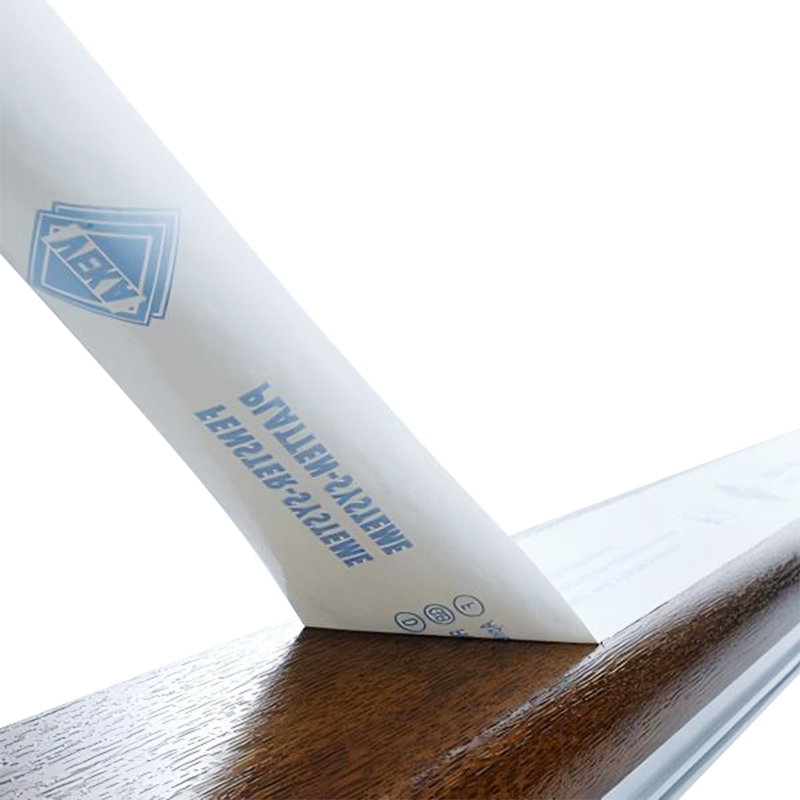
● Good weatherability for outdoor exposure; ● Stable adhesion level; ● UV resistance for up to 12 months; ● Can print customized logo or application i...
See Details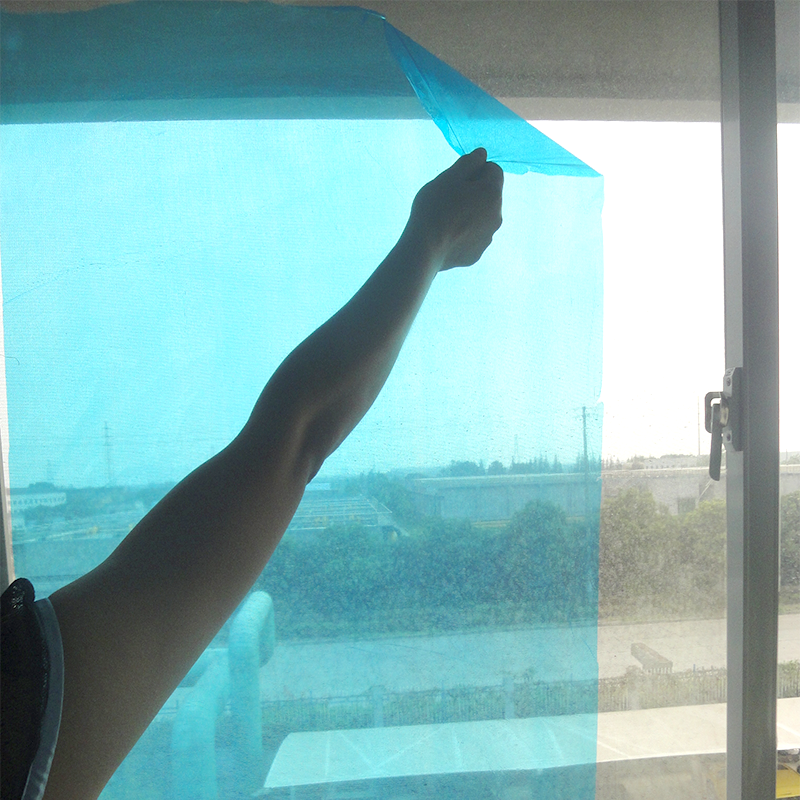
● Protect window glass against paint splatters, dirt, staining, and spillages during painting, building, plastering, tiling, general maintenance and r...
See Details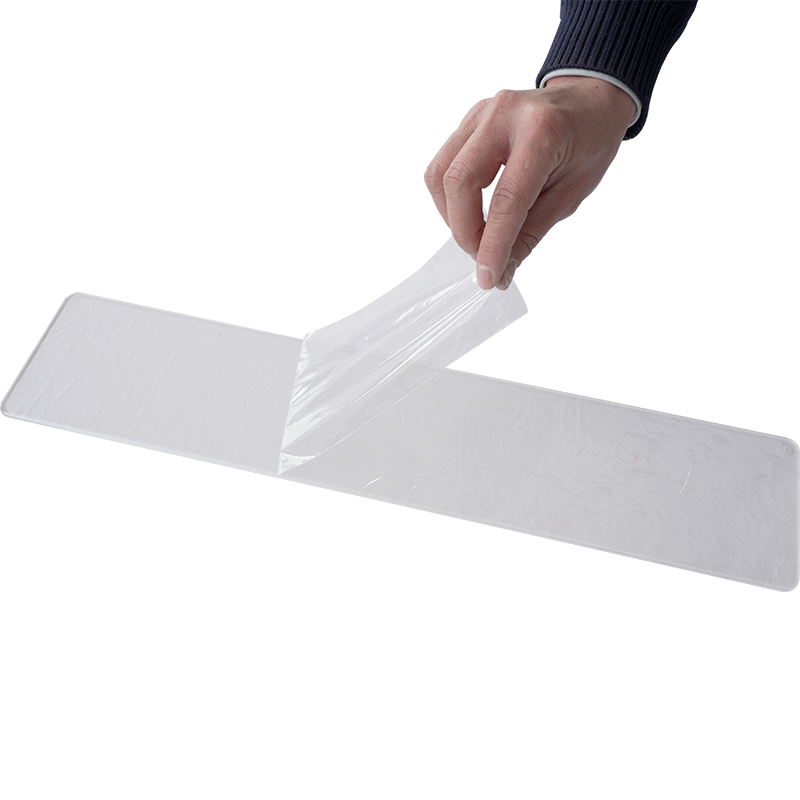
● No “ghost shadow” or “fish eye” after removal; ● Low gel content, soft and stable adhesion plus easy-peel removal with no surface damage or curling;...
See Details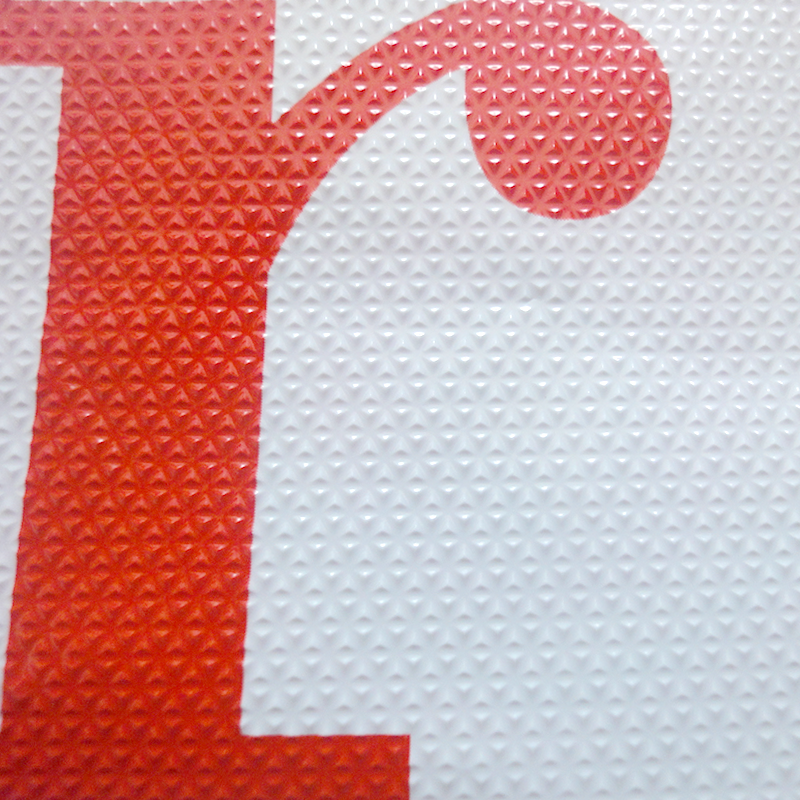
● Anti-slip; ● Embossed film surface to guarantee trip safety;● Tough puncture-resistant polyethylene film;● Can be coated with or without adhesive;● ...
See Details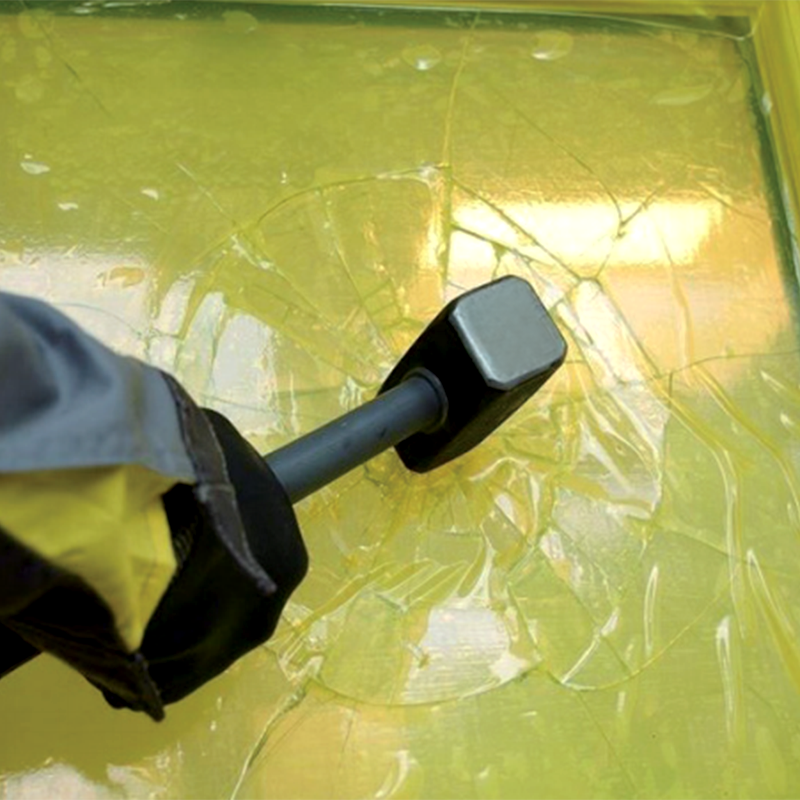
● The super tough polyethylene film with super high adhesion can stop the glass splitting and falling off during window glass demolition process;● Non...
See Details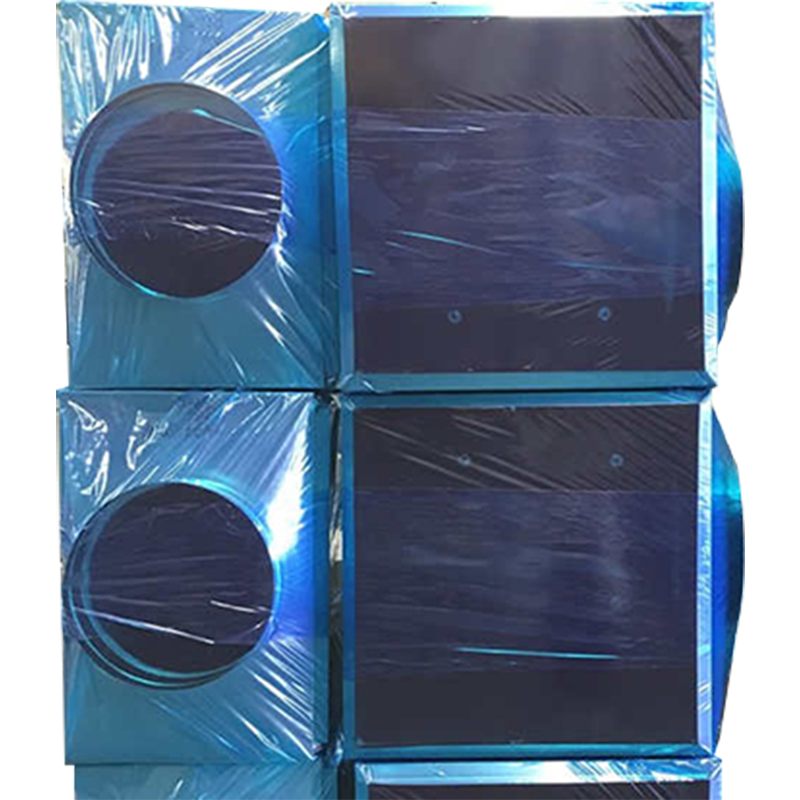
● The super-tough polyethylene film resists puncture and penetration by liquid and dirt during storage, transportation, and installation of the ductwo...
See Details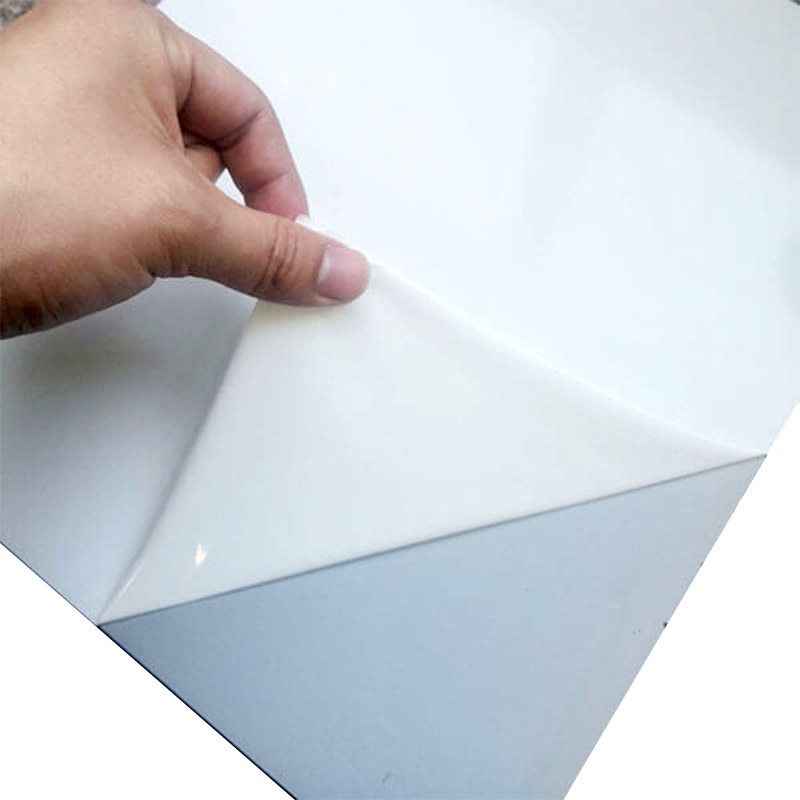
● The super tough polyethylene film with super high adhesion can stop parts of the glass or mirror from splintering away and injuring people when it i...
See Details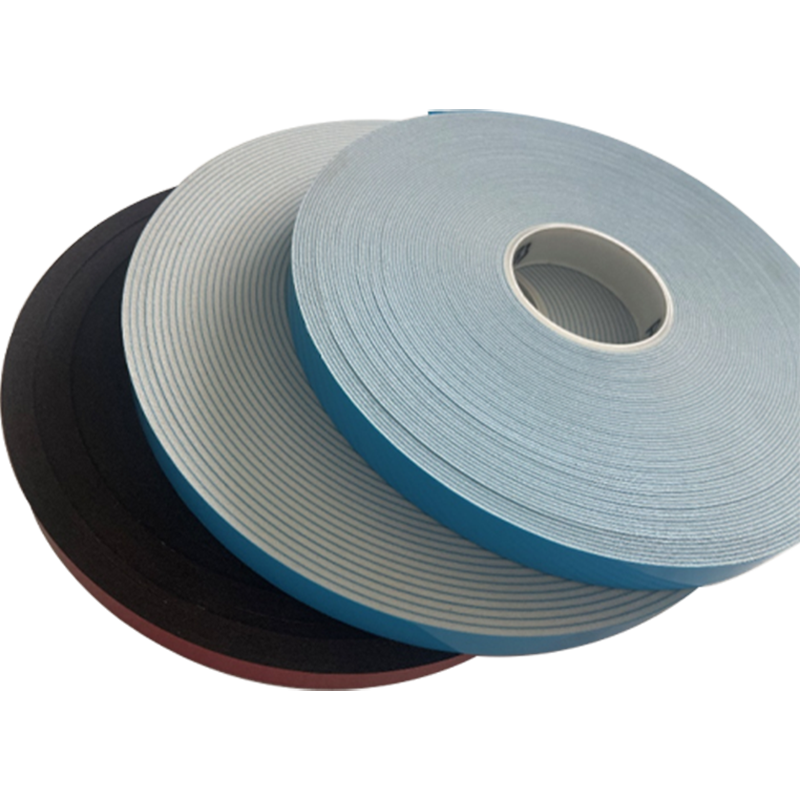
● Waterproof - the desirable material for waterproofing. ● Dust-proof - positive performance of dust prevention.● Low resilience - prevent the deforma...
See Details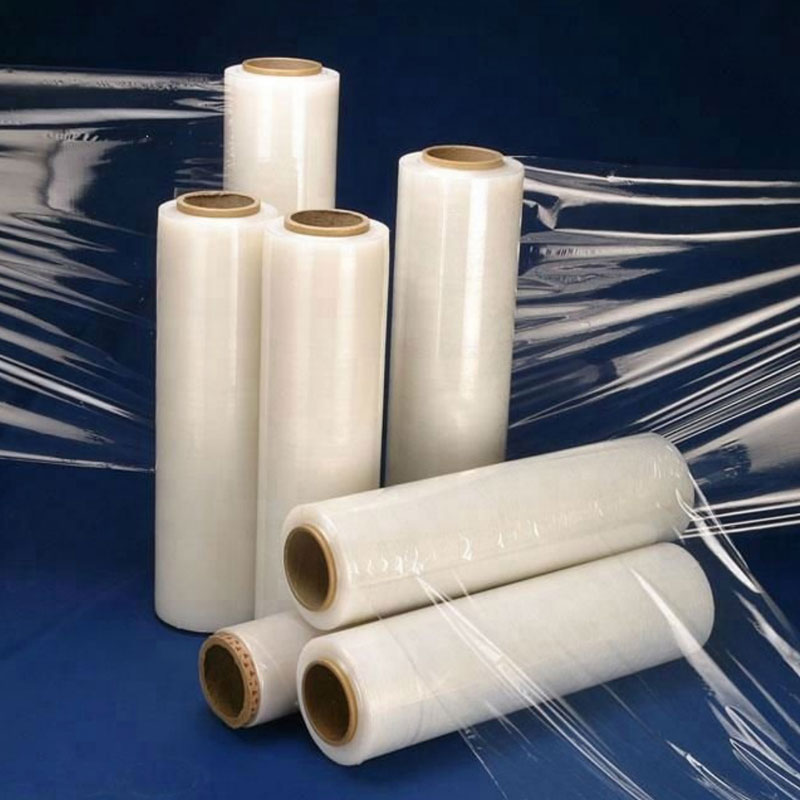
● Small roll size for convenient manual application;● Excellent puncture and tear resistance ; ● A self-adhering-each layer of film bonds to the next ...
See Details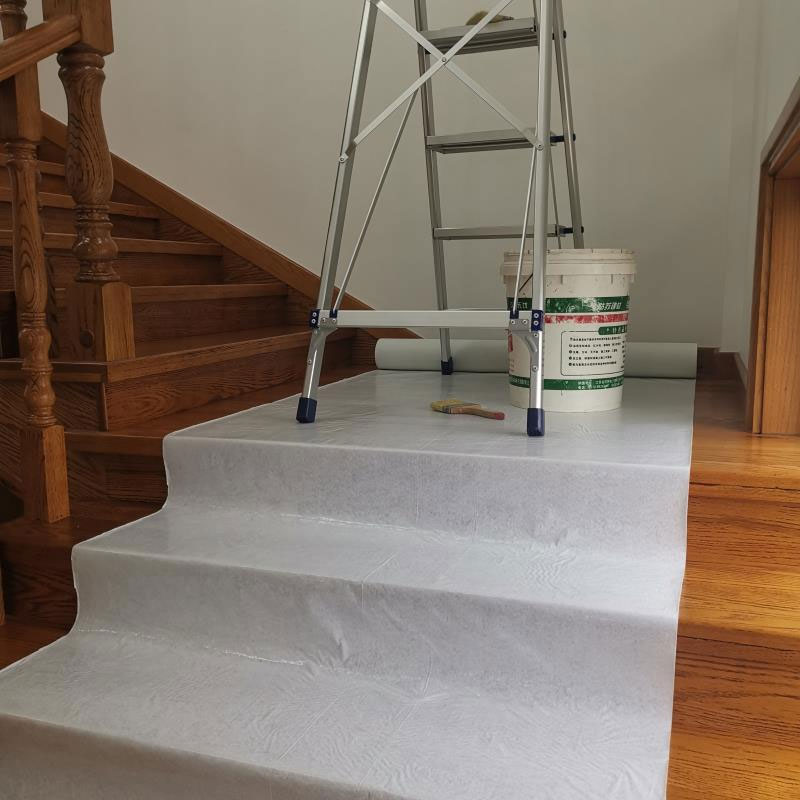
This product has non-woven synthetic fleece in middle; Breathable PE film adhered onto top of the non-woven fabric, which is coated with self adhesive...
See DetailsWe’re a reliable partner that shapes our expertise into success for your project.

Copyright 2024 Wuxi Qida Tape Co., Ltd. All Rights Reserved
 Wholesale Protective Film/Foil Manufacturers
Privacy
Wholesale Protective Film/Foil Manufacturers
Privacy