

 English

 English
 русский
 Français
 Español
 Português
 عربى


Cat:Glue -coated Protective Film
● No “ghost shadow” or “fish eye” after removal; ● Low gel content, soft and stable adhesion plus easy-peel removal with no surface damage or curling;...
See Details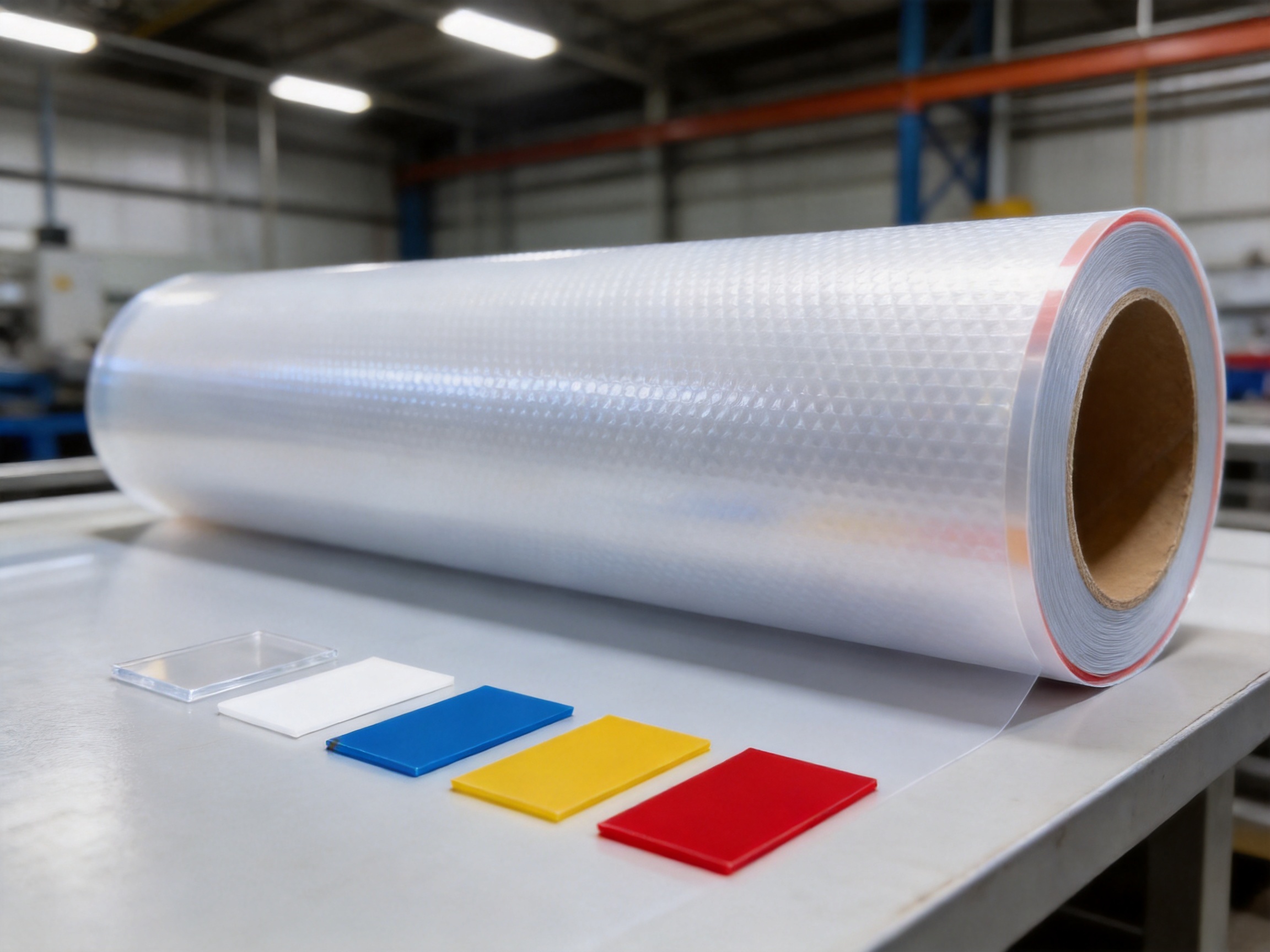
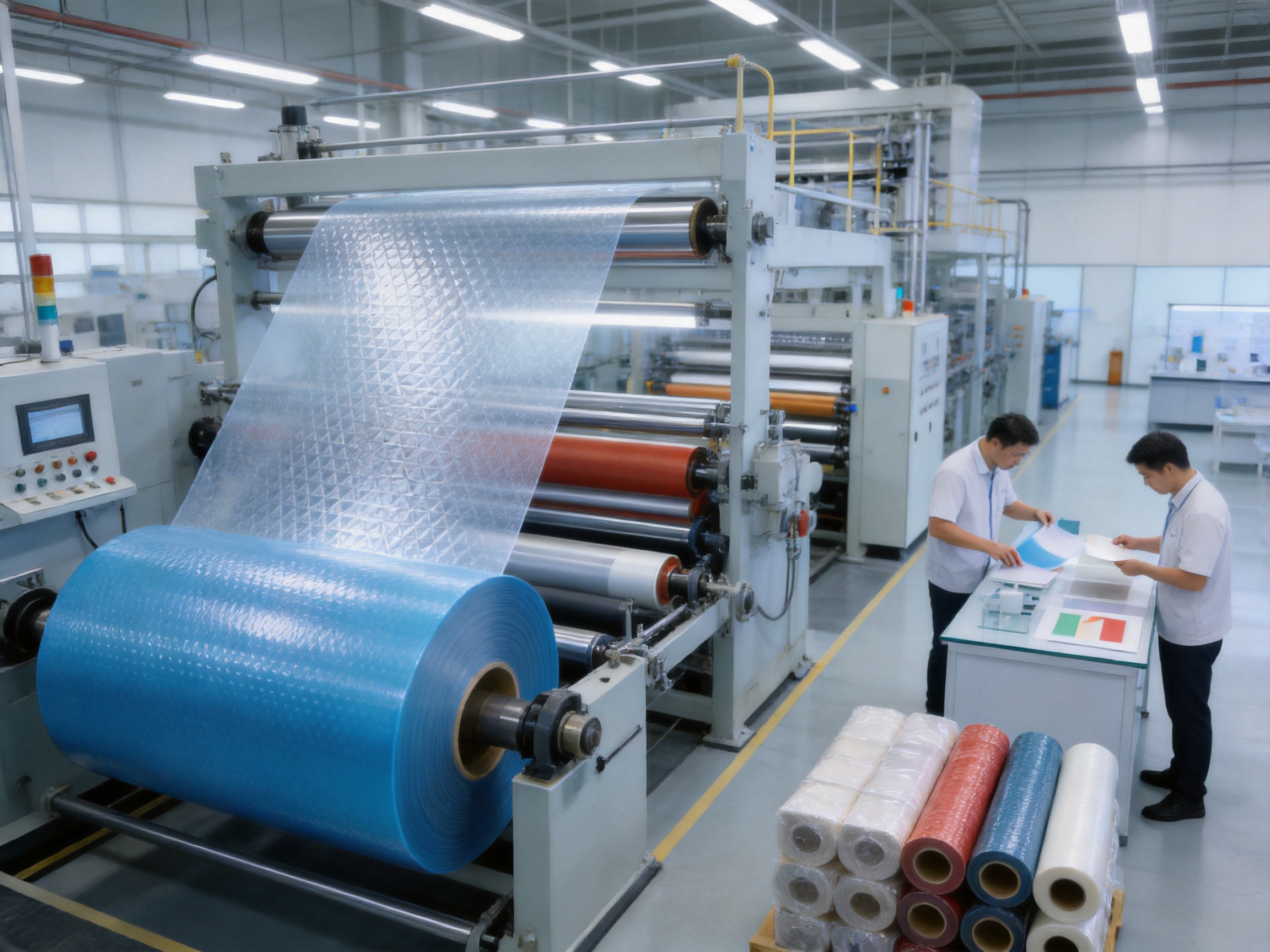
Anti-slip embossed protective film is a specialized polyethylene film designed to protect surfaces while also improving safety during handling, installation, transportation, and temporary use. Unlike smooth protective films that primarily create a barrier against scratches, dust, stains, and light impact, this product combines surface protection with a textured, anti-slip finish. The embossed surface helps provide better traction and can reduce the risk of slipping when the film is applied to suitable floors, steps, platforms, panels, work areas, and other surfaces requiring temporary protection.
The product is manufactured in tough, puncture-resistant polyethylene and can be supplied with or without an adhesive coating. This flexibility allows users to select a version according to the application, surface type, installation period, required holding power, and removal conditions. Adhesive options range from low adhesion to super-high adhesion, while acrylic adhesive technology supports dependable bonding and clean removal when the correct grade is selected and the film is installed properly.
For industrial users, contractors, distributors, fabricators, and project managers, the value of an anti-slip embossed protective film extends beyond basic surface coverage. A properly engineered film can help keep surfaces clean, reduce rework, support safer movement, simplify installation, and preserve the appearance of finished materials until a project is complete. The film can also be printed with customized logos, warnings, handling instructions, or application information, making it useful as both a protective material and a communication tool.
Anti-slip embossed protective film is a temporary surface protection material with a deliberately patterned or textured outer surface. The embossing creates a raised profile that increases surface texture compared with conventional flat polyethylene film. This texture can improve grip under appropriate conditions and helps the film maintain a more functional surface when placed in areas exposed to routine foot traffic, handling, or material movement.
The base material is polyethylene, a flexible thermoplastic polymer widely used in packaging and surface protection. Polyethylene offers a useful combination of light weight, toughness, moisture resistance, flexibility, and processability. For protective film applications, the material can be engineered to resist puncture, tearing, and stretching during installation and use. The specified product range includes thicknesses from 60 micrometers to 240 micrometers, giving users several options for balancing flexibility, coverage, durability, and handling strength.
Embossing is performed during film processing to create a controlled surface pattern. The pattern may vary according to product design and application requirements, but its purpose is to improve texture and help support anti-slip performance. The film can be produced in different colors, including white, clear, blue, red, yellow, pink, and green. Color selection can assist with product identification, job-site organization, warning visibility, or brand presentation.
When adhesive is required, the film can be coated with acrylic adhesive. Acrylic adhesive systems are widely used in temporary protection because they can be formulated for different adhesion levels and surface conditions. A low-adhesion grade may be suitable for delicate or easily marked surfaces, while a higher-adhesion grade may be selected for demanding applications where movement, edge lifting, or premature detachment must be minimized.
A smooth film can provide an effective barrier against dirt and surface marks, but its flat surface may not offer sufficient traction in every working environment. Embossing changes the contact profile between the film and footwear, tools, carts, or other objects. The raised pattern can help disperse contact pressure and create additional grip points, depending on the design, surface condition, and environment.
The embossed structure also gives the film a more functional surface for temporary protection in construction, renovation, manufacturing, transportation, and installation. When workers need to move across or handle protected areas, the textured film can help provide a more secure feeling underfoot than an ordinary smooth film. It is important to select the correct product grade and to remember that no temporary film can eliminate all risks in the presence of oil, water, chemicals, ice, loose debris, or unsuitable footwear.
Embossing can also influence the film’s appearance and handling characteristics. The texture may make minor surface contamination less visually obvious than it would be on a highly glossy film. In addition, the patterned surface can help distinguish this product from standard protective film during storage and job-site use. Different colors and printed instructions can further improve recognition and reduce the risk of incorrect application.
For companies comparing protective film products, the anti-slip embossed surface is one of the most important differentiating features. It adds a safety-oriented function without eliminating the primary purpose of the film: protecting the surface underneath from scratches, scuffs, dirt, marks, and damage during temporary exposure.
The primary advantage is the embossed surface, which is designed to provide improved traction compared with a flat protective film. This feature is especially valuable in temporary walkways, protected floors, stair areas, work platforms, renovation zones, and installation environments where people or equipment may pass over the film.
The anti-slip effect is influenced by several factors, including the embossing pattern, material composition, surface cleanliness, moisture, footwear, pressure, slope, and installation quality. For this reason, users should evaluate the product under actual site conditions when safety performance is critical. Nevertheless, the textured construction offers an important functional advantage over ordinary smooth films that are designed only as visual or scratch barriers.
The polyethylene backing is engineered to be tough and puncture-resistant. This helps the film withstand contact with tools, packaging, construction materials, edges, and routine handling. A heavy-duty protective film is less likely to fail prematurely when it is pulled across a surface, cut to size, walked on, or exposed to moderate mechanical stress.
Resistance to puncture and tearing also improves installation efficiency. Workers can unroll and position the film with less concern that it will split during application. Once installed, a durable backing can help maintain continuous coverage, reducing the need to replace damaged sections too frequently.
The film can be produced with or without adhesive. This is a major advantage because not every surface or application requires the same attachment method. Non-adhesive film may be suitable when the material is held in place by its own weight, edge tape, mechanical fixing, overlap, or the surrounding installation. Adhesive-coated film may be preferable when a closer fit and better resistance to shifting are needed.
Adhesion levels can range from low to super high. This broad range allows the film to be matched with surfaces that differ in smoothness, porosity, finish, sensitivity, and expected use period. The correct adhesive grade can help prevent lifting at edges while also supporting clean removal at the end of the protection period.
Thickness options from 60 micrometers to 240 micrometers allow users to select a product suitable for the expected level of exposure. A thinner grade may be easier to handle and more economical for light-duty protection. A thicker grade may provide additional resistance to puncture, abrasion, and demanding job-site conditions.
Choosing the correct thickness is important. Over-specifying thickness can increase material consumption and handling weight without providing meaningful additional value. Under-specifying thickness may lead to premature tearing or replacement. Product selection should consider the surface, traffic level, expected duration, installation method, and likely contact with tools or materials.
The film can be printed in zero to three colors. Customized printing may include a company logo, directional information, warning messages, installation instructions, product identification, or handling guidance. Printed information can make the protected area easier to recognize and can communicate the correct way to install, walk on, remove, or dispose of the film.
Printing is also useful for distributors and original equipment manufacturers that need a customized appearance. A printed film can support brand consistency across construction projects, manufacturing lines, logistics operations, and customer installations. It can also help separate different film grades or application zones in a busy working environment.
Available colors include white, clear, blue, red, yellow, pink, green, and other custom options subject to production requirements. Clear film may be selected when visibility of the underlying surface is important. White film can provide a clean, bright appearance, while stronger colors can improve visibility and identification.
Color coding can help organize a project. For example, different colors may represent separate work zones, surface types, adhesive levels, or installation stages. This simple visual management method can reduce confusion when several protective materials are being used at the same location.
The following table summarizes the main characteristics of the anti-slip embossed protective film. Final specifications should be confirmed according to the selected product grade, application, order requirements, and technical approval process.
| Characteristic | Available Specification or Option | Application Significance |
| Film material | Tough polyethylene | Provides flexibility, light weight, and resistance to routine puncture and tearing |
| Surface design | Embossed and anti-slip texture | Supports improved traction and product identification |
| Thickness | 60 to 240 micrometers | Allows selection for light-duty through heavy-duty protection |
| Width | 100 to 1,300 millimeters | Supports narrow-area, panel, floor, and wide-surface applications |
| Roll length | Approximately 25 to 5,000 meters, according to product specification | Provides options for different project sizes and production requirements |
| Elongation | At least 300 percent according to the stated specification | Supports conformability and handling during application |
| Adhesion level | Low to super high | Allows matching with different surfaces and holding requirements |
| Adhesive type | Acrylic | Offers a range of temporary bonding performance and removal characteristics |
| Adhesive availability | Coated or uncoated | Provides flexibility for adhesive and non-adhesive installation methods |
| Film colors | White, clear, blue, red, yellow, pink, green, and others | Supports visibility, identification, and customized appearance |
| Printing | Zero to three colors | Enables logos, instructions, warnings, and application information |
Because protective film performance depends on the interaction between the film, adhesive, substrate, environment, and installation method, the table should be treated as a product range summary rather than a substitute for a technical data sheet. Customers with demanding requirements should request samples and conduct compatibility testing before full-scale use.
Construction and renovation sites frequently expose finished floors, stairs, panels, doors, countertops, metal surfaces, and other components to dust, tools, footwear, packaging, and accidental contact. Anti-slip embossed protective film can be applied after a surface has been completed but before the surrounding work has finished.
The textured surface can support safer movement across protected areas, while the polyethylene backing helps shield the substrate from dirt, scuffing, and minor mechanical contact. The product can be cut, overlapped, and positioned according to the shape of the work area. Adhesive grades can be selected to balance holding power with clean removal.
Contractors may use printed film to communicate that a surface is protected and should not be uncovered or damaged. A logo or instruction can also make it easier to identify the responsible contractor or the correct handling procedure. At the end of the project, the film can be removed to reveal the underlying finished surface.
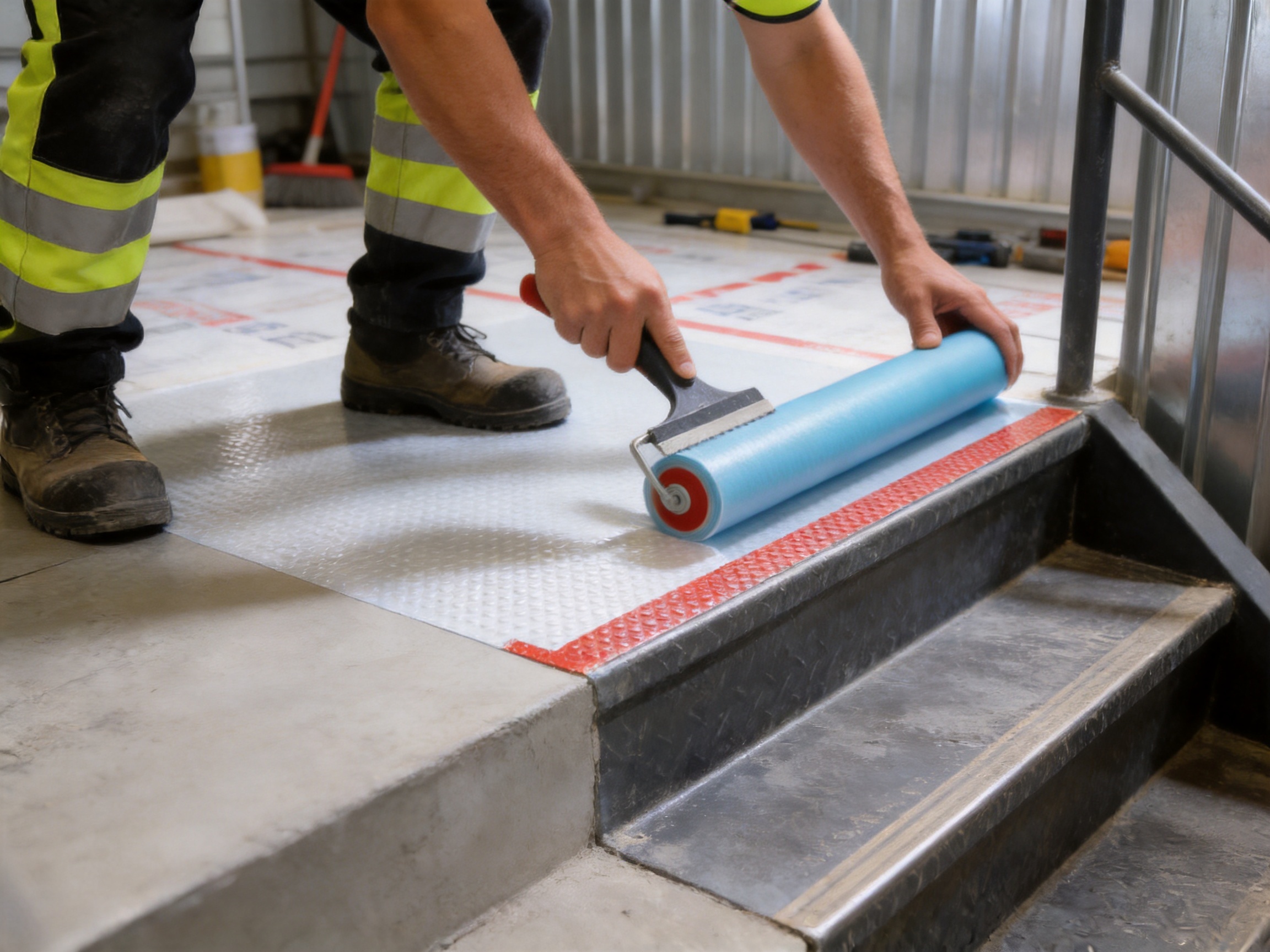
Floors and stairs are frequently exposed to foot traffic during fit-out, repair, decoration, and installation. A smooth temporary cover may move, fold, or create an uncertain walking surface if it is not correctly installed. An embossed protective film can provide additional texture and can be used as part of a broader site safety plan.
The film should be installed on a clean, dry, and suitable substrate. Edges should be secured, overlaps should be stable, and damaged sections should be replaced promptly. On stairs, slopes, wet areas, or high-risk locations, users should perform a specific risk assessment and should not rely on the film alone as a safety control.
Stainless steel, aluminum, pre-coated metal, and decorative metal panels can be vulnerable to scratches and marks during bending, pressing, transportation, fabrication, and installation. Protective film can reduce direct contact between the finished surface and nearby materials.
For metal processing, the selected adhesive must be compatible with the coating and surface finish. A film that adheres correctly can remain in place during handling without excessive edge lifting. After processing or installation, it should be removed within the recommended period and under suitable conditions to reduce the possibility of adhesive transfer or surface interaction.
Plastic panels, decorative laminates, and other finished sheet materials can be damaged by dust, abrasion, and contact during cutting, machining, transport, and assembly. The film can help preserve visual quality while the material moves through production and installation steps.
Clear, white, or colored film may be selected according to the need to view the substrate, identify material groups, or create a visible protective barrier. The adhesive level should be matched to the panel surface, especially when the substrate has a textured, coated, low-energy, or easily marked finish.
Glass and other smooth surfaces often require protection from fingerprints, dust, scratches, and installation debris. Film can be used during transportation and fitting, provided the product is suitable for the glass surface and the intended duration.
Because glass can be sensitive to heat, residue, and edge conditions, users should follow an approved installation and removal procedure. Clear film can maintain visual inspection of the surface, while colored or printed film can make the protected glass easier to identify on a busy site.
Carpet, flooring textiles, and other soft surface materials can become dirty or marked during construction and interior installation. Protective film or related surface protection materials can help separate the finished surface from shoes, dust, packaging, and light job-site contamination.
When using an adhesive-coated product on a textile or porous surface, compatibility testing is particularly important. The product must be selected according to the fiber, backing, finish, cleanliness, and expected removal period. In some cases, a non-adhesive installation method may be more appropriate.
During transportation and storage, surfaces may be exposed to friction, dust, stacking pressure, and contact with packaging materials. Protective film can help reduce handling marks and maintain product presentation until the final customer or installation stage.
Roll width, length, thickness, and adhesive level can be selected to match the size and shape of the goods. Printed identification can help warehouse personnel recognize the protected side, handling direction, product model, or removal instruction.
Conventional smooth protective film remains useful for many applications, particularly when the main requirement is a temporary barrier against dust and scratches. However, anti-slip embossed film provides additional functionality in areas where the film itself may be walked on, handled frequently, or used around an active work zone.
The most significant difference is the textured surface. A smooth film may offer limited traction, especially when contaminated or installed over a smooth substrate. The embossed film is designed to provide a more substantial surface profile. This can improve the user experience and support safer handling when combined with suitable installation and workplace controls.
The heavy-duty polyethylene construction is another important advantage. Low-cost thin films may tear easily during unrolling or may require frequent replacement in demanding environments. A product engineered for puncture resistance can reduce interruptions and maintain coverage for longer periods under comparable conditions.
The availability of adhesive and non-adhesive versions also gives this product a broader application range than a single fixed construction. Users can choose a low-adhesion film for sensitive surfaces, a stronger adhesive for high-movement areas, or an uncoated version when mechanical placement is preferred.
Finally, the ability to add one to three colors of printing creates a practical advantage for professional users. Printed instructions and logos can improve organization, reinforce responsibility for protected areas, and make the material more useful than an unmarked generic film.
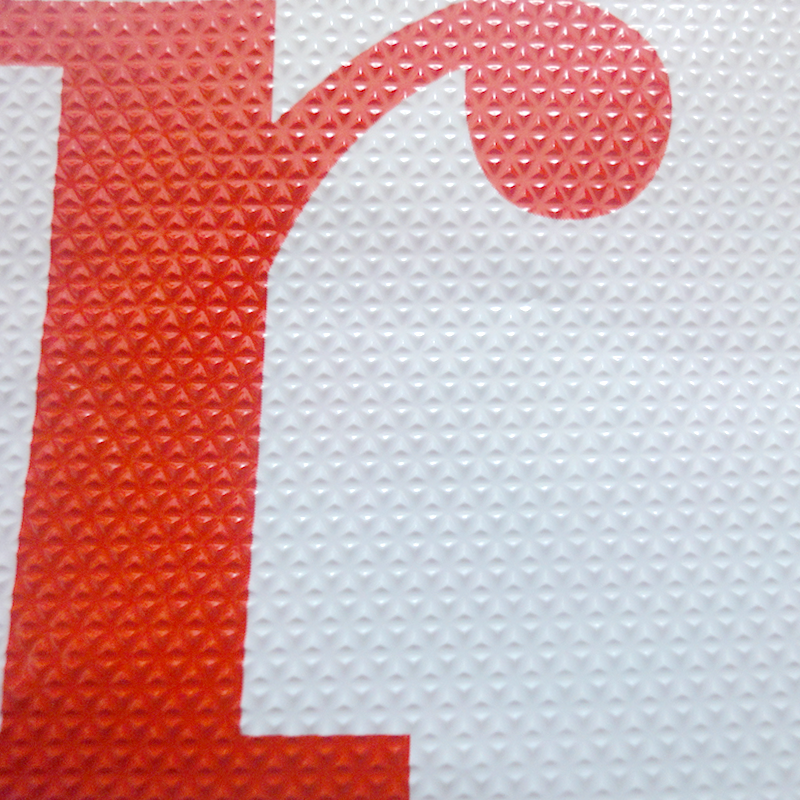
The manufacturing process begins with the preparation and processing of polyethylene raw materials. The material is converted into a continuous film using industrial film-forming equipment. Process control is important because thickness consistency, tensile performance, elongation, surface quality, and roll appearance all influence the final protective film’s performance.
Modern production requires careful control of temperature, line speed, film tension, cooling, and winding. Stable conditions help create uniform film that can be embossed, coated, printed, rewound, and slit without excessive variation. A consistent backing is particularly important for adhesive coating because changes in surface condition can affect coating uniformity and bonding behavior.
After or during film formation, the film is processed to create the embossed surface. The embossing equipment forms a controlled pattern on the polyethylene, producing the texture required for anti-slip performance and product appearance.
Uniform embossing helps maintain consistent handling characteristics across the roll. If the pattern is irregular, the film may show variations in surface feel, winding, or appearance. Production teams therefore need to monitor the embossing process and inspect the finished material for defects, wrinkles, incomplete patterns, and other conditions that could affect use.
For adhesive-coated grades, acrylic adhesive is applied to the selected side of the polyethylene film. Coating conditions must be controlled to achieve the intended adhesive weight and coverage. The coating process may include adjustment of adhesive viscosity, coating speed, drying conditions, and curing or stabilization time.
Acrylic adhesive can be formulated for different adhesion levels, from low adhesion to super high adhesion. The correct formulation depends on the target surface, the required holding power, the expected temperature range, the duration of use, and the desired removal behavior.
Clean and uniform coating is essential. Uneven adhesive distribution may create weak areas, excessive residue, bubbles, or inconsistent release. Quality inspection can include visual checks, adhesion testing, aging evaluations, and application trials on representative substrates.
When printing is requested, the film can be printed with up to three colors according to the approved artwork. The printing process must be coordinated with the film surface, ink compatibility, drying, winding direction, and customer requirements.
Artwork should be reviewed before production to confirm dimensions, color requirements, repeat length, text accuracy, logo proportions, and placement. Printed information must remain legible during handling and should not interfere with the protective function or adhesive performance.
Large master rolls can be rewound and slit into the widths required by the customer. The specified width range is from 100 millimeters to 1,300 millimeters. Accurate slitting helps ensure that the finished roll is easy to apply and fits the intended surface or equipment.
Rewinding tension must be controlled to reduce telescoping, loose edges, wrinkles, and roll deformation. Packaging should protect the rolls from moisture, dust, impact, and distortion during storage and transportation. Clear labeling can identify the film type, size, adhesive grade, batch information, and handling requirements.
Quality control is integrated into raw material management, production, finishing, and final release. Typical inspection activities may include checking film thickness, width, roll length, appearance, color, embossing quality, printing accuracy, adhesive performance, and physical strength.
Testing is particularly important for a product that combines several functions. A film may have excellent tensile properties but unsuitable adhesion for a particular substrate. It may have good adhesive holding power but insufficient removal performance after prolonged exposure. It may appear visually acceptable but have inconsistent embossing. A comprehensive quality approach helps ensure that the finished roll performs as intended in practical use.
The manufacturer operates an integrated production system covering backing film production, adhesive coating, logo printing, rewinding, slitting, and packaging. Completing these stages within its own factory can improve process coordination, production traceability, and response speed for customized orders.
Advanced machines from Germany support the company’s film and adhesive production capabilities. Modern equipment can improve consistency and increase the ability to manage different specifications. It also supports more efficient production of custom widths, colors, adhesive levels, printing designs, and packaging formats.
The company has a factory area of approximately 20,000 square meters, more than 95 experienced staff members, and an annual production capacity of over 12,000 tons. These resources support both standard products and customized protective film programs. Production capacity is particularly important for distributors and industrial customers that require repeat orders, stable supply, and coordinated delivery planning.
A testing laboratory and advanced inspection equipment provide additional support for product development and quality assurance. Engineers and technicians can evaluate film performance, adhesive behavior, surface compatibility, and application requirements. Customers may also provide technical data sheets or samples so that the product can be developed or adjusted for a specific use.
The company’s management systems include ISO 9001 and ISO 14001 certification. ISO 9001 supports structured quality management, while ISO 14001 provides a framework for environmental management. The stated compliance and testing portfolio also includes SGS, RoHS, REACH, PFAS, and Prop 65 testing. Actual compliance requirements should be confirmed for each product, market, and order.
Anti-Slip / Embossed Protective Film
Selecting the correct anti-slip embossed protective film begins with identifying the surface and the risk profile of the application. Users should consider whether the film will be installed on metal, plastic, glass, flooring, a coated panel, a decorative laminate, a textile, or another substrate. Surface texture, porosity, coating chemistry, cleanliness, and sensitivity all influence the correct film and adhesive choice.
The next consideration is exposure. Light-duty indoor handling may require a different thickness from a busy construction site with frequent foot traffic and contact with tools. The expected duration of protection should also be considered. Temporary protection for a few days may require different adhesive characteristics from protection maintained for several weeks.
Width and roll length affect installation efficiency. A wider roll can cover large surfaces with fewer joints, while a narrower roll may be easier to handle in confined areas. Longer rolls can improve productivity in large projects, but the roll weight and handling equipment must be considered.
Users should decide whether adhesive is necessary. Adhesive-coated film can reduce movement, but it must be compatible with the substrate and removed according to the recommended procedure. Non-adhesive film can be more flexible for temporary placement and may be preferred on sensitive surfaces or when the film will be mechanically secured.
Color and printing should be selected according to project organization and communication requirements. Clear film is useful when visual inspection is needed. Bright colors can increase visibility. Printed instructions can help workers understand installation, walking, removal, or disposal requirements.
The surface should be clean, dry, stable, and free from dust, grease, loose particles, moisture, and other contamination. Surface preparation is one of the most important factors affecting adhesion and final appearance. Even a high-quality film may fail to bond correctly if it is applied over dirt, oil, condensation, or loose coating.
Use a suitable cleaning method for the substrate. Solvents or cleaning agents should be tested for compatibility before broad use. Allow the surface to dry completely before applying the film.
Before removing the release liner or exposing the adhesive, plan the direction, overlaps, edges, corners, joints, and termination points. This is especially important for large floors, stairways, panels, and irregular surfaces.
Measure and cut the film with clean tools. Avoid unnecessary stretching, as excessive tension can create shrinkage, edge lifting, or distortion after installation. Where multiple pieces are required, plan overlaps so that they do not create trip hazards or allow contamination beneath the film.
Apply the film progressively rather than placing the entire piece at once. A squeegee, scraper, or similar flattening tool can help press the film onto the surface while removing air pockets. Work from the center toward the edges using light and even pressure.
For adhesive-coated film, avoid trapping air beneath the material. If a bubble forms, lift the affected area carefully when possible and reapply it with controlled pressure. Do not use excessive force that could stretch or damage the film.
Edges and joints should be firmly pressed against the surface. Pay particular attention to corners, seams, doorways, transitions, and areas exposed to repeated contact. A properly secured edge is less likely to collect dust, lift, curl, or create a trip hazard.
Where additional fixing is required, use a compatible adhesive, edge tape, or mechanical method. Any supplemental product should be tested to confirm that it will not damage the underlying surface or create difficult removal conditions.
After installation, inspect the film for bubbles, wrinkles, loose edges, open joints, tears, and areas with incomplete contact. Correct defects promptly. A final inspection can prevent small installation problems from becoming larger failures during use.
Small bubbles or slight wrinkles can often be corrected with a squeegee or similar flattening tool. Begin at the center of the affected area and push outward toward the nearest edge. Use controlled, even pressure rather than aggressive rubbing or stretching.
For larger bubbles or deeper wrinkles, gentle heat may make the polyethylene more flexible and easier to reposition. A heat gun or similar heat source should be used carefully and at a controlled distance. Excessive temperature or prolonged heating can deform the film, weaken the adhesive, damage printing, or affect the underlying surface.
Once the film becomes sufficiently flexible, press the bubble or wrinkle from the center outward. Allow the film to cool while maintaining contact. Heat should never be treated as a substitute for proper surface preparation and installation technique.
If a defect cannot be corrected, the film may need to be lifted and reinstalled. Remove it gradually from one side, avoiding sudden pulling that could damage the substrate or stretch the film. Reposition the film carefully and use a flattening tool to achieve a smooth fit.
Complex surfaces, large areas, sensitive substrates, and high-risk installations may require experienced installers or technical support. Professional installation can help identify compatibility problems, reduce waste, and improve the final result.
Edges and joints should be checked regularly during the protection period. Changes in temperature, humidity, traffic, cleaning, or substrate conditions can affect the film’s position and adhesion. Early inspection makes it easier to correct a loose edge before it becomes a larger problem.
If an edge begins to lift, clean the surrounding area if necessary and press the film back into place. If the adhesive has become contaminated or the material is damaged, replace the affected section. Do not leave a curled edge in a walkway or working area.
Joints should remain closed and stable. If a seam opens, dirt and moisture may enter beneath the film. Reposition or replace the material as appropriate. In high-traffic areas, use a layout that minimizes exposed joints and keeps transitions as flat as possible.
Protective film should be removed according to the recommended time and environmental conditions for the selected grade. Begin at a corner or edge and pull the film back steadily rather than sharply upward. A controlled removal angle can reduce stress on the adhesive and the substrate.
If the film has been exposed to excessive heat, sunlight, moisture, chemicals, or an unusually long service period, removal may require additional care. Residue or fragments should be addressed using a method compatible with the underlying surface. Never assume that a cleaning solvent is safe without testing it first.
After removal, inspect the surface for adhesive residue, moisture, dirt, discoloration, or other changes. If residue is present, use an approved cleaning procedure. For sensitive surfaces, consult the substrate supplier or technical specialist before applying any chemical cleaner.
Clean removal depends on several factors, including adhesive formulation, substrate chemistry, surface cleanliness, temperature, ultraviolet exposure, duration, and installation method. Therefore, users should perform a small-area trial before applying the film to a valuable or highly visible surface.
Protective film helps reduce damage and rework, but responsible use also requires attention to material consumption and disposal. Selecting the correct thickness and width can reduce unnecessary waste. Accurate cutting and careful layout can improve coverage efficiency.
Polyethylene film should be collected and handled according to local waste management requirements. Where recycling streams are available and the material is clean and accepted, recycling may be considered. Contaminated film, adhesive-coated film, or film mixed with other materials may require different disposal arrangements.
Storage conditions also influence performance. Rolls should generally be kept in a clean, dry location away from excessive heat, direct sunlight, moisture, and sharp objects. They should remain properly supported to avoid deformation. Before use, users should check the rolls for damage, contamination, or signs of improper storage.
A major advantage of working with an integrated protective film manufacturer is the ability to coordinate product design, production, testing, and packaging through one technical system. Instead of selecting an anonymous standard film, customers can discuss surface type, adhesive requirement, thickness, width, color, printing, roll length, and packaging with engineers familiar with the production process.
Customization can be especially valuable for distributors, building-material suppliers, metal processors, window and door manufacturers, panel fabricators, flooring contractors, and industrial users. A customized film can be developed around actual working conditions rather than relying on a general-purpose product.
The company has been developing and manufacturing protective films since 1999. Its product range addresses the protection of stainless steel, aluminum, pre-coated metal, plastic panels, ceramic, carpets, decorative laminates, glass, and other surfaces. This broad application experience supports the selection of suitable film and adhesive combinations.
Production for domestic and export markets has helped the company develop experience with different customer requirements, packaging expectations, quality documentation, and product specifications. The company serves customers in approximately 90 export areas, including markets in Europe, North America, Australia, the Middle East, Japan, and other regions.
In addition to anti-slip embossed film, the product portfolio includes glue-coated protective film, self-adhesive protective film, sticky mats, double-sided foam tape, polyethylene stretch film, and surface protection fleece. This broader range can be useful for buyers seeking coordinated surface protection and packaging solutions from one supplier.
Its main purpose is to protect surfaces from scratches, dirt, marks, scuffing, and light handling damage while providing a textured surface designed to improve traction. It is intended for temporary use during manufacturing, construction, renovation, transportation, installation, and related activities.
Yes. The product can be supplied with or without adhesive. Adhesive-coated versions use acrylic adhesive and can be produced with adhesion levels ranging from low to super high, depending on the surface and application requirement.
It can be used for suitable floor protection applications, provided that the film grade, adhesive, surface condition, and installation method are appropriate. The embossed surface can provide improved texture, but the film should not be considered a complete substitute for formal workplace safety controls, especially in wet, oily, sloped, or high-risk areas.
The stated thickness range is from 60 micrometers to 240 micrometers. The correct thickness depends on traffic, handling, surface sensitivity, expected duration, puncture exposure, and installation conditions.
Yes. Printing is available from zero to three colors. Customers can request customized logos, application instructions, warning messages, product identification, or other approved artwork.
Common options include white, clear, blue, red, yellow, pink, and green. Additional colors may be considered according to production requirements and order quantity.
The surface should first be cleaned and dried. The film should then be positioned carefully, applied gradually, and flattened with a squeegee or similar tool. Edges and joints should be pressed firmly and inspected for bubbles, wrinkles, and lifting.
Small bubbles can usually be pushed outward with a squeegee. Larger bubbles may require careful lifting and reapplication. Gentle heat can make the film more flexible, but overheating must be avoided because it may deform the film or damage the substrate.
It may be suitable for some sensitive surfaces when the correct low-adhesion grade is selected, but testing is essential. A small trial should be conducted to evaluate bonding, residue, discoloration, and removal behavior before full application.
The stated width range is from 100 millimeters to 1,300 millimeters. Customized widths can be discussed according to the application and production requirements.
The appropriate duration depends on the film grade, adhesive, substrate, temperature, sunlight, humidity, chemicals, and exposure conditions. Users should follow the technical recommendation for the selected grade and remove the film within the approved period.
Yes. The company offers OEM and ODM protective film services. Product development can be based on customer technical data sheets, samples, application requirements, artwork, or packaging specifications.
The company operates under ISO 9001 and ISO 14001 management systems. Its stated testing and compliance portfolio includes SGS, RoHS, REACH, PFAS, and Prop 65. Specific documentation should be confirmed for the individual product and destination market.
Samples allow buyers to evaluate adhesion, removal, anti-slip feel, appearance, printing, handling, and compatibility with the actual substrate. Testing can identify potential problems before a full production order or large installation begins.
Anti-slip embossed protective film combines the essential barrier function of temporary surface protection with a textured surface designed to support improved traction. Its tough polyethylene backing provides resistance to puncture and tearing, while adhesive and non-adhesive options allow the material to be adapted to different substrates and installation methods.
The available thicknesses, widths, roll lengths, colors, adhesion levels, and printing options make the product suitable for a broad range of industrial, commercial, construction, renovation, transportation, and installation applications. Compared with ordinary smooth protective film, the embossed construction offers an additional safety-oriented feature, particularly where people or materials may pass over the protected area.
Product performance depends on correct selection, surface preparation, installation, inspection, maintenance, and removal. Users should consider the substrate, exposure conditions, traffic, protection period, adhesive requirement, and local safety procedures before choosing a grade.
With integrated film production, acrylic adhesive coating, embossing, printing, rewinding, slitting, packaging, laboratory testing, and technical support, the manufacturer can provide more than a standard roll of protective material. Its manufacturing capacity, customization options, quality systems, experienced technical team, and international supply experience support customers seeking reliable and application-specific surface protection solutions.
1. Manufacturer-provided product specifications for anti-slip embossed protective film.
2. Manufacturer-provided information on polyethylene protective film production, adhesive coating, printing, rewinding, slitting, and packaging.
3. ISO 9001 quality management system principles.
4. ISO 14001 environmental management system principles.
5. General technical guidance for temporary surface protection film selection, installation, maintenance, and removal.
6. General material information relating to polyethylene film and acrylic pressure-sensitive adhesive systems.
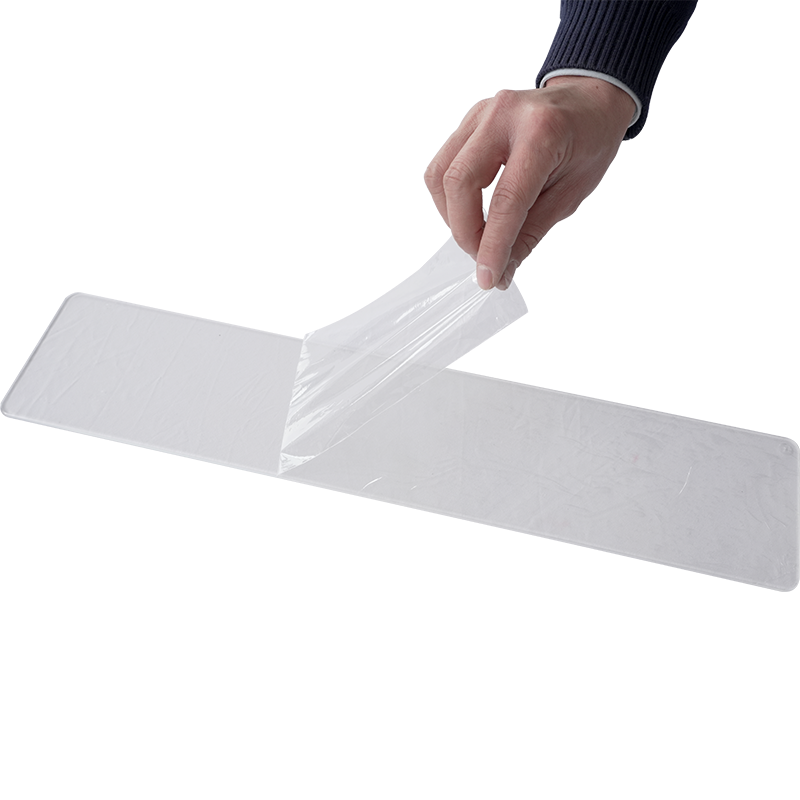
● No “ghost shadow” or “fish eye” after removal; ● Low gel content, soft and stable adhesion plus easy-peel removal with no surface damage or curling;...
See Details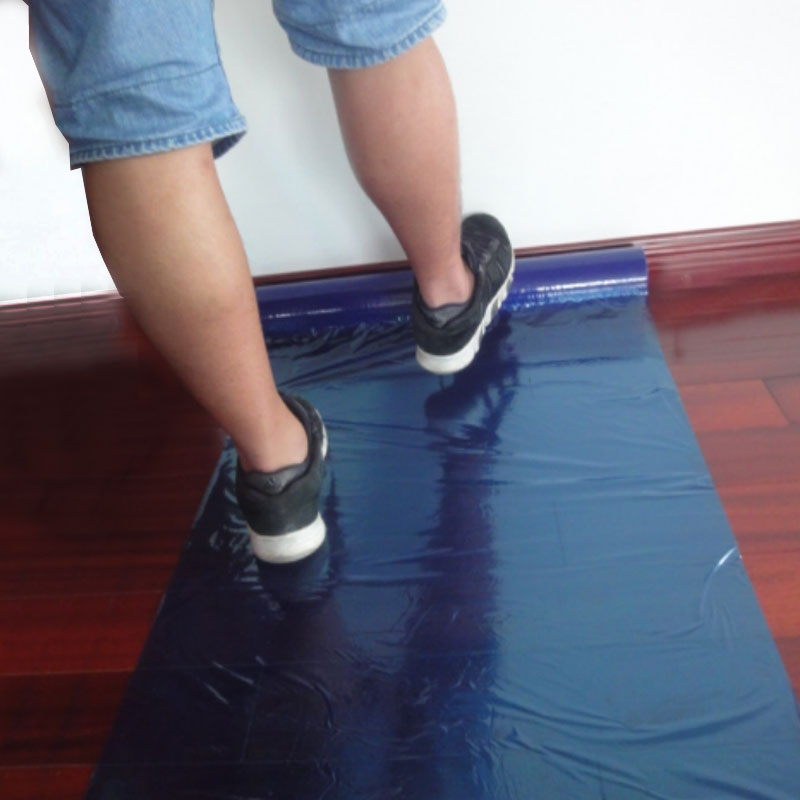
● Patented adhesive formula suits all hard surfaces such as hardwood floors, laminate floors, ceramic, marble, tile, granite, vinyl, worktops, and gla...
See Details
● Anti-slip; ● Embossed film surface to guarantee trip safety;● Tough puncture-resistant polyethylene film;● Can be coated with or without adhesive;● ...
See Details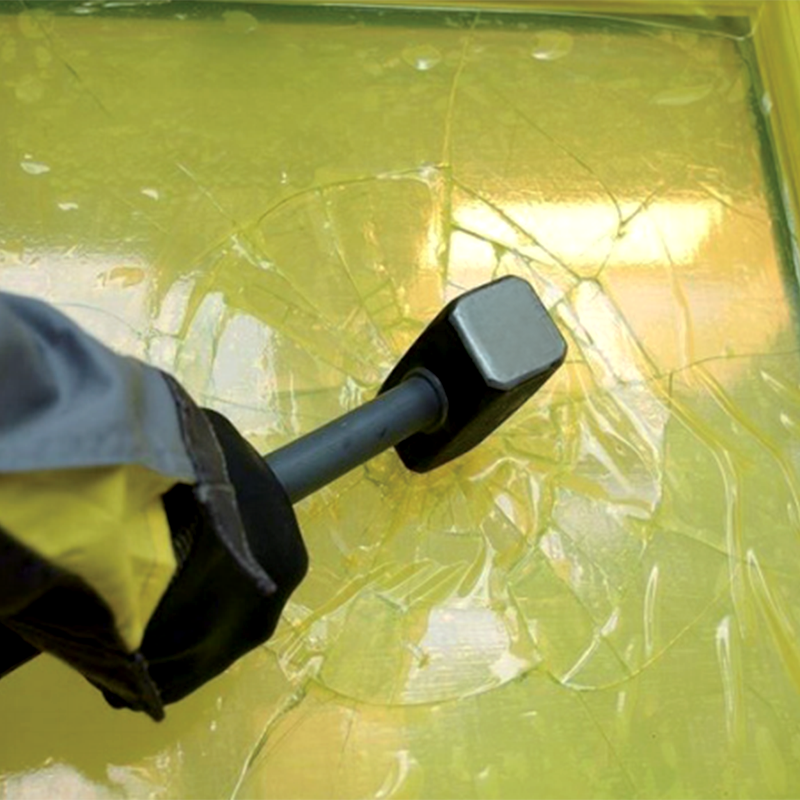
● The super tough polyethylene film with super high adhesion can stop the glass splitting and falling off during window glass demolition process;● Non...
See Details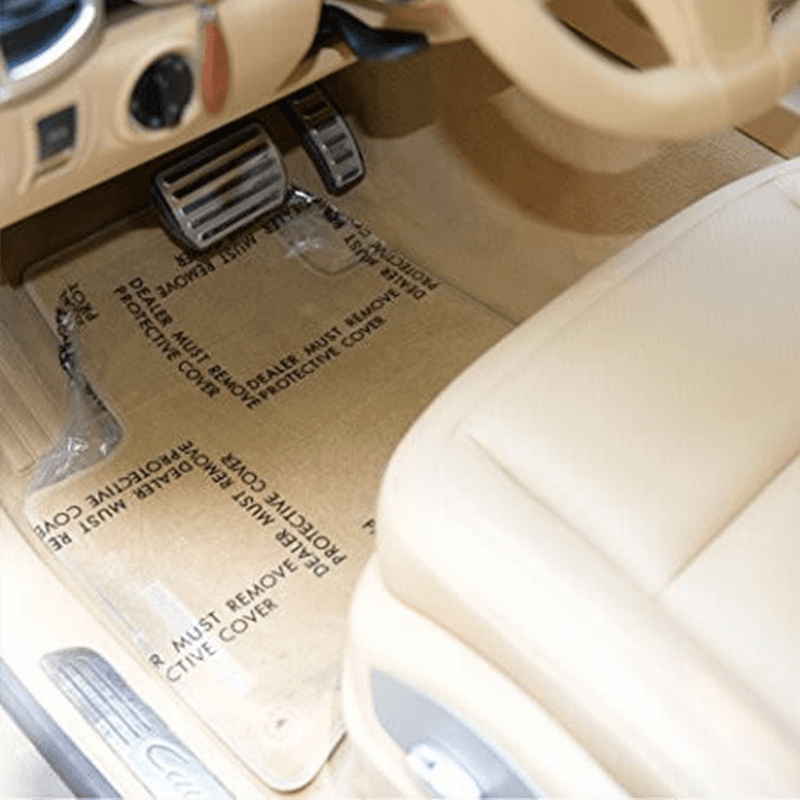
● Distance of each perforation die-cut ranges from 100mm to 1200mm;● Can peel off each die-cut piece of protective film at the perforated line easily;...
See Details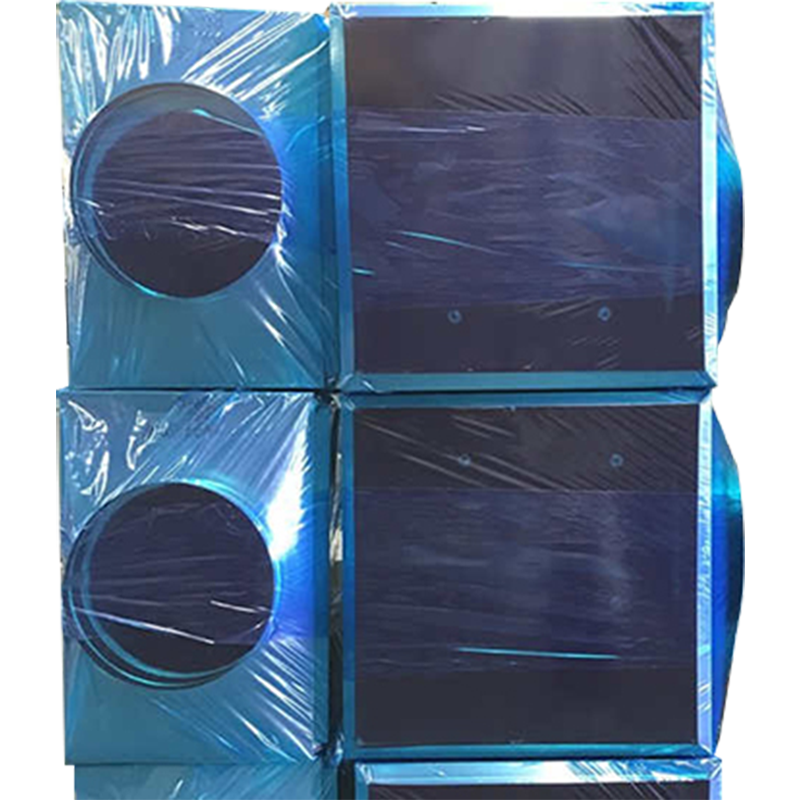
● The super-tough polyethylene film resists puncture and penetration by liquid and dirt during storage, transportation, and installation of the ductwo...
See Details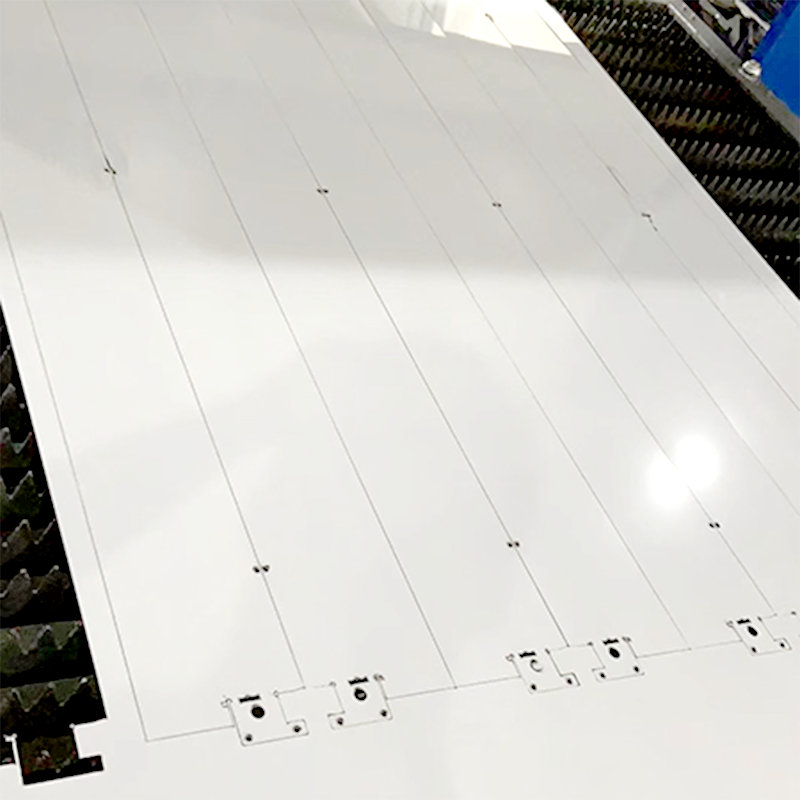
● The specially formulated natural rubber adhesive suitable for both CO2 and Fiber laser cutting processes;● High cutting quality without burr or trac...
See Details
● The specially formulated adhesive ensures easy application and removal without leaving residue glue; ● The super-tough polyethylene film protects ag...
See Details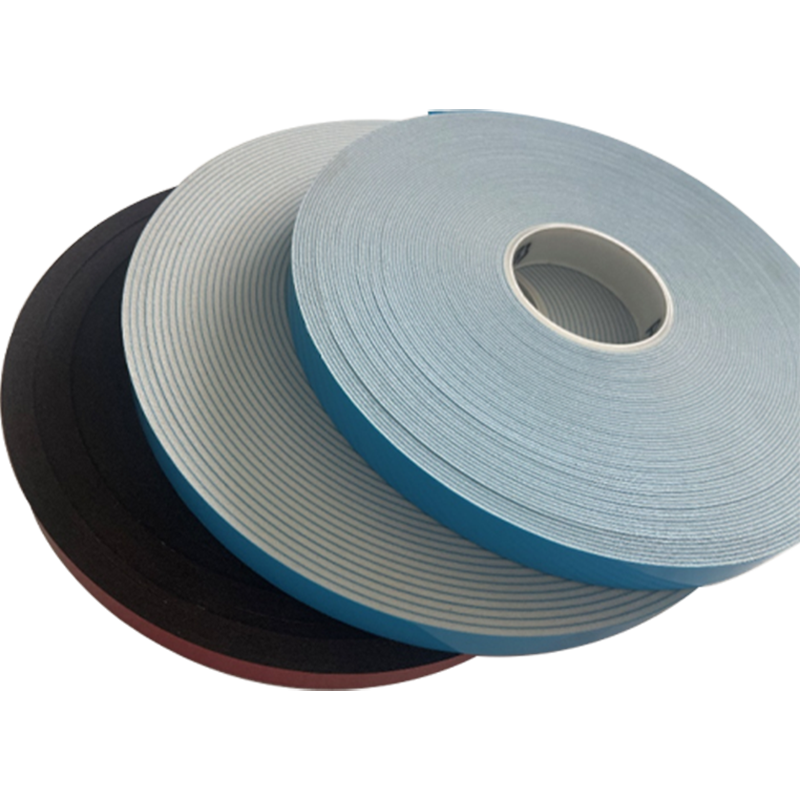
● Waterproof - the desirable material for waterproofing. ● Dust-proof - positive performance of dust prevention.● Low resilience - prevent the deforma...
See Details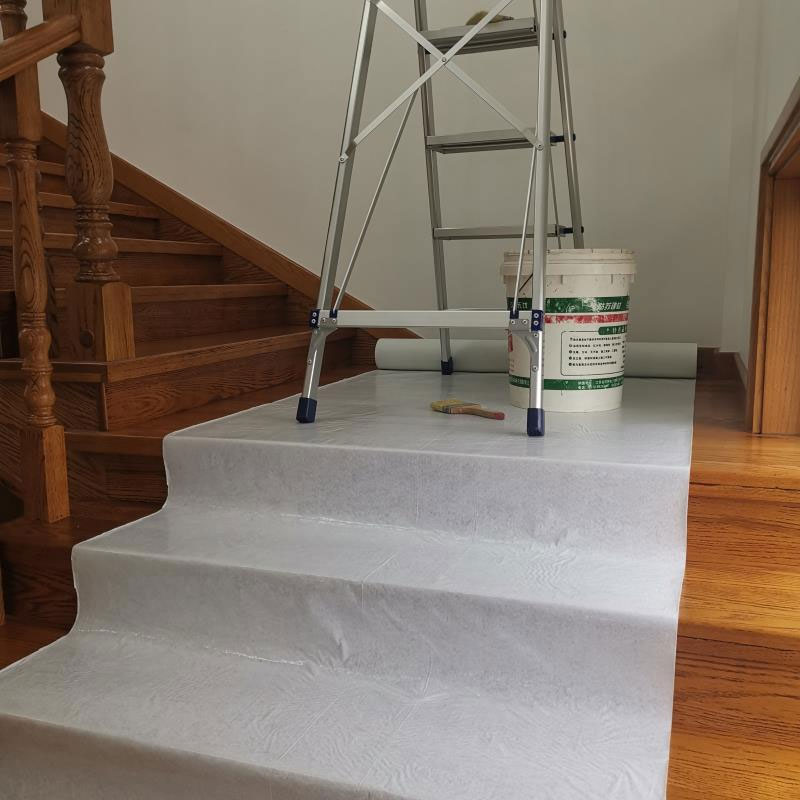
This product has non-woven synthetic fleece in middle; Breathable PE film adhered onto top of the non-woven fabric, which is coated with self adhesive...
See DetailsWe’re a reliable partner that shapes our expertise into success for your project.
Copyright 2024 Wuxi Qida Tape Co., Ltd. All Rights Reserved
 Wholesale Protective Film/Foil Manufacturers
Privacy