

 English

 English
 русский
 Français
 Español
 Português
 عربى


Cat:Glue -coated Protective Film
● Good weatherability for outdoor exposure; ● Stable adhesion level; ● UV resistance for up to 12 months; ● Can print customized logo or application i...
See Details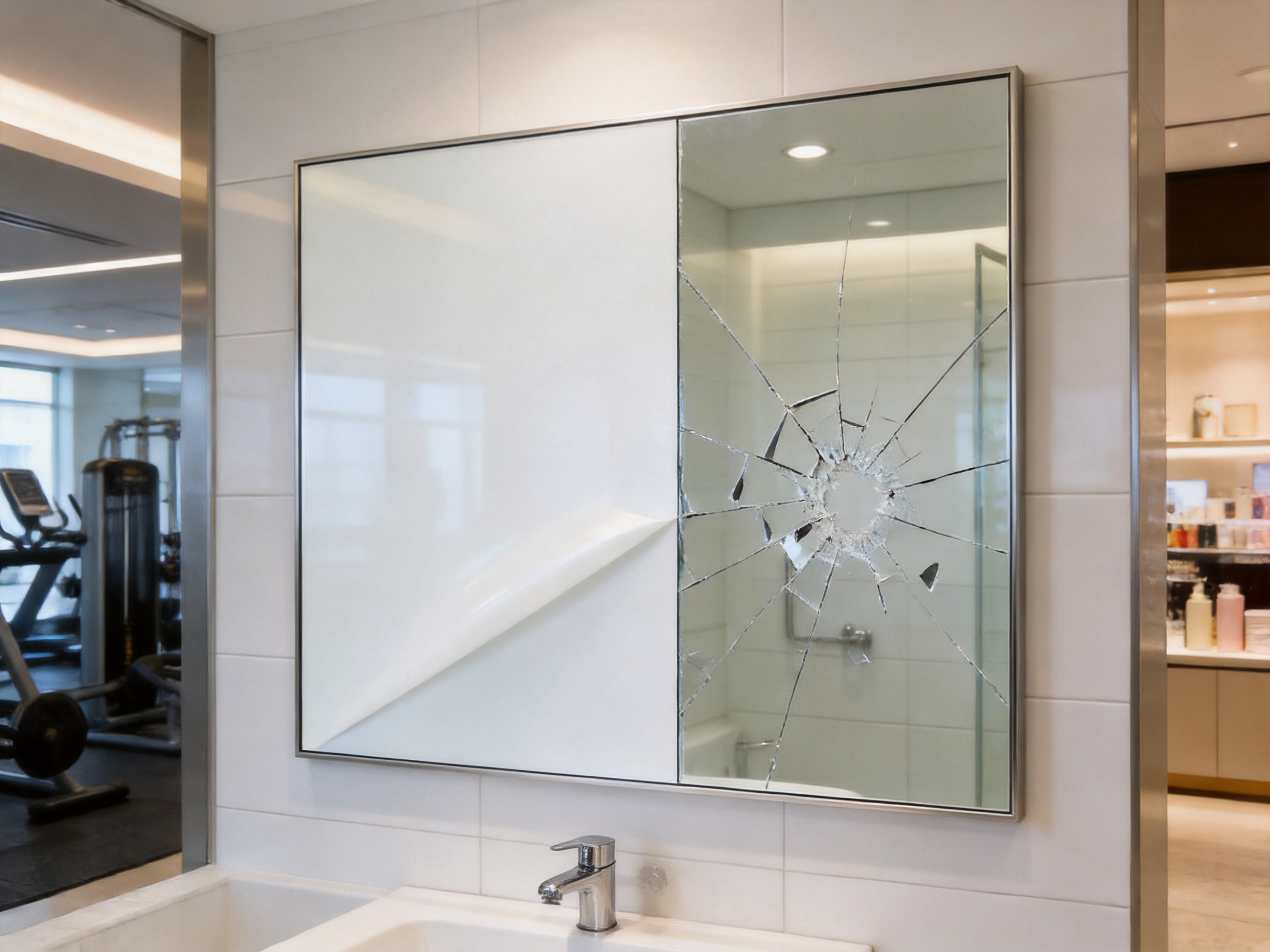
Mirrors are widely used in homes, hotels, retail stores, offices, hospitals, schools, gyms, public transportation facilities, and commercial interiors. They improve lighting, expand the visual impression of a room, support personal grooming, and contribute to decorative design. However, like all glass products, mirrors can break when exposed to accidental impact, incorrect installation, transportation damage, structural movement, or sudden temperature changes. Once a mirror breaks, sharp fragments may separate from the backing and create a serious injury risk.
Mirror backing safety film is designed to reduce this risk by creating a strong protective layer on the rear surface of a mirror. The film bonds tightly to the back of the glass and helps hold broken fragments together if the mirror is accidentally damaged. Instead of allowing pieces to scatter freely, the film acts as a containment layer that can reduce splintering and improve the overall safety of the installation.
For manufacturers, glass processors, interior contractors, furniture producers, architectural suppliers, and distributors, selecting the right mirror backing film requires more than comparing thickness or price. The product must combine high tensile strength, strong puncture resistance, dependable adhesion, dimensional stability, practical roll specifications, and consistent quality. It must also be available in formats that support efficient application and long-term use.
This article explains the structure, performance, advantages, applications, manufacturing process, customization options, quality controls, and purchasing considerations associated with permanent mirror backing safety film. It also describes how an experienced protective film manufacturer can support customers through material selection, adhesive development, coating, printing, slitting, packaging, and technical service.
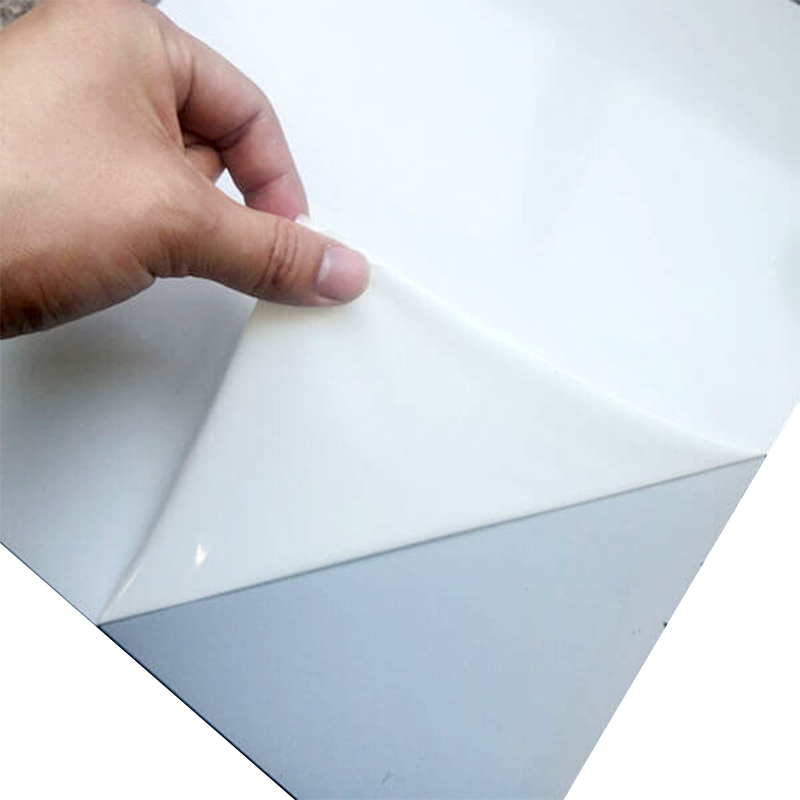
Mirror Backing Safety Film
Mirror backing safety film is a high-strength adhesive film applied to the rear side of a mirror. Its principal function is to help retain glass fragments if the mirror breaks. The film is manufactured with a tough polymer backing and a specially formulated adhesive layer that provides a strong, lasting bond to the mirror backing or rear glass surface.
Unlike temporary surface protection films used during transportation or installation, permanent mirror backing safety film is intended to remain in place throughout the service life of the mirror. It is therefore classified as a non-removable or permanent-use protective film. The adhesive is selected for long-term attachment rather than easy peel-off removal.
The film may be supplied in white, clear, blue, or other customized colors. White film is commonly selected when a solid protective appearance is required, while clear film may be preferred when the original rear surface or visual design needs to remain visible. Blue and other colored options can support product identification, branding, or customer-specific production requirements.
The film can also be printed with one to three colors. Printing may be used for brand information, installation instructions, safety messages, product codes, batch identification, or decorative elements. Printing availability allows the film to serve not only as a safety component but also as an information and identification layer within the finished mirror product.
The main safety function is fragment retention. When unprotected glass breaks, the impact can create multiple sharp pieces that may fall, project outward, or scatter across a surrounding area. When a strong film is securely bonded to the back of the mirror, it can help hold many fragments in position. This does not make the glass unbreakable, nor does it eliminate every hazard associated with broken glass, but it can significantly reduce uncontrolled splintering.
The film also provides a physical barrier on the rear surface. This barrier can help protect the mirror against certain forms of abrasion, handling damage, and contamination during production, storage, and installation. Its high tensile strength and puncture resistance are important because the film must remain structurally intact when the mirror is subjected to impact or mechanical stress.
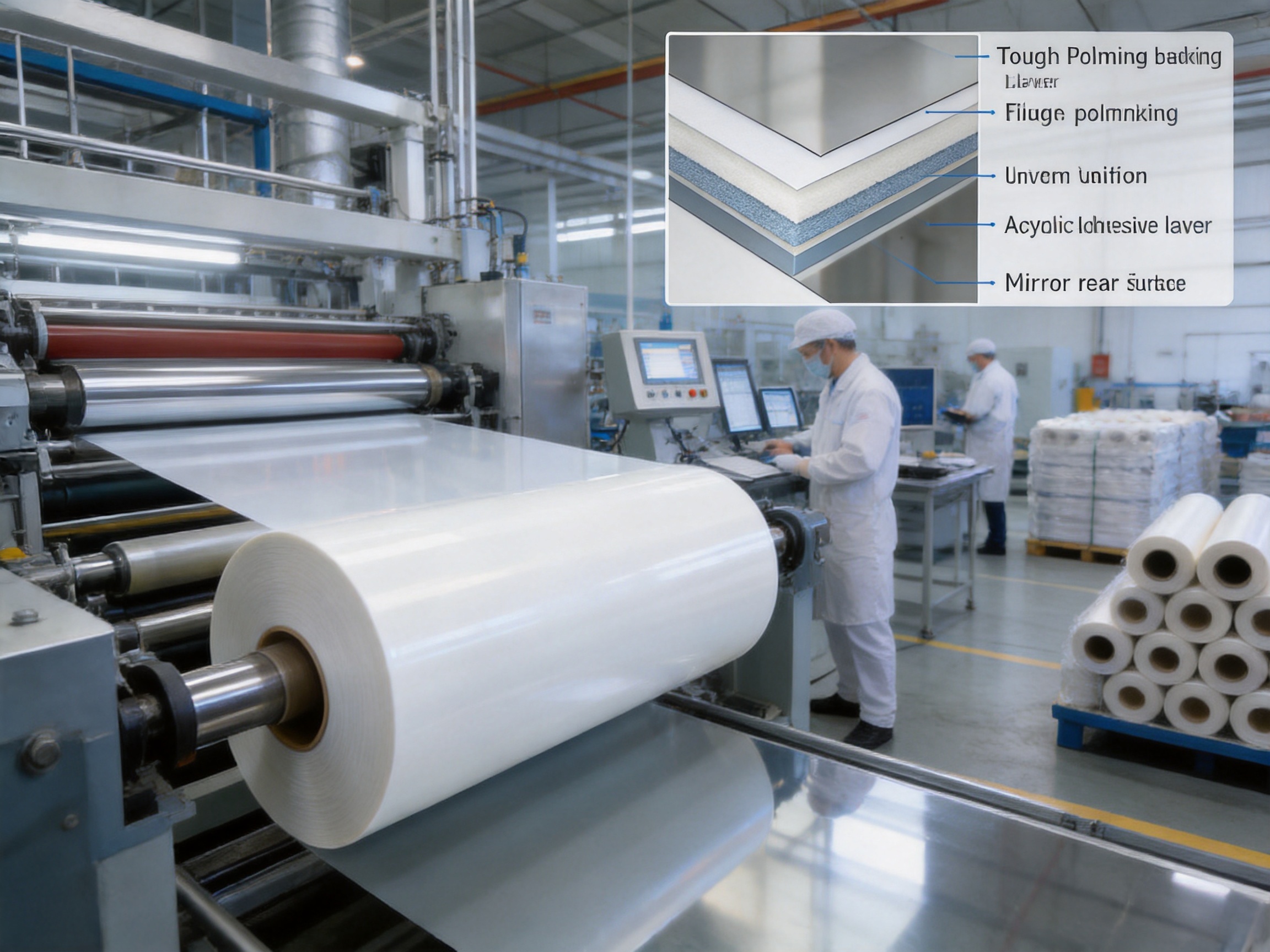
Mirror backing safety film is generally constructed from a polymer film substrate and an adhesive layer. Depending on the product specification, the substrate may be based on polyethylene or another engineered polymer with appropriate flexibility, strength, elongation, and puncture resistance. The adhesive is commonly acrylic and is formulated to provide a strong, durable bond to the rear surface of the mirror.
The backing film provides the principal mechanical support. A suitable backing must be tough enough to resist tearing while remaining flexible enough to conform to the mirror surface during application. Excessive stiffness can make installation difficult, particularly on large panels or around edges. Insufficient strength, on the other hand, can reduce fragment-retention performance.
Polyethylene is valued for its balance of flexibility, impact resistance, tensile performance, and processability. It can be manufactured in a range of thicknesses and colors and can be converted into wide rolls for industrial use. The polymer formulation can be adjusted to meet the requirements of different mirror sizes, handling methods, and end-use environments.
The adhesive layer is critical because the backing film can only perform effectively when it remains firmly bonded to the mirror. The adhesive must wet the rear surface properly, create intimate contact, and maintain adhesion during storage and service. It must also be coated uniformly so that the film does not contain weak areas, excessive adhesive deposits, dry spots, or coating variations.
Acrylic adhesive is commonly selected for this application because it can provide strong adhesion and good aging properties when properly formulated. The adhesive system may be adjusted for different mirror backings, surface conditions, application temperatures, and customer requirements. A super-high adhesion level is particularly important for permanent-use products where clean removal is not the primary objective.
Depending on the construction and intended application, a mirror backing safety film may include additional functional features. These can include enhanced puncture resistance, improved UV resistance, colored printing, customized surface treatment, or packaging protection. The exact construction should be confirmed through technical evaluation because mirror types, rear coatings, environmental conditions, and installation methods can vary.
In some safety film designs, a UV-resistant formulation may help reduce degradation caused by prolonged exposure to sunlight. This feature can be useful for mirrors installed near windows, in bright commercial interiors, or in other locations where ultraviolet radiation may affect polymer performance over time. UV performance should be evaluated according to the required service conditions rather than assumed solely from the film appearance.
The product is available in multiple specifications to accommodate different mirror sizes and production requirements. The following table summarizes the principal characteristics provided for this mirror backing safety film.
| Characteristic | Available Specification | Practical Significance |
|---|---|---|
| Thickness | 70 to 200 micrometers | Allows customers to balance flexibility, strength, handling, and safety requirements. |
| Width | 500 to 1,500 millimeters | Supports narrow, medium, and wide mirror panels and production lines. |
| Roll length | 100 to 1,000 meters | Provides options for trial orders, regular production, and high-volume converting. |
| Elongation | At least 300 percent | Helps the film conform to surfaces and resist tearing during handling and application. |
| Adhesion level | Super high | Supports permanent bonding to the rear surface of the mirror. |
| Adhesive type | Acrylic | Offers a strong adhesive platform suitable for permanent-use protection. |
| Film colors | White, clear, blue, and other options | Allows adaptation to product appearance, identification, and customer requirements. |
| Printing | One to three colors | Supports logos, safety information, product codes, and customized graphics. |
Thickness selection should be based on the mirror dimensions, expected handling conditions, required strength, application equipment, and target cost. A thinner film may be easier to process and may be suitable for certain smaller or lighter products. A thicker film can provide additional physical support and may be preferred for large mirrors, demanding handling conditions, or specifications that require greater puncture resistance.
Width and roll length also affect production efficiency. A width that matches the mirror panel or cutting layout can reduce waste and minimize the number of joints or overlaps. Longer rolls can reduce roll changes on automated or semi-automated production lines, while shorter rolls may be more convenient for small-batch manufacturing, sampling, and distributor inventory management.
Many protective films are designed to be removed after transportation, machining, installation, or construction. Those products often use lower or medium adhesion so that the film can be peeled away without damaging the surface. Mirror backing safety film has a different purpose. It is intended to remain permanently attached and therefore uses a much stronger adhesive system.
This difference is important for mirrors used in public or high-traffic environments. Once the mirror is installed, the safety layer remains available throughout the service period. There is no need for an installer, building manager, or end user to apply a separate protective sheet after the mirror has been delivered.
High tensile strength helps the film resist stretching, tearing, and separation when it is handled or exposed to impact. Good puncture resistance helps prevent a sharp broken-glass edge or external object from creating a hole that could compromise the protective layer. These properties provide an advantage over thin, low-strength plastic coverings that may split easily during installation or after damage.
The combination of toughness and elongation is also valuable during application. A flexible film with high elongation can accommodate minor dimensional changes and surface irregularities without immediately tearing. It can be handled around edges and across large panels more easily than a brittle or excessively rigid sheet.
A safety film that loses adhesion cannot provide reliable fragment retention. The specially formulated acrylic adhesive is designed to create a tight bond with the back of the mirror. Strong bonding can help reduce edge lifting, bubbling caused by poor contact, and peeling during handling or long-term use.
Adhesion performance depends on both the film and the application process. The mirror rear surface should be clean, dry, and free from dust, oil, release agents, loose coatings, and other contaminants. Proper pressure during application is also important because pressure helps the adhesive establish complete contact with the surface.
Standardized films may not be suitable for every mirror manufacturer. Different customers may need specific widths, roll lengths, colors, adhesive strengths, printing designs, or thicknesses. The available range from 70 to 200 micrometers, widths from 500 to 1,500 millimeters, and roll lengths from 100 to 1,000 meters gives buyers practical flexibility.
Printing in up to three colors offers an additional advantage over unmarked generic products. A printed film can carry information that remains associated with the mirror even after packaging materials have been discarded. This may support traceability, installation guidance, quality identification, or brand presentation.
Wide master rolls and customized slitting allow manufacturers to integrate the material into their own converting processes. The film can be supplied for manual application, semi-automatic lamination, cutting, or high-volume mirror production. Consistent roll quality helps reduce interruptions and supports more predictable production planning.
The most important benefit of mirror backing safety film is its ability to help contain fragments. When the mirror is struck, the film remains attached to the rear side and supports the broken pieces. Depending on the impact energy, glass type, installation method, and condition of the bond, the film can reduce the distance that fragments travel and lower the possibility of uncontrolled splintering.
For this reason, the film is especially useful in areas where people may stand close to mirrors. Examples include bathrooms, dressing rooms, fitness facilities, hotel rooms, retail displays, salons, dance studios, schools, healthcare spaces, and residential interiors. It can be used as one element of a broader safety strategy that also includes appropriate glass selection, secure framing, correct installation, and regular inspection.
Commercial buildings often contain large quantities of glass and mirrors. A broken mirror in a public space can create an immediate maintenance problem, restrict access to an area, and expose occupants or employees to sharp fragments. A permanent safety film can help reduce the severity of such incidents and simplify the initial response by keeping much of the broken material together.
The film does not replace responsible maintenance. Damaged mirrors should still be isolated, assessed, and replaced or repaired by qualified personnel. However, a safety backing layer can provide an additional period of containment while the area is being secured and a replacement is being arranged.
Although the product is installed on the rear of the mirror, its construction can influence the appearance and quality of the finished product. A well-manufactured film should have consistent thickness, stable color, controlled adhesive coating, and a smooth surface free from major defects. Clear or carefully selected colored options can support the visual requirements of decorative mirrors, furniture panels, and architectural products.
When the film is applied correctly to a clean rear surface, it should remain securely attached without excessive wrinkles, air channels, or edge lifting. Application quality is particularly important for large mirrors because visual defects or uneven bonding can affect product acceptance even when the film is not visible from the front.
In addition to its permanent safety purpose, the film can offer some protection to the rear surface during handling and installation. It may reduce contact with dust, light abrasion, and incidental marks. This can be useful in factories where mirrors pass through several stages before final packaging.
However, the film should not be considered a substitute for suitable packaging. Mirrors still require appropriate separators, edge protection, cushioning, and secure transport procedures. The safety film is one component of a complete product protection system.
Residential mirrors are used in bedrooms, bathrooms, hallways, living rooms, home gyms, wardrobes, and decorative wall installations. Homes may contain children, pets, elderly residents, and visitors who can accidentally strike or destabilize a mirror. Permanent backing protection can provide an additional safety measure, particularly for large wall-mounted mirrors and full-length mirrors.
Hotels, serviced apartments, resorts, and restaurants often use mirrors as part of their interior design. These installations are subject to frequent use, cleaning, room turnover, and maintenance activity. Mirror backing safety film can support the durability and safety requirements of hospitality projects while allowing the mirror supplier to deliver a finished product with consistent specifications.
Retail environments commonly use large mirrors in clothing departments, fitting rooms, beauty stores, furniture displays, and decorative installations. These areas experience regular customer traffic and frequent contact with fixtures. The ability to help retain broken fragments is valuable where customers may be standing directly in front of the mirror.
Large mirror walls are common in gyms, dance studios, martial arts facilities, exercise rooms, and training centers. Balls, equipment, furniture, and users may accidentally impact the mirror surface. A suitable backing safety film can improve the risk profile of these installations when combined with strong mounting systems and appropriate glass specifications.
Hospitals, clinics, schools, universities, nurseries, and care facilities require careful consideration of impact and injury risks. Mirrors may be installed in washrooms, corridors, classrooms, therapy rooms, bedrooms, and activity areas. Permanent safety film can be included in the specification for projects where fragment containment is an important design objective.
Mirror panels are incorporated into wardrobes, cabinet doors, dressing tables, display units, elevators, partitions, and decorative wall panels. These products may be manufactured in large quantities and require consistent roll materials for efficient assembly. Customized widths, printing, and packaging can help the film supplier adapt to furniture factory requirements.
The quality of mirror backing safety film depends on the entire manufacturing chain, from polymer preparation and film production to adhesive formulation, coating, curing, slitting, inspection, and packaging. A strong final product cannot be achieved by relying on one isolated production step.
The process begins with the preparation and extrusion of the polymer backing. Materials are selected according to the required thickness, color, elongation, tensile strength, flexibility, and puncture resistance. Production conditions must be controlled to achieve a stable film structure and uniform thickness across the roll.
Uniformity is important because variations in the backing can affect roll handling, application behavior, appearance, and mechanical performance. Advanced film-production equipment supports more precise control of processing parameters and allows the manufacturer to produce stable master rolls for subsequent coating and converting.
The adhesive is formulated for the intended application rather than treated as a generic coating. Acrylic adhesive chemistry can be adjusted to achieve the desired balance of initial tack, final adhesion, coating stability, aging performance, and compatibility with the mirror rear surface.
For permanent mirror safety applications, the adhesive must develop a strong bond without creating unnecessary processing problems. The formulation may be evaluated for coating uniformity, adhesion to representative mirror surfaces, resistance to environmental exposure, and behavior after conditioning.
During coating, the adhesive is applied to the polymer backing at a controlled weight and thickness. Coating equipment must distribute the adhesive evenly across the film width. Accurate control helps prevent weak bonding zones, excessive adhesive transfer, uneven winding, and inconsistent final performance.
After coating, the film may pass through drying or curing stages designed to remove solvents or water and establish the required adhesive properties. The exact process depends on the adhesive system. Careful temperature and line-speed control are necessary to avoid under-drying, over-drying, surface defects, or changes in adhesive behavior.
Where required, printing can be added in one to three colors. Printing equipment must be calibrated so that text, logos, symbols, and product information remain legible and properly positioned. Customers can provide artwork, technical information, or product identification requirements for evaluation.
Printing must be compatible with the film surface and adhesive construction. Ink adhesion, color consistency, drying, and resistance to handling should be considered during product development. Printed information should not interfere with the film’s protective function or the customer’s application process.
After coating and printing, the material can be rewound into rolls suitable for customer use. Slitting equipment converts master rolls into specified widths. Accurate slitting is important because uneven edges, telescoping, loose winding, or excessive roll hardness can cause problems during application and processing.
Roll length, core size, winding direction, labeling, and packaging can be customized. These details are often overlooked, but they can influence warehouse storage, production-line compatibility, and operator efficiency.
Finished rolls are inspected for appearance, width, thickness, winding quality, adhesive condition, printing accuracy, and other agreed specifications. Packaging is designed to protect the rolls from dust, moisture, deformation, and handling damage during storage and transportation.
Professional packaging is especially important for export shipments. Protective outer materials, stable pallets, suitable labeling, and clear documentation help reduce the risk of damage and simplify receiving inspection at the customer’s facility.
A reliable supplier should provide more than a product catalog. Customers need technical information, consistent production, responsive communication, and support when a project requires customization. A manufacturer with established quality systems can help make the supply chain more predictable.
The manufacturer described in the supplied company information operates under ISO 9001 and ISO 14001 management systems. ISO 9001 supports documented quality management processes, while ISO 14001 addresses environmental management practices. These systems can help organize responsibilities, procedures, corrective actions, and continual improvement.
The company also reports product compliance and testing related to SGS, RoHS, REACH, PFAS, and Prop 65 requirements. Customers should confirm the exact test scope, product version, test date, and applicable market requirements for each project. Compliance documentation should be reviewed in relation to the specific film construction and destination country.
An internal testing laboratory allows the manufacturer to evaluate materials and finished products during development and production. Typical evaluations may include thickness, width, tensile properties, elongation, adhesion, appearance, coating uniformity, winding quality, and printing accuracy.
Testing is most useful when it is connected to production decisions. If a test indicates variation, the manufacturer can investigate raw materials, coating conditions, machine settings, curing parameters, or converting performance. This process supports stable quality rather than relying solely on final visual inspection.
Mirror manufacturers do not all use the same rear coatings, glass thicknesses, dimensions, or installation methods. A product that performs well on one mirror type may require adjustment for another. A strong research and development team can evaluate customer samples and technical data sheets and then recommend an appropriate adhesive, thickness, color, or construction.
Product development may involve laboratory trials, small production runs, adhesion studies, aging tests, and application evaluations. This approach is particularly valuable for OEM and ODM projects, where the customer requires a film with specifications that are not available as an off-the-shelf item.
The company’s stated production scope includes backing film production, adhesive coating, logo printing, rewinding, slitting, and packaging within its own factory. Integrated production can improve process coordination and reduce dependence on multiple external suppliers.
When the same organization controls several stages, it can more easily trace materials, coordinate changes, investigate quality issues, and maintain consistent specifications. It may also provide shorter communication paths when customers request a modification to width, thickness, adhesive performance, packaging, or printing.
The company was founded in 1999 and operates a factory area of approximately 20,000 square meters. It has more than 95 experienced employees and an annual production capacity exceeding 12,000 tons. These resources indicate the ability to support both regular supply and larger-volume purchasing programs, subject to production scheduling and product specifications.
The company reports sales across China and exports to approximately 90 regions, including Europe, North America, Australia, the Middle East, and Japan. International experience can be valuable because export customers often require careful documentation, customized labeling, consistent packaging, and compliance with different regulatory expectations.
Another advantage is product range. The manufacturer produces protective films and surface protection solutions for stainless steel, aluminum, pre-coated metal, plastic panels, ceramic, carpets, decorative laminates, glass, and other surfaces. This broader experience can help when a customer needs several protection products for one project or supply chain.
The company also offers different adhesive platforms, including acrylic water adhesive, acrylic solvent adhesive, and natural rubber adhesive. Mirror backing safety film is specified with acrylic adhesive, but access to multiple adhesive technologies demonstrates broader formulation capability. It allows engineers to compare options when developing related protective materials or adapting products to specialized surfaces.
Customization is another important strength. The manufacturer states that it can develop products according to customer technical data sheets or samples. This may include film thickness, roll width, roll length, color, printing, adhesive strength, packaging, and other production details. Custom development is useful for mirror processors with automated equipment, unusual panel sizes, private-label requirements, or special project specifications.
The rear surface of the mirror should be clean, dry, and free from dust, grease, loose particles, moisture, and other contaminants. If the mirror has a loose or damaged backing coating, the surface should be assessed before application. The safety film is intended to bond to a sound surface; it cannot reliably compensate for a poorly attached or deteriorated rear coating.
Cleaning materials should be compatible with the mirror and should not leave an oily residue. The cleaned surface should be allowed to dry fully before lamination. Operators should avoid touching the bonding area with bare hands after cleaning because fingerprints and oils can reduce adhesive contact.
The film can be applied manually or with suitable laminating equipment, depending on the mirror size and production volume. The release liner, if supplied, should be removed gradually while the film is brought into contact with the mirror. Applying the film progressively can help reduce trapped air and improve control over alignment.
A roller or squeegee may be used to apply even pressure across the film. Pressure should be sufficient to promote adhesive contact but should not damage the mirror or create excessive stretching. Large mirrors may require two trained operators or mechanical assistance to keep the film aligned and prevent wrinkles.
The film should be trimmed according to the mirror design and mounting method. Edge treatment should prevent unnecessary lifting while allowing the mirror to be installed correctly. Sharp tools should be used carefully because cutting directly against the mirror edge can create damage or weaken the glass.
For products that will be framed or enclosed within another component, the film dimensions may be specified to suit the available edge area. Customers should communicate their preferred overlap, trim allowance, and application sequence before production so that the roll width and adhesive design can be matched to the assembly process.
Rolls should be stored in a clean, dry environment away from direct sunlight, excessive heat, and sharp objects. They should remain in their original packaging until use whenever possible. Rolls should be supported properly to prevent deformation, and heavy items should not be placed on top of them.
Before production use, customers should inspect the packaging, labels, roll edges, and film appearance. Any unusual damage or contamination should be reported promptly. Proper storage helps preserve adhesive performance and reduces avoidable application defects.
Selection should begin with the mirror’s dimensions and construction. Large or heavy mirrors may require a thicker film or a specification with enhanced puncture resistance. Smaller decorative mirrors may use a thinner film if it satisfies the required safety and handling criteria.
The next consideration is the rear surface. Mirror backings can vary in coating composition, smoothness, roughness, and surface energy. Customers should provide representative samples or detailed technical information so that adhesion can be evaluated accurately.
Environmental conditions should also be considered. Indoor bathrooms, dry retail spaces, humid coastal regions, bright atriums, and outdoor-adjacent installations may create different demands. Temperature changes, humidity, cleaning chemicals, ultraviolet exposure, and expected service life can all influence the preferred construction.
Production requirements are equally important. Buyers should specify the desired width, length, core size, winding direction, packaging method, and application equipment. If the material will be printed, artwork and color requirements should be submitted before final quotation and sampling.
Finally, customers should define their quality documentation needs. These may include technical data sheets, certificates of analysis, compliance declarations, inspection reports, sample approval records, and packaging specifications. Clear requirements help prevent misunderstandings and support consistent repeat orders.
OEM and ODM services are useful for customers that require a private-label or project-specific safety film. The development process normally begins with a discussion of the mirror type, application method, dimensions, target performance, packaging, and annual demand.
The supplier may then recommend a preliminary thickness, adhesive construction, color, and roll format. Samples can be produced for application trials on the customer’s actual mirror surface. Testing should include visual appearance, handling, adhesion, edge behavior, and any relevant environmental conditioning.
Once the customer approves the sample, the final specification can be documented. This should identify the backing material, nominal thickness, adhesive type, color, printing, width, roll length, core, packaging, and inspection requirements. A written specification helps maintain consistency during repeat production.
OEM and ODM projects may also include customized labels, cartons, safety instructions, barcodes, pallet configuration, and export documentation. These services are especially valuable for distributors and mirror manufacturers that want to offer a differentiated product under their own market identity.
Ordinary temporary protective film is normally designed for short-term protection against scratches, dust, fingerprints, and light handling marks. It is often easy to peel away and may leave little or no residue when removed under suitable conditions. That design is appropriate for metal sheets, plastic panels, glass surfaces, and finished products that need protection only until installation.
Mirror backing safety film has a different performance objective. It is intended to remain attached and assist with fragment retention after accidental breakage. It therefore requires stronger adhesion, a tougher backing, and more durable construction than a removable transport film.
Using a temporary film for a permanent safety function may create several risks. The adhesive may lose contact, the film may peel at the edges, the polymer may tear easily, or the material may not provide sufficient support during impact. For this reason, product selection should be based on the intended service function rather than on appearance alone.
The correct comparison is not simply between a low-cost film and a higher-cost film. It is between a temporary surface protection product and a purpose-designed permanent safety layer. When injury risk, maintenance, product liability, and long-term performance are considered, the value of a correctly specified mirror backing film becomes clearer.
Environmental performance is increasingly important in protective film production. ISO 14001 environmental management certification indicates that the manufacturer has established a framework for managing environmental responsibilities and improving related processes.
Material efficiency can also contribute to sustainability. Accurate extrusion, coating, slitting, and packaging reduce unnecessary waste and improve the amount of usable product obtained from each raw material batch. Customized widths may reduce offcuts when they are matched to the customer’s mirror dimensions.
Customers should discuss recycling, disposal, adhesive composition, packaging materials, and regulatory requirements with the supplier. Because permanent safety films combine polymer and adhesive layers, end-of-life handling may depend on local recycling systems and the construction of the finished mirror. Responsible product selection should consider the complete life cycle rather than only the initial purchase price.
Before placing an order, buyers should confirm the intended use and required performance. The following questions can help organize the purchasing process:
What are the mirror dimensions, thickness, and rear-surface construction?
Will the film remain permanently attached, or is temporary removal required?
What level of tensile strength, elongation, and puncture resistance is needed?
Which film thickness is appropriate for the mirror size and application conditions?
Is the required film width available, or should a custom width be produced?
What roll length, core size, and winding direction suit the production line?
Is the preferred color white, clear, blue, or another custom color?
Is printing required, and if so, what artwork, number of colors, and position are needed?
What environmental conditions will the mirror experience during service?
Are UV resistance, humidity resistance, or other special properties required?
Which test reports, compliance documents, and certificates must accompany the shipment?
What packaging, labeling, palletizing, and export documentation are required?
Will the customer perform a sample trial before approving mass production?
Providing complete information at the quotation stage helps the manufacturer recommend a more suitable product and reduces the risk of later changes.
The main purpose is to help hold broken mirror fragments together and reduce uncontrolled splintering after accidental impact. It creates a strong protective layer on the rear surface of the mirror. It should be used together with appropriate mirror selection, mounting, framing, and maintenance practices.
This product is designed for permanent use. It is a non-removable protective film with a super-high-adhesion acrylic adhesive. It should not be confused with low-adhesion films that are applied only during transportation or installation and then peeled off.
No. The film does not make the mirror unbreakable and does not eliminate every risk associated with glass failure. Its purpose is to help contain fragments and reduce splintering if the mirror breaks. Proper glass specification and secure installation remain essential.
The product uses a tough polymer film backing and an acrylic adhesive layer. The backing is engineered for high tensile strength, elongation, and puncture resistance. The exact formulation can vary according to the selected specification and customer requirements.
Available thicknesses range from 70 to 200 micrometers. The best thickness depends on the mirror size, application method, required mechanical performance, and project specification.
Widths are available from 500 to 1,500 millimeters, and roll lengths range from 100 to 1,000 meters. Custom formats may be discussed according to production requirements and order quantities.
Yes. Printing is available in one to three colors. Customers may use printing for logos, safety messages, product codes, instructions, or other identification requirements, subject to artwork and production evaluation.
Standard options include white, clear, and blue, with other colors available for customized projects. The preferred color should be selected according to product appearance, identification needs, and customer branding requirements.
Compatibility should be confirmed for each mirror construction. Rear coatings, surface cleanliness, texture, and composition can vary. Customers should provide a representative sample or technical information so that adhesion and application performance can be evaluated.
The rear surface should be clean, dry, and free from dust, oil, loose particles, moisture, and other contaminants. A sound rear coating is necessary for reliable bonding. Operators should follow an approved cleaning and application procedure.
Yes. The manufacturer offers OEM and ODM support and can develop products according to customer technical data sheets or samples. Customization may include thickness, width, roll length, color, adhesive performance, printing, labels, and packaging.
The stated production processes include backing film production, adhesive coating, logo printing, rewinding, slitting, and packaging. Integrated production can support better process coordination, traceability, customization, and quality control.
The company reports ISO 9001 and ISO 14001 certification and product testing or compliance related to SGS, RoHS, REACH, PFAS, and Prop 65. Customers should request current documentation applicable to the exact product specification and destination market.
Wide film options and high elongation support large-format applications, but the final selection should consider mirror dimensions, weight, installation method, and production equipment. Large panels may require mechanical handling and trained operators during application.
No. Safety film is an additional protective measure, not a replacement for correct mounting, suitable frames, appropriate glass, edge protection, and regular inspection. A complete safety design should consider all of these factors.
Mirror backing safety film provides a practical way to improve the safety and durability of mirror products. Its high-strength polymer backing, super-high-adhesion acrylic layer, strong elongation, and puncture resistance are designed to help retain fragments when a mirror is accidentally broken. Because it is intended for permanent use, it remains part of the finished mirror rather than being removed after transportation or installation.
The product offers important advantages over ordinary temporary protective film, including stronger bonding, more durable construction, customized colors, printing options, wide roll formats, and suitability for industrial production. It can be applied in residential, hospitality, retail, healthcare, educational, fitness, furniture, and architectural environments.
Manufacturing capability is an important part of product value. The supplier’s integrated processes cover film production, adhesive coating, printing, rewinding, slitting, packaging, testing, and technical development. Its reported ISO management systems, testing laboratory, experienced technical staff, export experience, production capacity, and OEM/ODM services provide a foundation for consistent supply and customized solutions.
For buyers, the best results come from evaluating the complete application rather than selecting a film by price alone. Mirror size, rear coating, environment, application method, thickness, width, roll format, printing, compliance, and quality documentation should all be considered. With the correct specification and professional application, mirror backing safety film can become an effective component of a safer, more durable, and more reliable mirror system.
1. Product technical information for mirror backing safety film, including thickness, width, roll length, adhesive type, color options, and printing availability.
2. Company information concerning protective film production, adhesive coating, printing, rewinding, slitting, packaging, quality systems, and technical development.
3. General principles of polymer film extrusion, adhesive coating, pressure-sensitive adhesive technology, and industrial roll converting.
4. General glass safety and fragment-retention principles for architectural, commercial, residential, and interior mirror applications.
5. ISO 9001 quality management system principles.
6. ISO 14001 environmental management system principles.
7. General regulatory considerations associated with RoHS, REACH, PFAS, Prop 65, and third-party product testing.
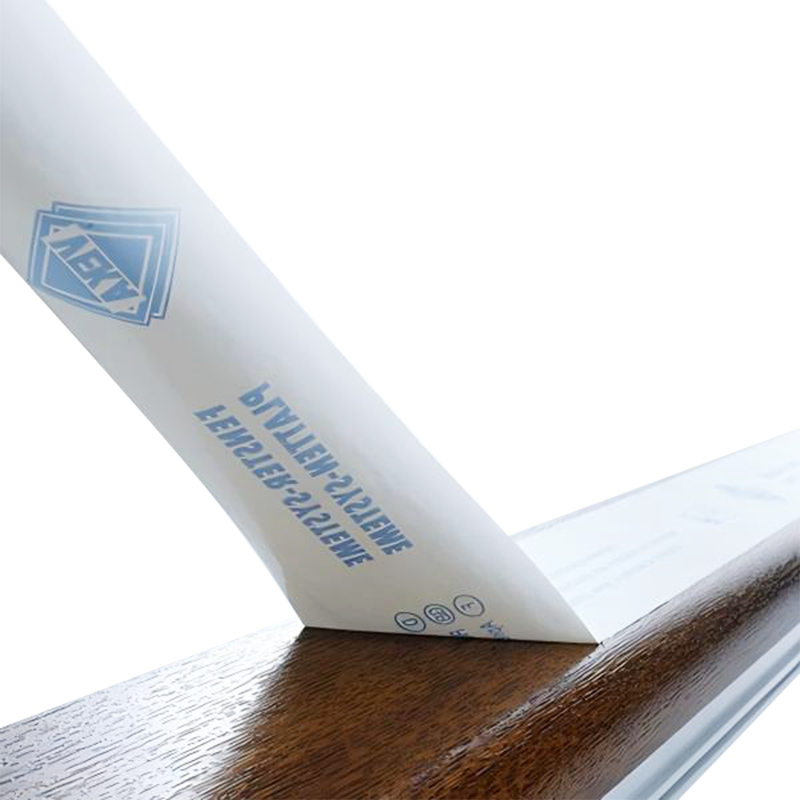
● Good weatherability for outdoor exposure; ● Stable adhesion level; ● UV resistance for up to 12 months; ● Can print customized logo or application i...
See Details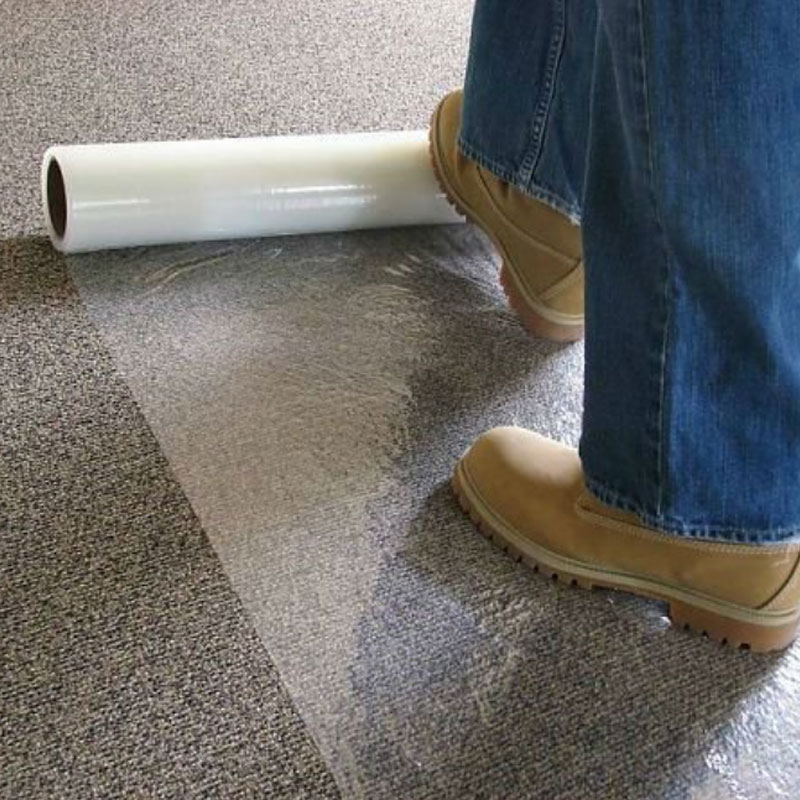
● Protects carpet against staining, paint spillage and dirt during painting, building, remodeling, plastering, tiling, decoration, general maintenance...
See Details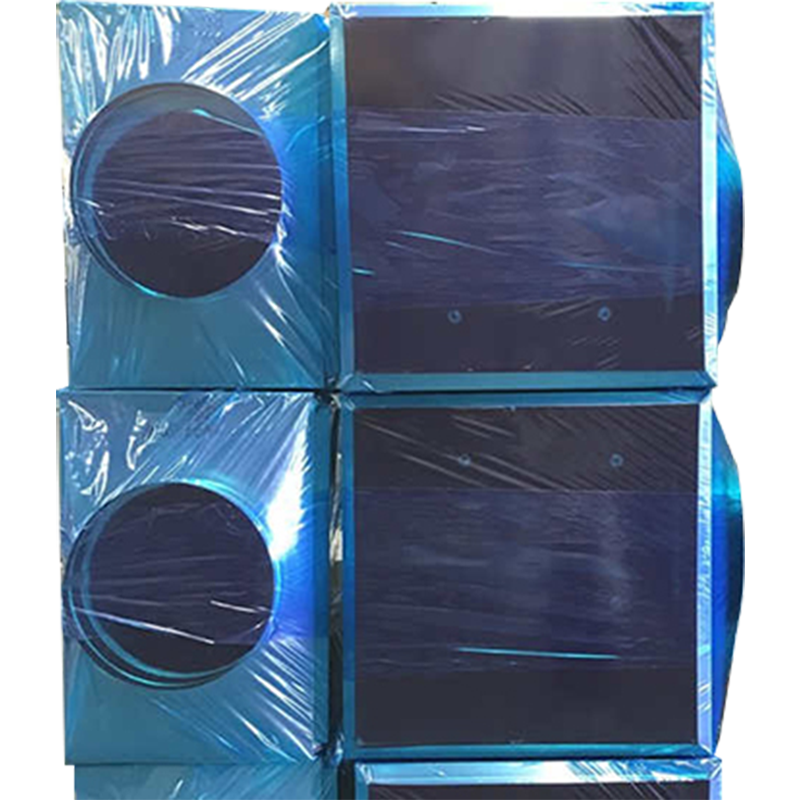
● The super-tough polyethylene film resists puncture and penetration by liquid and dirt during storage, transportation, and installation of the ductwo...
See Details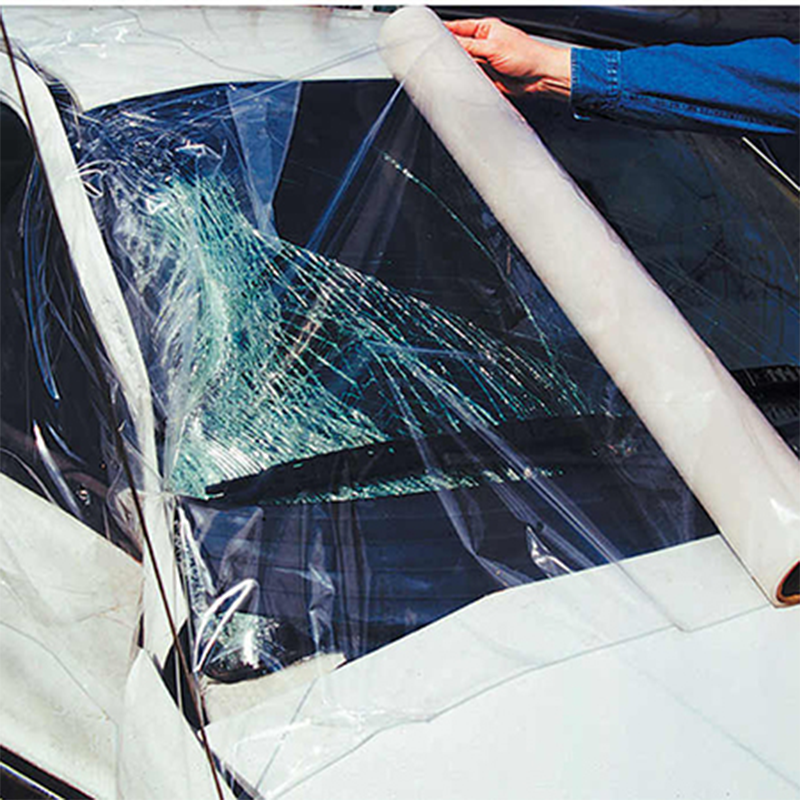
● The super-tough polyethylene film resists puncture and penetration by rain, snow, debris, and dirt during the transportation and storage of the cras...
See Details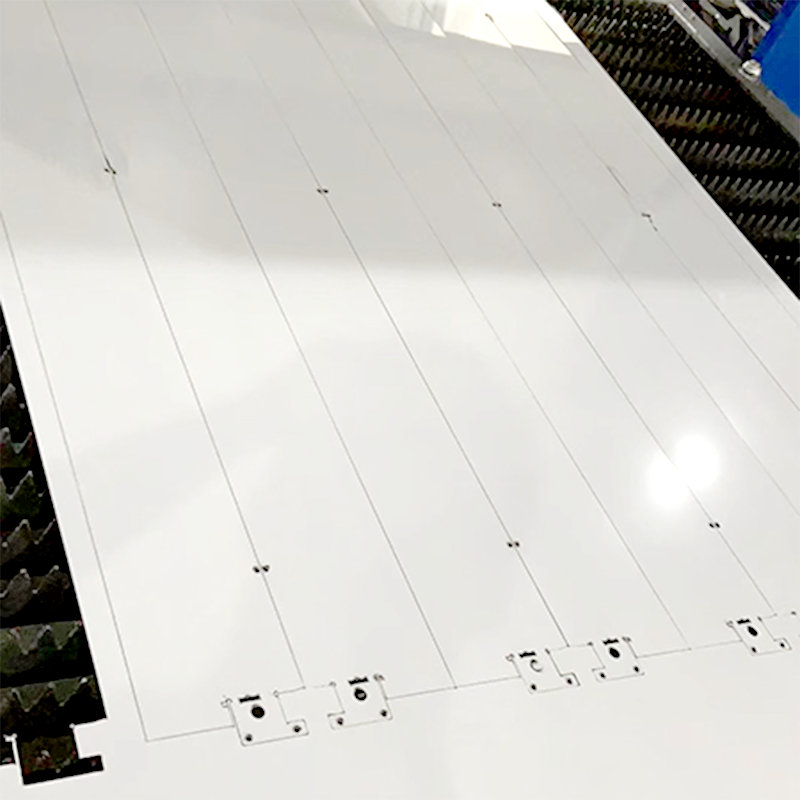
● The specially formulated natural rubber adhesive suitable for both CO2 and Fiber laser cutting processes;● High cutting quality without burr or trac...
See Details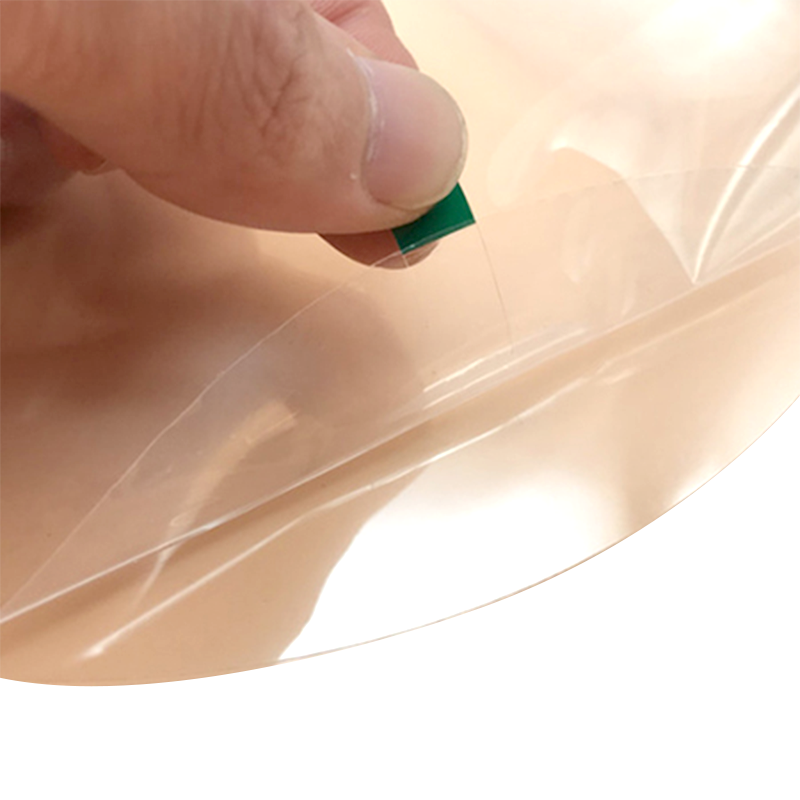
● Suitable for plastic sheets’ drilling, cutting, routing, thermoforming, bending, or post-fabrication operations;● No “ghost shadow” or “fish eye” af...
See Details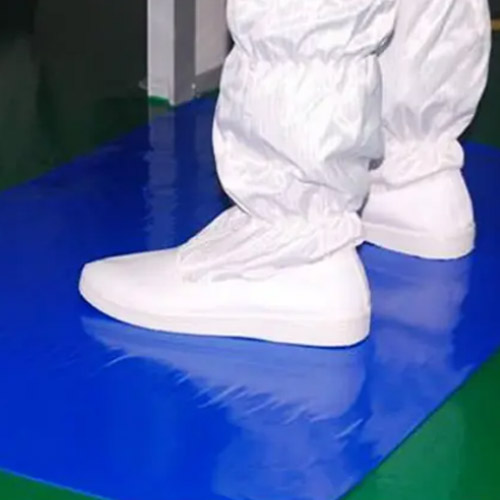
● Options for either 30 or 60 layers per mat; can be packed with four mats, eight mats, or ten mats per carton;● Remove dirt effect: ≥99.9% (5 steps);...
See Details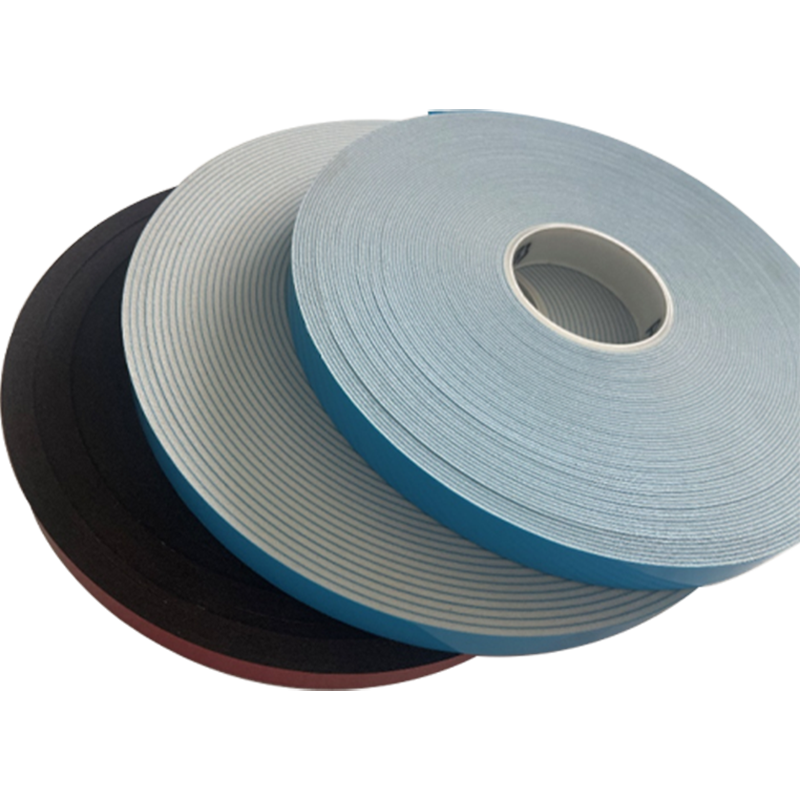
● Waterproof - the desirable material for waterproofing. ● Dust-proof - positive performance of dust prevention.● Low resilience - prevent the deforma...
See Details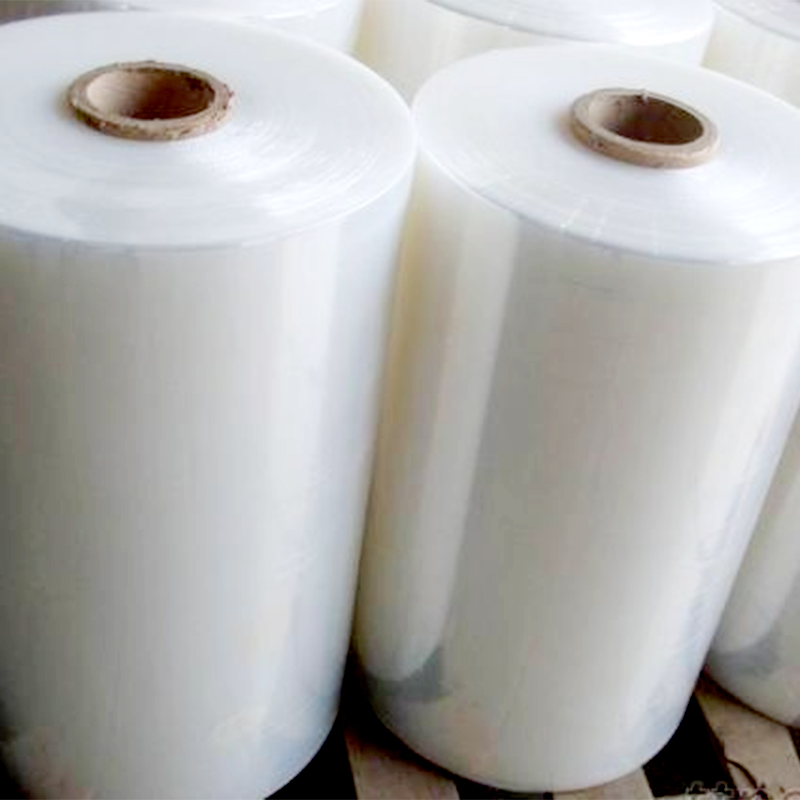
● Excellent puncture and tear resistance; ● Self-adhering-each layer of film bonds to the next for added strength; ● Big roll size to save cost and re...
See Details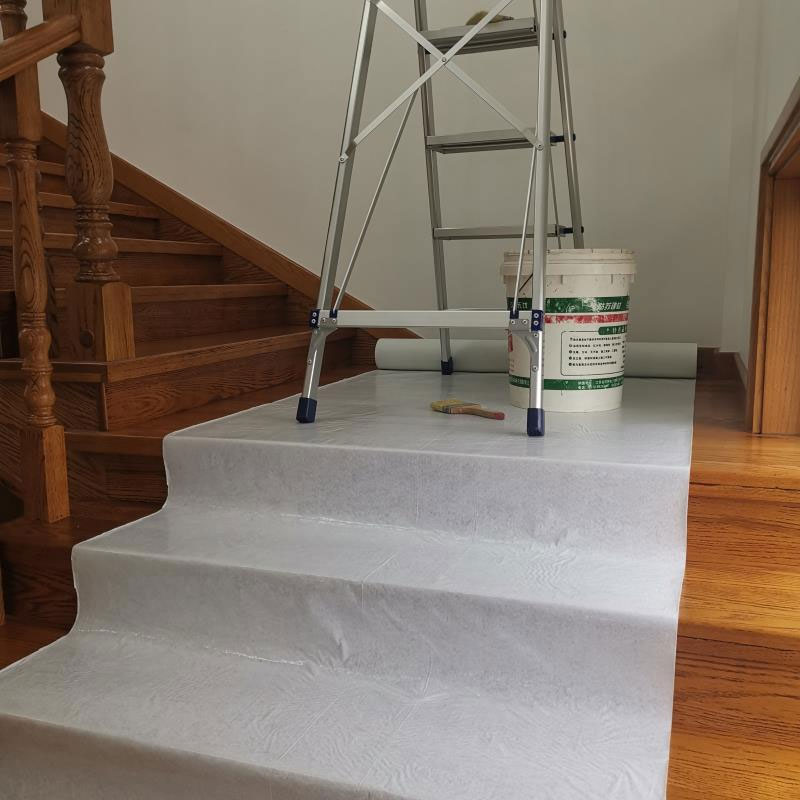
This product has non-woven synthetic fleece in middle; Breathable PE film adhered onto top of the non-woven fabric, which is coated with self adhesive...
See DetailsWe’re a reliable partner that shapes our expertise into success for your project.
Copyright 2024 Wuxi Qida Tape Co., Ltd. All Rights Reserved
 Wholesale Protective Film/Foil Manufacturers
Privacy