

 English

 English
 русский
 Français
 Español
 Português
 عربى


Cat:Glue -coated Protective Film
● No “ghost shadow” or “fish eye” after removal; ● Low gel content, soft and stable adhesion plus easy-peel removal with no surface damage or curling;...
See Details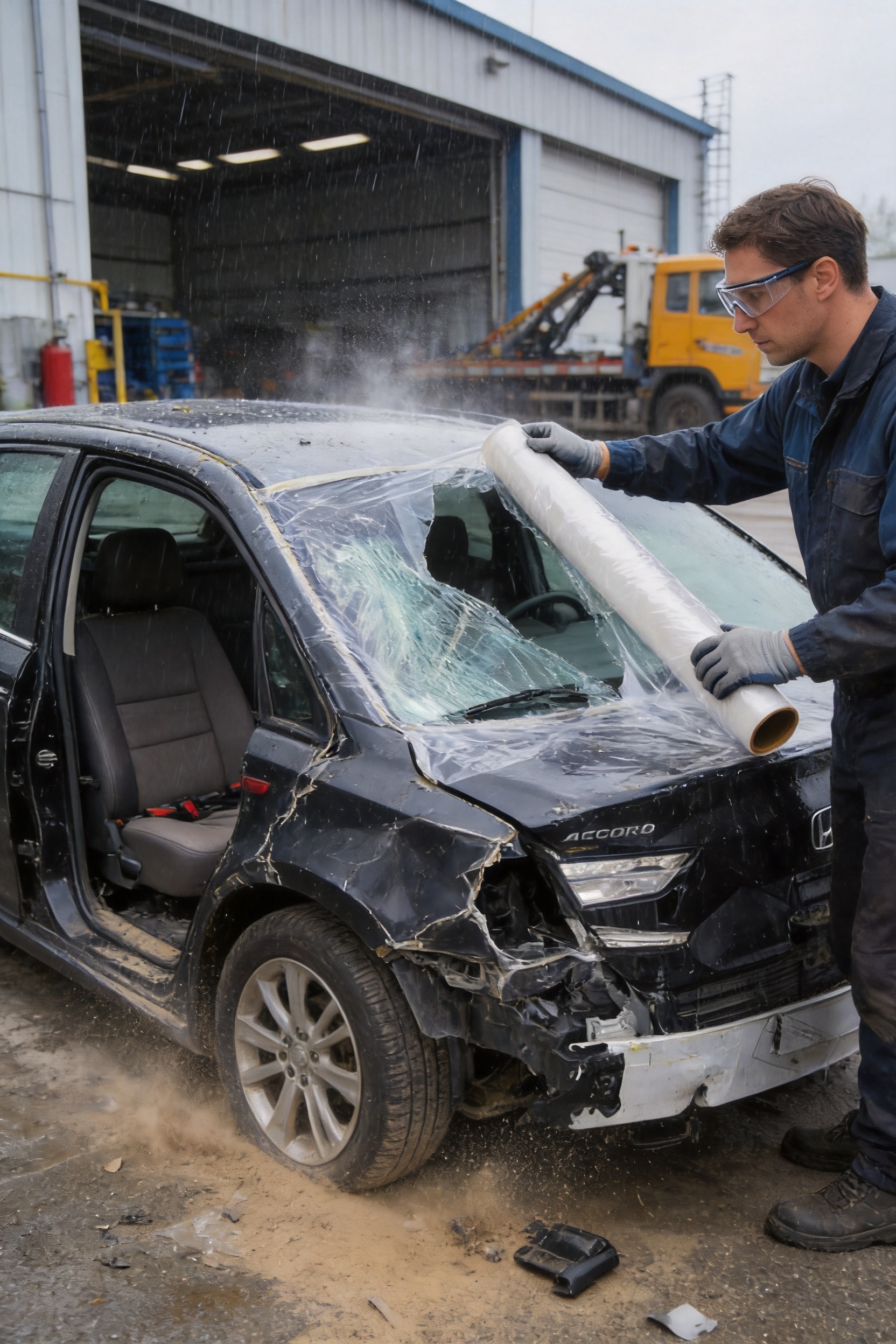
When a vehicle has been involved in an accident, broken windows, cracked panels, exposed interiors, and loose components can create serious risks during towing, transportation, storage, inspection, and repair. Rain, snow, road spray, dust, dirt, wind, and flying debris may cause additional damage long after the original collision. Crash wrap film provides a practical temporary barrier that helps protect damaged automotive vehicles while they are moved or held before repair.
Designed for demanding automotive applications, crash wrap film combines a tough polyethylene backing with a specially formulated acrylic adhesive. The film can be applied over damaged body panels, broken windows, gaps, openings, and other vulnerable areas. It helps prevent water and debris from entering the vehicle while also helping hold loose parts and cracked glass in place during transportation and storage.
This article explains the structure, performance, applications, advantages, technical specifications, application methods, quality considerations, and manufacturing strengths associated with crash wrap film. It also describes how Wuxi Qida Tape Co., Ltd. supports customized protective film production through integrated manufacturing, technical development, quality control, and international service.
Crash wrap film is a self-adhesive protective film developed for temporarily covering and securing damaged automotive vehicles. It is commonly used by collision repair centers, towing companies, vehicle auctions, insurance assessors, automotive logistics providers, dealerships, salvage operators, and vehicle storage facilities.
Unlike ordinary household plastic film or low-strength packaging film, crash wrap film is engineered for exposure to outdoor conditions and contact with rough or irregular vehicle surfaces. Its backing film is made from super-tough polyethylene, giving it resistance to puncture, tearing, and penetration. The adhesive layer is formulated to provide strong attachment while allowing removal without leaving adhesive residue when used correctly.
The film may be supplied in clear, blue, green, yellow, white, or other customized colors. Clear film is especially useful when visibility, vehicle identification, and inspection of the covered area are important. Colored film can provide stronger visual identification, branding, warning, or area separation.
Crash wrap film is a temporary protection product. It is not intended to replace permanent vehicle repair, structural restoration, glazing replacement, or professional weatherproofing. Its purpose is to reduce secondary damage and improve handling safety until the vehicle can receive a proper inspection and repair.
A collision may leave a vehicle exposed in several different ways. Windows can be shattered or cracked, doors may no longer close correctly, body panels can be bent, roof sections may be torn, and lights or trim components may become loose. Even when the vehicle remains drivable, these openings can expose the interior and mechanical areas to the environment.
Water entering through a broken window or damaged roof can soak seats, carpets, electronic modules, wiring, insulation, and interior trim. Repeated exposure may lead to mold, unpleasant odors, corrosion, staining, and electrical faults. These secondary problems can significantly increase repair costs and complicate insurance assessment.
Wind can also worsen existing damage. Loose glass, plastic trim, bumper sections, and metal fragments may move during towing or transport. Road vibration can enlarge cracks, loosen components, and cause small damaged areas to become larger. A temporary wrap helps cover openings and can help keep certain loose fragments together until the vehicle reaches a safe repair location.
Outdoor storage presents additional challenges. A damaged vehicle may remain in a yard, auction facility, dealership, or repair queue for days or weeks. During this time, ultraviolet radiation, rain, snow, temperature changes, dust, and airborne debris can continue to affect exposed surfaces. A suitable crash wrap film creates an additional layer of protection during this period.
The performance of crash wrap film depends on the combined properties of its polyethylene backing and adhesive coating. A strong backing without reliable adhesion may lift or tear. An adhesive with excessive aggressiveness may be difficult to remove. A balanced product must provide durability, secure attachment, clean removability, and practical handling.
The polyethylene film acts as the primary barrier against external conditions. Its toughness helps it resist puncture and penetration by rain, snow, dirt, debris, and sharp edges commonly found around damaged vehicles.
Accident-damaged surfaces are rarely smooth. They may include broken glass, bent metal, cracked plastic, exposed fasteners, and irregular edges. A high-strength backing is therefore important because a weak film may split during application or fail when exposed to wind and movement.
The film’s toughness also supports transportation operations. A vehicle may be loaded onto a tow truck, moved through a storage yard, transferred between facilities, or transported over long distances. During these activities, the film may encounter wind pressure, vibration, contact with straps, and airborne particles. Strong polyethylene helps maintain coverage under these conditions.
Crash wrap film is designed with a very high adhesion level to help it remain attached to metal, glass, plastic, painted surfaces, and other automotive substrates. Reliable adhesion is particularly important around corners, edges, window frames, door gaps, and uneven damage areas.
The adhesive must maintain contact when the vehicle is exposed to changing temperatures and outdoor weather. If the film peels away, water and debris may enter through the newly exposed gap. Secure adhesion also reduces the risk of loose film flapping during towing.
At the same time, high adhesion does not necessarily mean permanent bonding. The specially formulated acrylic adhesive is intended to provide strong temporary attachment while allowing clean removal under suitable conditions. This balance distinguishes purpose-made crash wrap film from generic high-tack tapes or uncoated plastic sheeting.
After the damaged vehicle reaches the repair facility, the protective material should be removable without leaving significant sticky residue. Clean removal saves labor, reduces the need for solvent cleaning, and helps preserve the appearance of paint, glass, plastic, and metal surfaces.
Removal performance can be affected by surface condition, exposure time, temperature, paint quality, contamination, and application technique. For best results, users should follow the recommended storage and application conditions and test the film on an inconspicuous area when the substrate is unusual, freshly painted, oxidized, or otherwise sensitive.
Crash wrap film is intended for outdoor exposure and provides good weather ability. It helps protect damaged vehicles against rain, snow, wind, dirt, and other environmental conditions encountered during transportation and temporary storage.
The product is also designed with ultraviolet resistance for up to 12 months under appropriate conditions. Actual service life may vary according to climate, sunlight intensity, temperature, surface condition, installation quality, and the degree of mechanical stress. The stated UV performance gives operators a useful reference when planning storage and repair schedules.
With elongation of at least 300 percent according to the supplied technical information, the film can accommodate many curved and irregular vehicle surfaces. High elongation helps the installer cover contours, corners, recessed areas, and edges without immediate splitting.
Flexibility is valuable when protecting damaged doors, quarter panels, hoods, roofs, windows, trunks, and other areas with complex shapes. It also helps the film remain continuous over a larger coverage area, reducing the number of seams through which water or dirt might enter.
Clear crash wrap film allows users to inspect the protected area without removing the film. This can be helpful during vehicle identification, damage assessment, inventory checks, insurance inspection, and storage management. Transparency also allows light into the vehicle and minimizes visual changes to the vehicle’s appearance.
Colored versions are useful when a fleet operator or repair organization needs visual classification. Different colors can identify damage status, transport destination, repair priority, ownership, or internal handling instructions. Printing of up to three colors is available for applications requiring logos, warnings, instructions, or other identification marks.
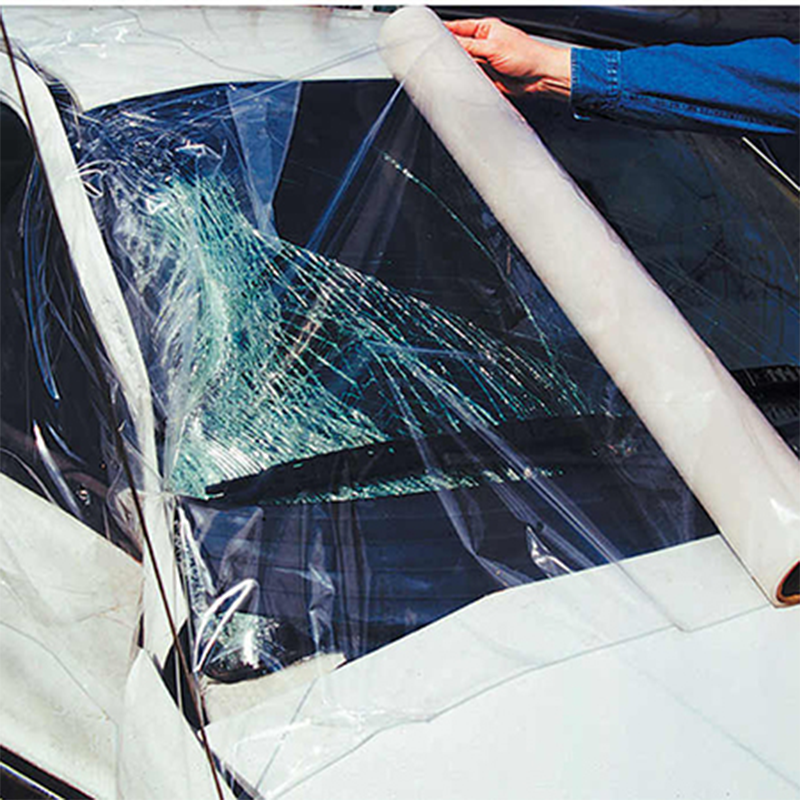
Crash Wrap Film
The following specifications summarize the principal product information supplied for crash wrap film. Exact values, tolerances, core dimensions, packaging, and adhesive performance should be confirmed for each production order because the product can be customized according to application requirements.
Specification | Available Information |
Product type | Self-adhesive crash protection film |
Film material | Polyethylene |
Thickness | 70 to 150 micrometers |
Width | 500 to 1,200 millimeters |
Roll length | Approximately 25 to 200 meters, depending on configuration |
Elongation | At least 300 percent |
Adhesion level | Very high |
Adhesive type | Acrylic |
Film color options | Clear, blue, green, yellow, white, and other colors |
Printing | Up to three colors |
Outdoor performance | Good weather resistance and UV resistance for up to 12 months under suitable conditions |
The thickness range allows users to select a construction according to the required balance of toughness, handling, flexibility, and cost. A thinner grade may be convenient for lighter temporary coverage, while a thicker grade can offer a stronger barrier for rough transport conditions or more demanding damage areas.
Width selection is equally important. Narrow rolls may be easier for individual repair technicians to handle around windows or doors. Wider rolls can cover large body sections more efficiently and reduce the number of overlapping pieces. The most suitable width depends on the size of the vehicle, the damaged area, the number of workers, and the available application space.
Many temporary covering materials are available, including tarpaulins, stretch film, masking tape, duct tape, general packaging film, and non-adhesive plastic sheets. These products may have limited usefulness, but they do not provide the same combination of adhesion, flexibility, weather resistance, and clean removability as a purpose-designed crash wrap film.
Non-adhesive plastic sheets must generally be secured with ropes, straps, tape, clips, or other fasteners. These additional components can create gaps, increase installation time, and place pressure on already damaged areas. Wind can also get underneath an unsecured sheet.
Crash wrap film adheres directly to the vehicle surface, creating a closer seal around the covered area. This makes application more streamlined and reduces the need for separate fastening accessories. The installer can shape the film to the damage and press the edges into place for a more controlled temporary barrier.
Standard stretch film is primarily developed for pallet wrapping and load stabilization. It may be too thin, too weak, or unsuitable for direct application to automotive paint, glass, and plastic surfaces. It may also lack the adhesive system needed to remain attached to a damaged opening.
Crash wrap film is developed specifically for protective coverage. Its tough polyethylene backing, high elongation, strong acrylic adhesive, and outdoor performance make it more appropriate for accident-related vehicle protection.
Duct tape is useful for many temporary repairs, but it is not usually designed to cover large irregular areas. Applying many strips of tape can be slow, create seams, and leave adhesive residue. Tape may also fail to provide a continuous protective barrier against water and debris.
Crash wrap film covers larger surfaces with fewer joints. Its adhesive is spread across the film, supporting more uniform contact. The result can be cleaner, faster, and easier to remove than a patchwork of individual tape strips.
Low-grade protective films may have inconsistent thickness, weak backing strength, unstable adhesion, or limited UV resistance. These weaknesses can appear during transportation when the film is exposed to wind, vibration, and sharp edges.
A professionally manufactured crash wrap film offers a more controlled combination of material thickness, adhesive coating, winding quality, width accuracy, printing, and packaging. Consistency is especially important for repair chains, logistics providers, and distributors that need predictable performance across repeated applications.
Repair centers use crash wrap film to protect vehicles while they wait for inspection, parts, approval, or workshop capacity. Covering broken windows and open body sections helps reduce additional damage before permanent repairs begin.
During towing, vehicles may travel through rain, snow, dust, and high wind. A wrap can help protect exposed interiors and prevent loose parts from becoming more unstable. It can also help reduce the amount of debris entering the vehicle during loading and transport.
Auction operators often store damaged vehicles outdoors while they await valuation or sale. Crash wrap film can help maintain a cleaner condition and protect vehicles between arrival, inspection, photography, auction, and collection.
Insurance companies and assessment providers may handle large numbers of damaged vehicles. A consistent temporary protection method can help standardize storage and reduce secondary weather-related damage while claims are being processed.
Dealerships may need to protect trade-in vehicles, transport-damaged stock, demonstration units, or vehicles awaiting bodywork. Clear film can preserve visibility and identification while reducing the visual impact of temporary protection.
Salvage operators and long-term storage facilities may keep damaged vehicles outdoors for extended periods. The film’s weather and UV resistance can provide a useful protective layer during the interval before dismantling, auction, export, or repair.
Logistics companies move vehicles between accident locations, repair facilities, storage yards, ports, and dealerships. Crash wrap film supports safer and cleaner movement by helping cover openings and stabilize vulnerable areas during handling.
Correct application is essential to achieving strong adhesion, weather protection, and clean removal. The following procedure provides a practical general method. Operators should also consider the vehicle manufacturer’s recommendations and the condition of the specific surface.
Remove loose debris, dirt, broken glass, dust, and other contaminants from the area to be covered. A soft brush, cloth, or suitable cleaning tool can be used. Sharp fragments should be handled carefully, and appropriate personal protective equipment should be worn.
Clean the surface with a mild detergent or an appropriate cleaning solution. Oil, grease, dust, road film, and other contaminants may reduce adhesive contact. Avoid using chemicals that could damage automotive paint, plastic, rubber, or trim.
The surface must be completely dry before the film is applied. Moisture between the film and substrate can reduce adhesion and create pathways for water penetration. If the vehicle has been exposed to rain or washing, allow sufficient drying time before beginning.
Measure the damaged opening or area that needs protection. Add several extra inches on all sides so the film can extend beyond the damage and adhere to sound surrounding surfaces. Adequate overlap is important for creating a continuous seal.
When covering a large opening, consider the direction of wind, water flow, door movement, and vehicle handling. The film should not interfere with essential functions such as steering, braking, lighting, emergency access, or safe towing.
Cut the film with sharp scissors or a suitable utility knife. Cutting on a flat, stable surface helps produce clean edges. Avoid dragging the adhesive side across dirty floors or work surfaces because contamination can affect bonding.
For complex shapes, make a paper or temporary layout pattern first when practical. This can reduce waste and help the installer plan overlaps around corners, mirrors, handles, window frames, and body contours.
Start at one corner and peel back a small section of the release backing. Avoid touching the adhesive with bare fingers whenever possible. Fingerprints, oil, and dirt can reduce contact in critical areas.
Align the exposed edge with the selected starting line. Press the film gently into position. Do not remove the entire backing before alignment is confirmed, especially when working with a wide roll or a large irregular area.
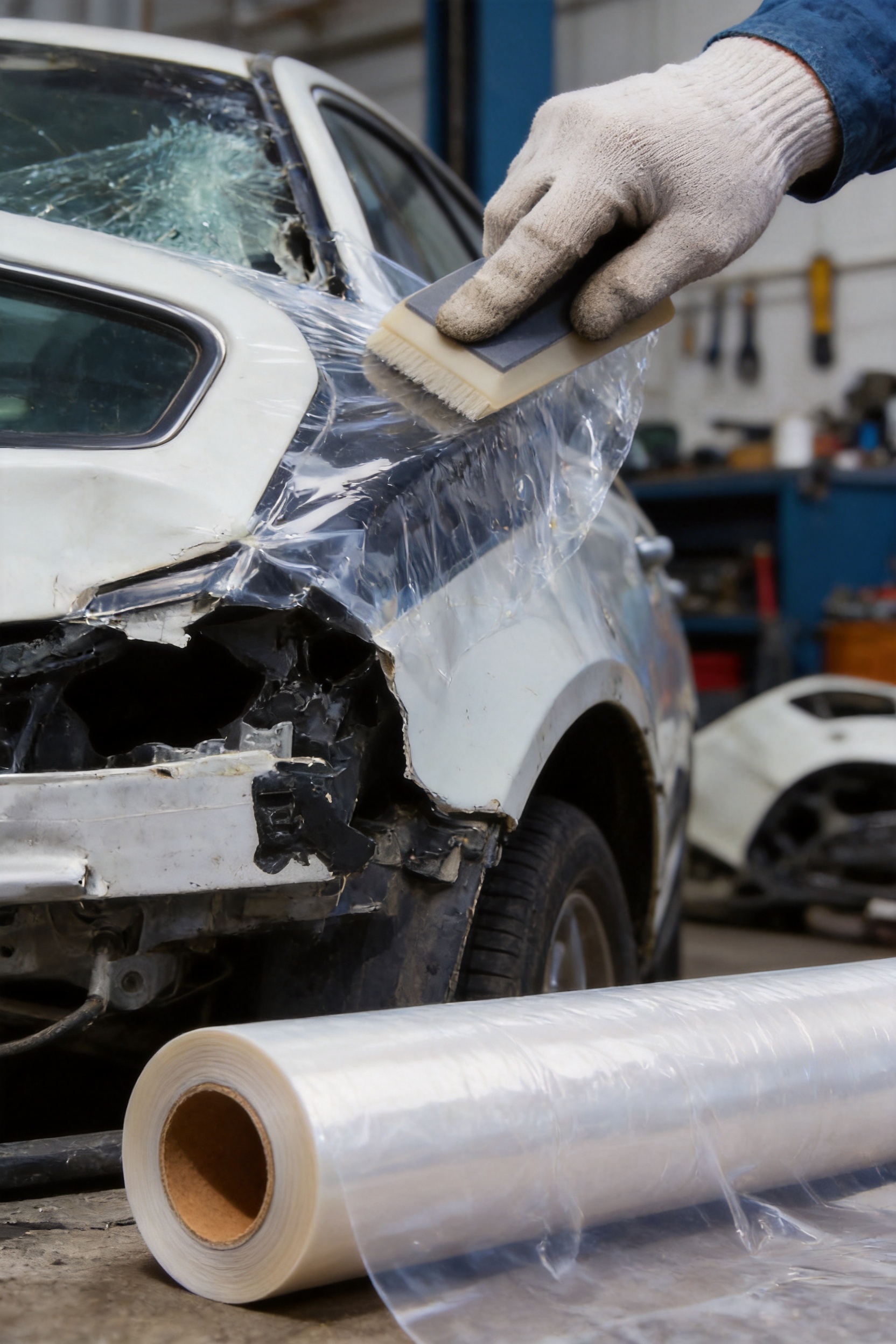
Gradually peel away the remaining backing while pressing the film onto the vehicle. Use a squeegee, soft flat tool, or clean gloved hand to work from the center toward the edges. This method helps reduce wrinkles and trapped air.
If an air bubble or fold develops, lift the film carefully and reapply the affected section. Avoid excessive stretching that could create permanent tension or cause the film to pull away from corners later.
Press firmly along all edges to ensure full contact. Pay special attention to corners, creases, window frames, door edges, and areas exposed to wind. If more than one piece is needed, overlap adjacent pieces by at least one inch or according to the application requirement.
Inspect all overlaps for gaps. Water and debris can enter through small openings, especially when the vehicle is transported in rain or snow. Repress any loose sections and add additional film if necessary.
Check that the film is firmly attached, the damaged area is fully covered, and no loose edges are flapping. Confirm that doors, windows, lights, mirrors, wheels, towing points, and safety equipment remain accessible and functional as required.
Record the application date when the vehicle may remain protected for an extended period. Regularly inspect the film during storage and after transportation. Replace it if it has been punctured, torn, significantly lifted, or contaminated.
Broken automotive glass and sharp metal edges can cause serious injury. Personnel should wear suitable gloves, eye protection, and protective clothing when cleaning and covering damaged vehicles. Crash wrap film should not be treated as a substitute for removing dangerous fragments or securing major structural damage.
Do not apply film to surfaces that are excessively hot, wet, oily, heavily contaminated, or chemically unstable. Freshly painted surfaces, weathered coatings, oxidized finishes, and non-standard materials may require testing before full application.
The film should not cover license plates, vehicle identification numbers, warning labels, lights, ventilation openings, emergency equipment, or controls when doing so would create a safety or compliance issue. It should also not be used to conceal structural damage or make an unsafe vehicle appear roadworthy.
Storage conditions can affect product performance. Rolls should generally be kept in a clean, dry environment away from direct sunlight, excessive heat, moisture, and chemicals. Keeping the original packaging intact until use helps protect the adhesive and film surface.
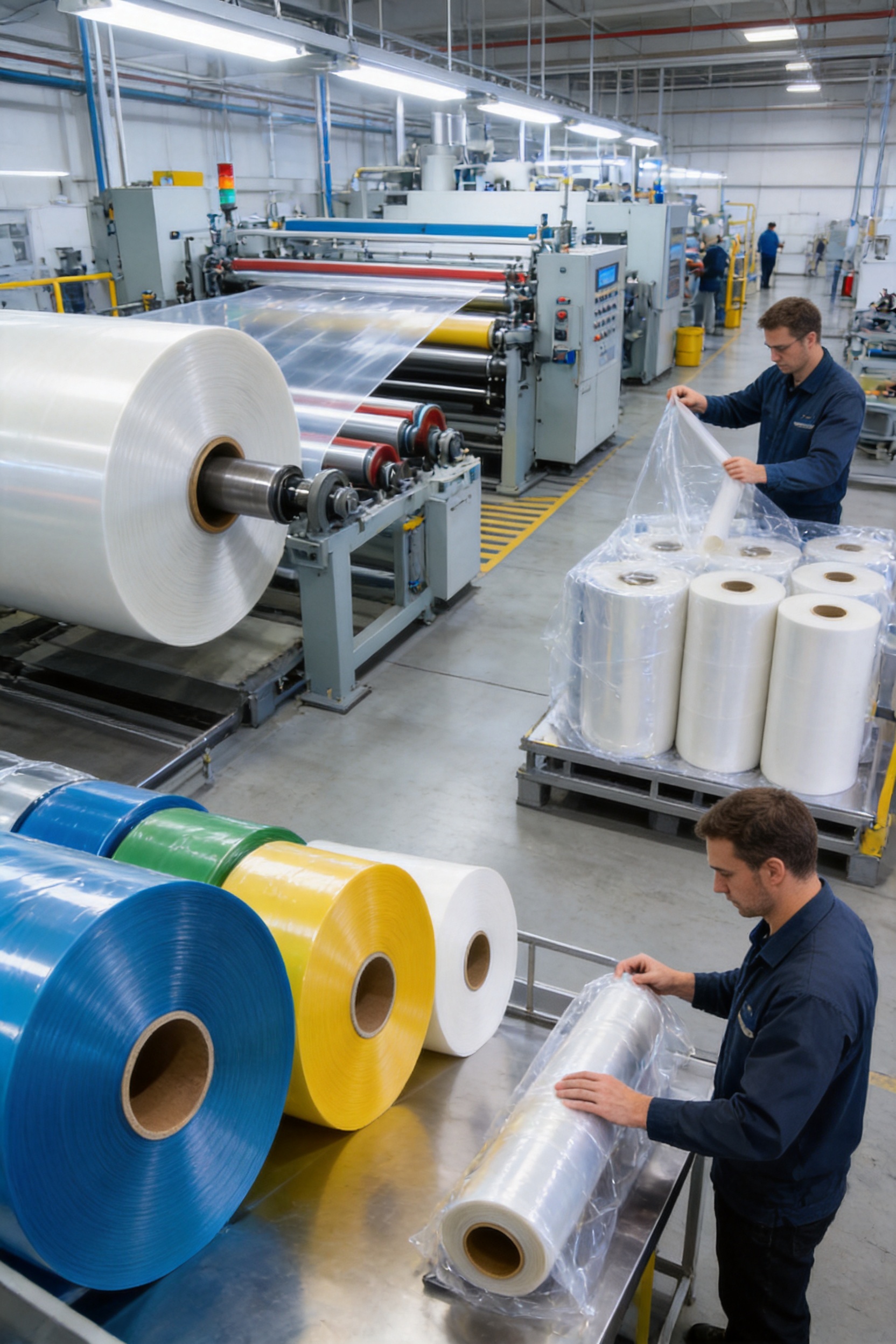
Wuxi Qida Tape Co., Ltd. is a manufacturer specializing in protective films and surface protection solutions. Its production capabilities cover multiple stages, including backing film production, adhesive coating, logo printing, rewinding, slitting, and packaging. This integrated approach provides greater process control than relying entirely on external suppliers.
The polyethylene backing is the foundation of crash wrap film. Control of film formulation, thickness, mechanical strength, elongation, winding, and surface condition helps establish the final product’s durability and handling characteristics.
Internal control of backing film production can support more consistent thickness and reduce variation between production batches. It also gives technical personnel greater flexibility when developing different grades for specific thickness, width, color, or performance requirements.
The adhesive coating stage determines how the film bonds to automotive surfaces and how it behaves during removal. Uniform coating is important because excessive adhesive can make handling difficult, while insufficient or uneven adhesive may lead to lifting and poor protection.
The company offers several adhesive options across its broader product range, including acrylic water adhesive, acrylic solvent adhesive, and natural rubber adhesive. Crash wrap film is specified with an acrylic adhesive system. The exact adhesive construction can be selected and optimized according to the target surface, climate, application duration, and removal requirements.
Printing capability of up to three colors allows customers to add identification marks, handling instructions, warnings, product information, or company graphics. Custom printing may help fleet operators organize vehicles and help distributors offer differentiated products.
Customization can also include film color, thickness, width, roll length, packaging format, core size, and labeling. The most suitable configuration depends on the customer’s application method, storage conditions, sales channel, and transport requirements.
Rewinding and slitting convert coated master rolls into practical commercial sizes. Accurate slitting supports clean edges and consistent roll widths. Controlled winding helps reduce telescoping, wrinkles, loose edges, and handling problems.
Different users require different roll formats. A collision repair technician may prefer a manageable roll for one vehicle, while a large logistics operator may require longer or wider rolls to improve productivity. Flexible converting capabilities make it possible to match the material to the working environment.
Quality control should address the film, adhesive, printing, roll construction, packaging, and finished appearance. Typical inspection considerations include thickness, width, elongation, adhesion, visual defects, winding quality, color consistency, and packaging integrity.
Wuxi Qida Tape Co., Ltd. operates a testing laboratory and uses inspection equipment to support product evaluation. Its quality and environmental management systems are certified under ISO 9001 and ISO 14001. The company also identifies compliance and testing support associated with SGS, RoHS, REACH, PFAS, and Prop 65 requirements.
Crash wrap film performance is not determined by one specification alone. A product may have a strong backing but poor adhesion, or strong adhesion but difficult removal. An experienced manufacturer evaluates the entire system, from raw materials and coating conditions to finished roll conversion and customer application.
A specialized producer can help customers select an appropriate thickness, width, color, adhesive construction, and roll length. This technical support is valuable when the film will be applied to different paint systems, glass types, plastics, metals, or irregular vehicle surfaces.
Manufacturing experience also supports troubleshooting. If a customer experiences edge lifting, residue, tearing, bubbles, or difficulty during removal, the supplier can investigate whether the cause is related to surface preparation, application temperature, adhesive selection, film thickness, storage, or converting quality.
Wuxi Qida Tape Co., Ltd. was founded in 1999 and operates a factory area of approximately 20,000 square meters with more than 95 experienced staff members. Its reported annual production capacity exceeds 12,000 tons, and its products are supplied in China and exported to approximately 90 overseas areas.
The company’s production system supports both standard products and customized development. Its research and development team works with technical data sheets, samples, and customer requirements to develop protective film solutions for different applications.
Customers may require a particular combination of thickness, adhesion, color, width, print, or roll length. A manufacturer with internal technical and production capabilities can evaluate these requirements more efficiently than a trading company that must coordinate every stage through separate suppliers.
Custom development is particularly useful for automotive groups, repair networks, distributors, and private-label brands that need a consistent product specification across multiple locations.
Large production capacity helps support repeat orders and commercial supply programs. It can also help reduce the risk of inconsistent material availability when customers operate multiple warehouses, repair centers, or distribution channels.
Capacity alone is not sufficient; it must be combined with process control and inspection. The company’s stated combination of production equipment, experienced personnel, testing facilities, and quality management supports a more reliable supply structure.
Integrated manufacturing can reduce unnecessary external handling and improve control over material usage, coating, converting, and packaging. These efficiencies may contribute to competitive pricing while maintaining the performance needed for professional applications.
Customers should evaluate total value rather than unit price alone. A film that applies quickly, stays attached during transport, protects against secondary damage, and removes cleanly may reduce labor, rework, cleaning, and claims-related costs.
Protective film products are supplied to customers in Europe, North America, Australia, the Middle East, Japan, and other regions. Experience with international customers can support communication regarding packaging, documentation, product compliance, shipping, labeling, and technical requirements.
For importers and distributors, dependable export service is especially important because protective film is often purchased as a repeat industrial supply rather than a one-time item. Clear specifications and stable production help customers plan inventories more effectively.
Before placing an order, users should identify the main application conditions. Consider whether the product will be used for short-distance towing, long-distance transportation, outdoor storage, auction handling, or extended repair delays. The expected exposure time will influence the preferred thickness, adhesive, and UV performance.
Surface type is another important factor. A vehicle may contain painted steel, aluminum, glass, plastic, rubber, chrome, and composite panels. While crash wrap film is designed for common automotive surfaces, unusual or sensitive substrates should be tested before broad application.
Users should also determine whether clear or colored film is more appropriate. Clear film supports inspection and minimizes visual change. Colored film may be more visible in a busy storage yard or useful for identifying vehicle status.
Width and roll length should match the application team. A roll that is too wide may be difficult for one person to control. A roll that is too narrow may require excessive overlaps. Selecting a practical format can improve productivity and reduce waste.
Selection Factor | Questions to Consider | Potential Product Response |
Exposure duration | How long will the vehicle remain covered? | Select suitable thickness, adhesive, and UV performance |
Surface type | Will the film contact paint, glass, plastic, or metal? | Confirm compatibility and conduct a test application when necessary |
Coverage area | Are windows, doors, roofs, or large body panels being covered? | Choose suitable width and roll length |
Visibility | Must the covered area remain visible? | Use clear film when inspection and transparency are important |
Identification | Is color coding or printed information needed? | Select colored film or up to three-color printing |
Transport conditions | Will the vehicle face wind, vibration, rain, snow, or dust? | Use a strong film with secure edge application |
Temporary protection products should be used thoughtfully to minimize waste. Applying the correct amount of film, measuring accurately, and avoiding unnecessary overlapping can reduce material consumption. Damaged or contaminated film should be handled according to local waste management requirements.
The company’s ISO 14001 environmental management certification indicates attention to environmental management practices. Customers seeking specific environmental documentation should request the latest technical and compliance information for the selected product and market.
Responsible use also means removing the film promptly when it is no longer required. Extended exposure beyond the recommended period can make removal more difficult, particularly under intense sunlight or high temperatures. Regular inspection and timely replacement help maintain protection while avoiding unnecessary material use.
Crash wrap film is used to temporarily protect damaged vehicles during towing, transportation, outdoor storage, inspection, auction handling, and repair delays. It helps cover broken windows, openings, damaged panels, and exposed areas.
Yes. It can be applied over a broken or cracked window area after loose glass and debris have been removed safely. The film helps reduce water, snow, dust, and debris entering the vehicle. It does not replace permanent glass repair or structural work.
The specially formulated acrylic adhesive is designed for clean removal without leaving adhesive residue under suitable conditions. Surface condition, exposure time, temperature, paint quality, and application method can influence results. A small test area is recommended for sensitive or non-standard surfaces.
The product is designed for outdoor use and offers UV resistance for up to 12 months under appropriate conditions. Actual service life depends on sunlight, climate, surface preparation, mechanical stress, and installation quality. The film should be inspected regularly.
Clear film is available and allows inspection of the protected area while minimizing changes to the vehicle’s appearance. Blue, green, yellow, white, and other colors are also available for identification, visibility, or customization purposes.
Yes. Printing of up to three colors is available. Printed film can include warnings, handling instructions, identification marks, logos, or other customer-defined information.
The stated thickness range is 70 to 150 micrometers. The most suitable thickness depends on the required balance of flexibility, strength, handling, exposure conditions, and budget.
Widths are available from approximately 500 to 1,200 millimeters. Roll lengths are generally available from approximately 25 to 200 meters, depending on the selected configuration and production requirements.
Smaller sections can often be applied by one trained person. Wider or longer sections may be easier and safer with two people, especially when covering roofs, large windows, or broad body panels. Clean preparation and gradual backing removal are important.
The film is intended for common automotive surfaces such as metal, glass, and plastic, but compatibility can vary. Fresh paint, heavily oxidized coatings, textured materials, rubber, or unusual finishes should be tested before full application.
No. Crash wrap film is a temporary protective solution. It helps reduce secondary environmental damage but does not repair structural, mechanical, electrical, glazing, or safety-related damage.
Professional crash wrap film combines a tough polyethylene backing, high elongation, strong acrylic adhesion, outdoor weather performance, UV resistance, practical widths and roll lengths, and clean-removal characteristics. Ordinary plastic may not provide this balanced performance.
Yes. Wuxi Qida Tape Co., Ltd. provides customization based on technical data sheets, samples, and customer requirements. Possible options include thickness, width, roll length, color, printing, packaging, and adhesive-related specifications.
Crash wrap film is an efficient temporary protection material for damaged automotive vehicles. Its super-tough polyethylene backing helps resist puncture and penetration, while its acrylic adhesive provides strong attachment to common automotive surfaces. High elongation supports application over irregular shapes, and the available clear and colored options allow users to balance visibility, identification, and appearance.
The product is especially valuable during towing, transportation, outdoor storage, insurance processing, auction handling, and repair delays. By helping block rain, snow, dirt, debris, and wind, it can reduce the risk of secondary damage and support safer, cleaner vehicle handling.
Compared with non-adhesive sheets, generic stretch film, duct tape, and low-grade protective materials, purpose-designed crash wrap film offers a more complete combination of coverage, adhesion, flexibility, weather resistance, and removability. Correct surface preparation, careful application, secure edge sealing, and regular inspection are essential for achieving the best performance.
Wuxi Qida Tape Co., Ltd. strengthens this product offering through integrated manufacturing, adhesive coating, printing, rewinding, slitting, packaging, laboratory testing, and technical development. Founded in 1999, the company combines production capacity, customization, quality management, environmental management, international supply experience, and support from experienced engineers and technicians.
For automotive repair organizations, logistics providers, storage facilities, distributors, and fleet operators, selecting the correct crash wrap film can improve temporary vehicle protection and operational efficiency. A detailed review of exposure conditions, substrate types, dimensions, adhesive needs, printing requirements, and storage practices will help ensure that the selected product matches the intended application.
1. Product technical information for Crash Wrap Film, including film construction, thickness, width, roll length, elongation, adhesion, colors, printing, and adhesive type.
2. Product application guidance for cleaning, measuring, cutting, applying, smoothing, overlapping, and securing crash wrap film.
3. General automotive collision repair and vehicle transportation practices for temporary protection of damaged vehicles.
4. ISO 9001 quality management system principles.
5. ISO 14001 environmental management system principles.
6. General guidance concerning RoHS, REACH, PFAS, Prop 65, SGS testing, and material compliance documentation.
7. Manufacturer information concerning protective film development, polyethylene film production, adhesive coating, printing, rewinding, slitting, packaging, research and development, and international supply.
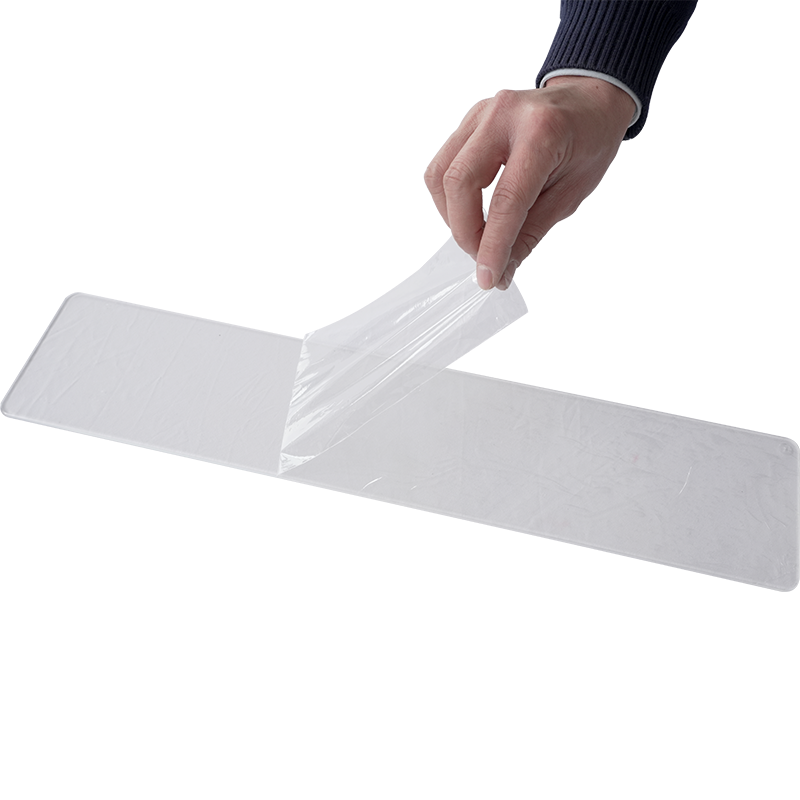
● No “ghost shadow” or “fish eye” after removal; ● Low gel content, soft and stable adhesion plus easy-peel removal with no surface damage or curling;...
See Details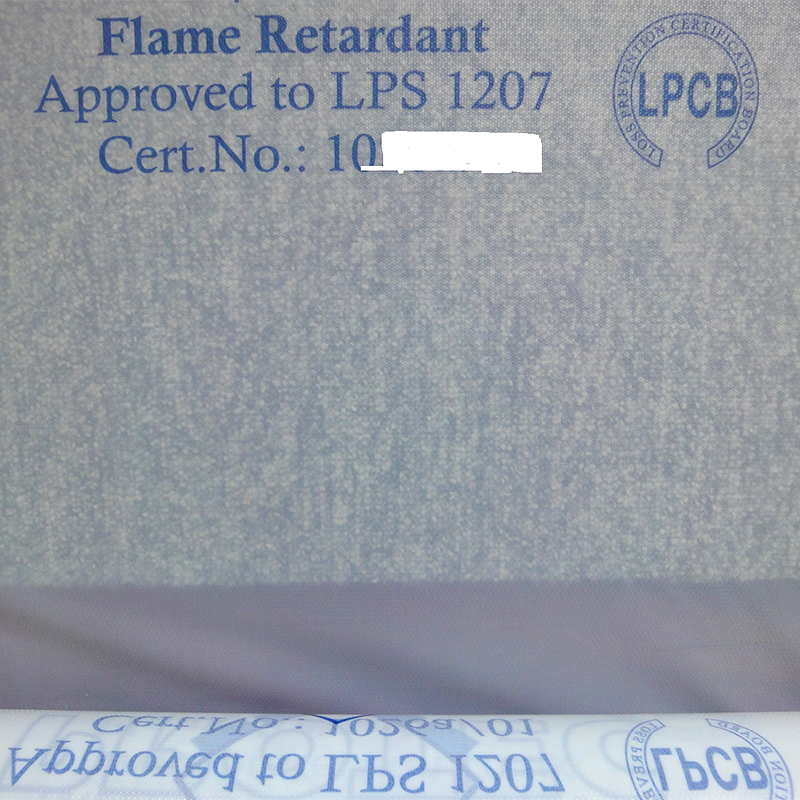
● Prevents costly damages in case of fire /flame;● Meet the strict international test standards of loss prevention; ● Extensive selection for flame re...
See Details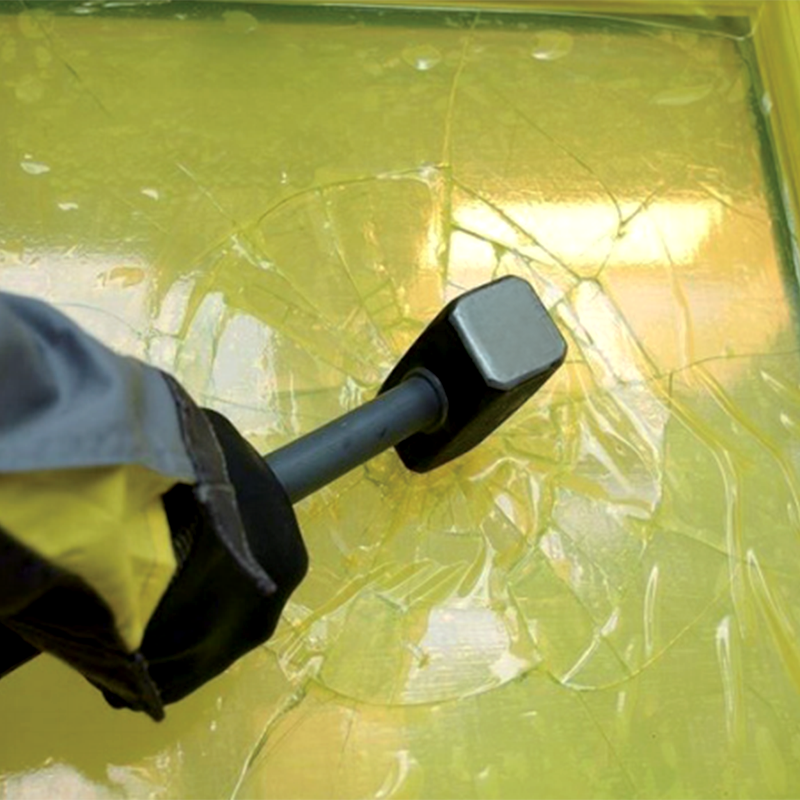
● The super tough polyethylene film with super high adhesion can stop the glass splitting and falling off during window glass demolition process;● Non...
See Details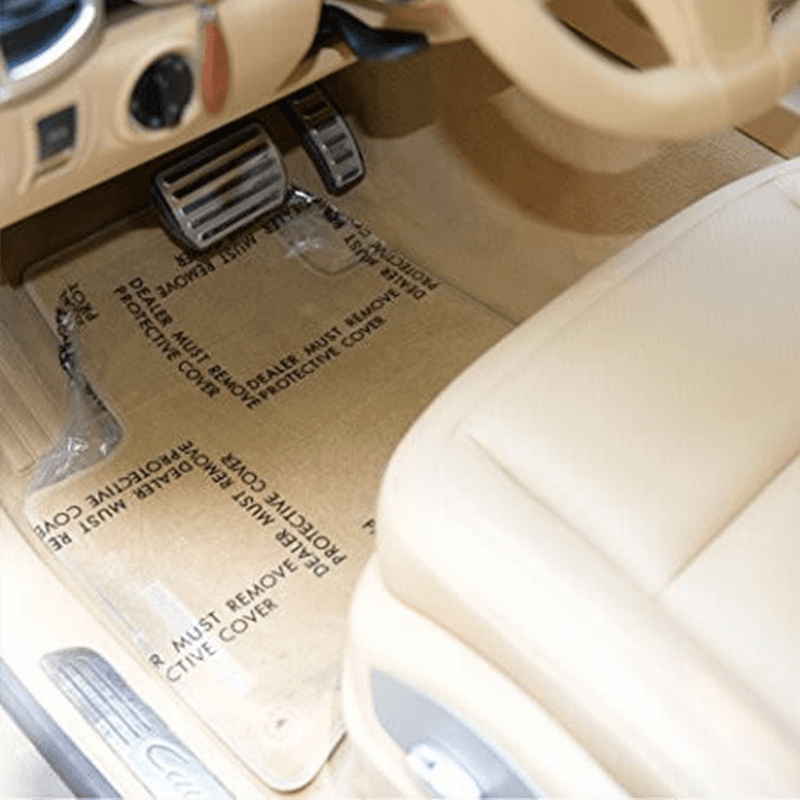
● Distance of each perforation die-cut ranges from 100mm to 1200mm;● Can peel off each die-cut piece of protective film at the perforated line easily;...
See Details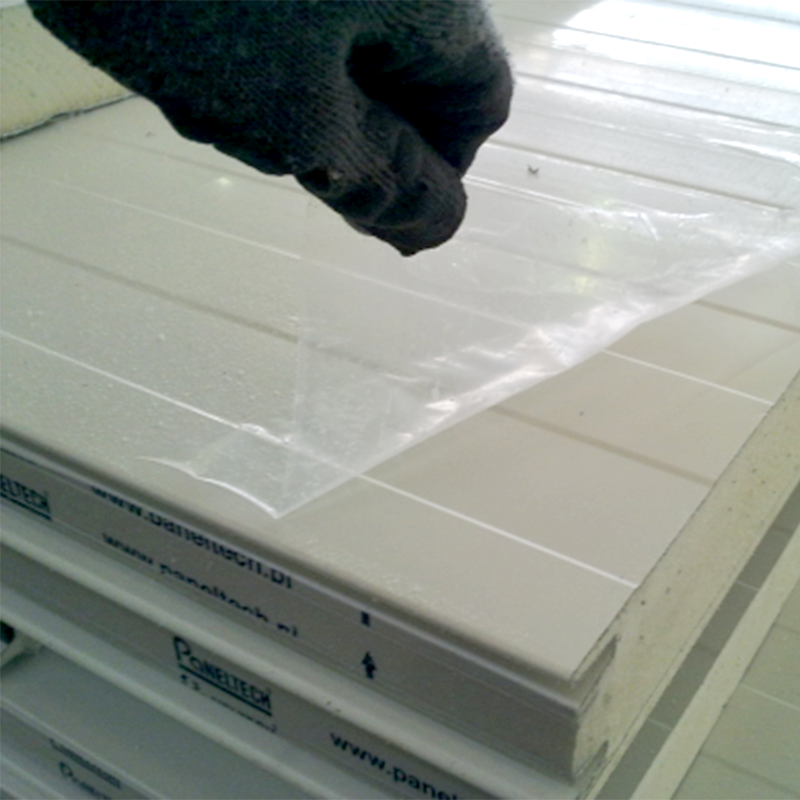
● The specially formulated adhesive ensures easy application and removal without leaving residue glue on the sandwich panels; ● The super-tough polyet...
See Details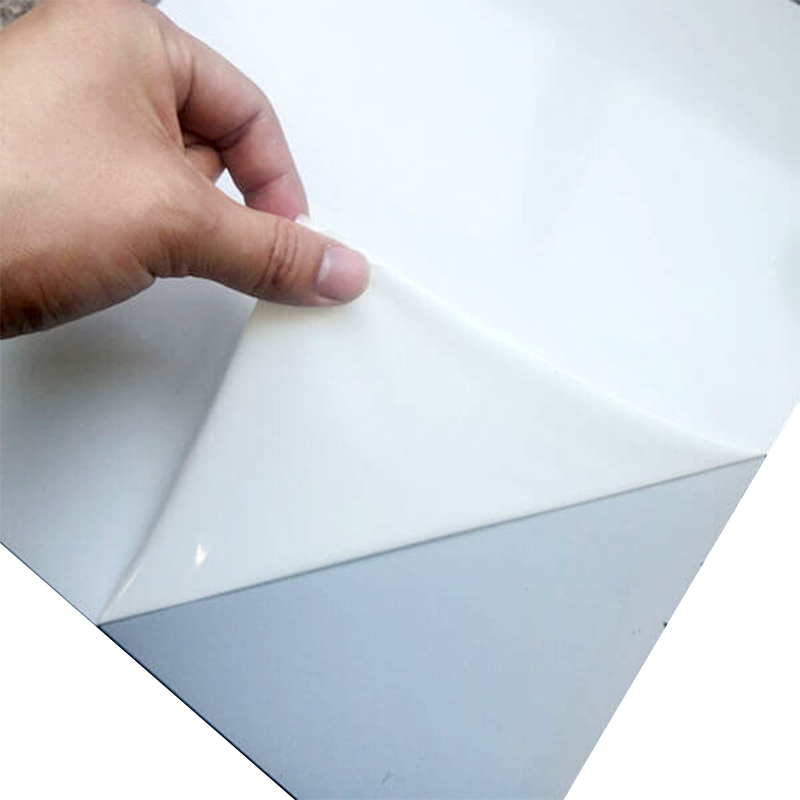
● The super tough polyethylene film with super high adhesion can stop parts of the glass or mirror from splintering away and injuring people when it i...
See Details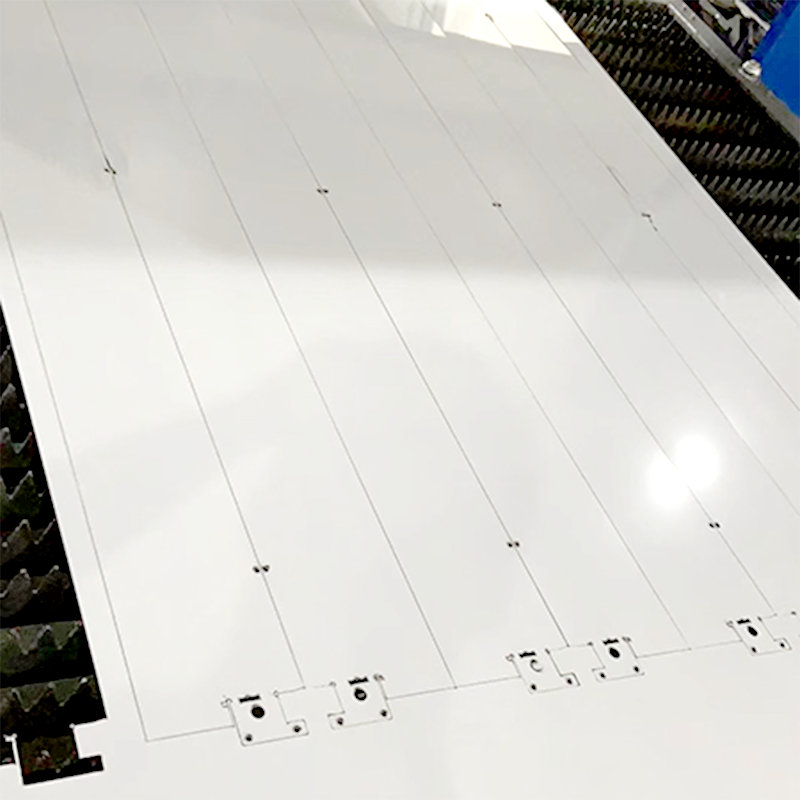
● The specially formulated natural rubber adhesive suitable for both CO2 and Fiber laser cutting processes;● High cutting quality without burr or trac...
See Details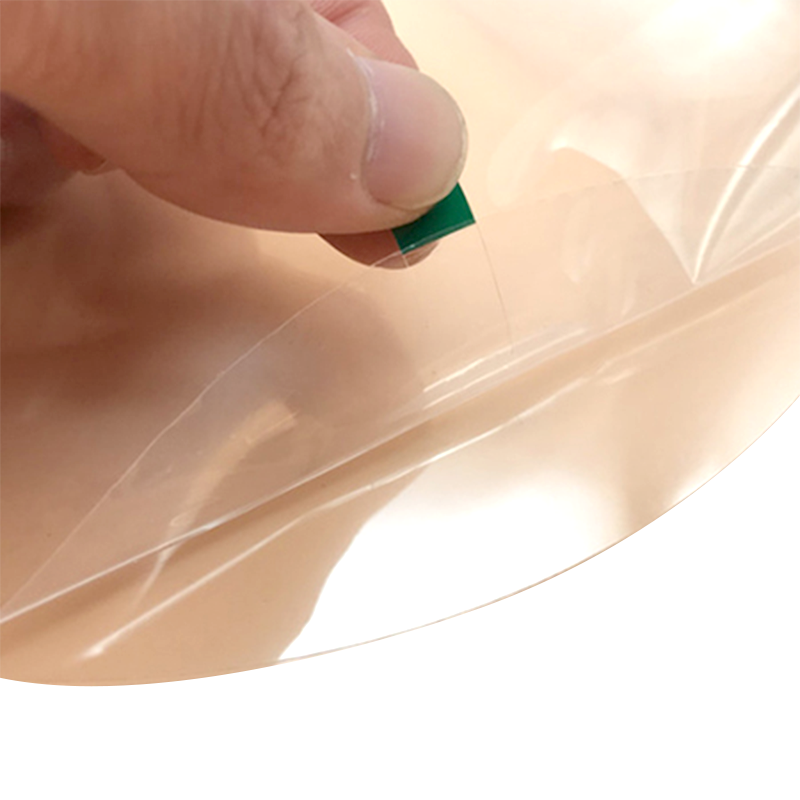
● Suitable for plastic sheets’ drilling, cutting, routing, thermoforming, bending, or post-fabrication operations;● No “ghost shadow” or “fish eye” af...
See Details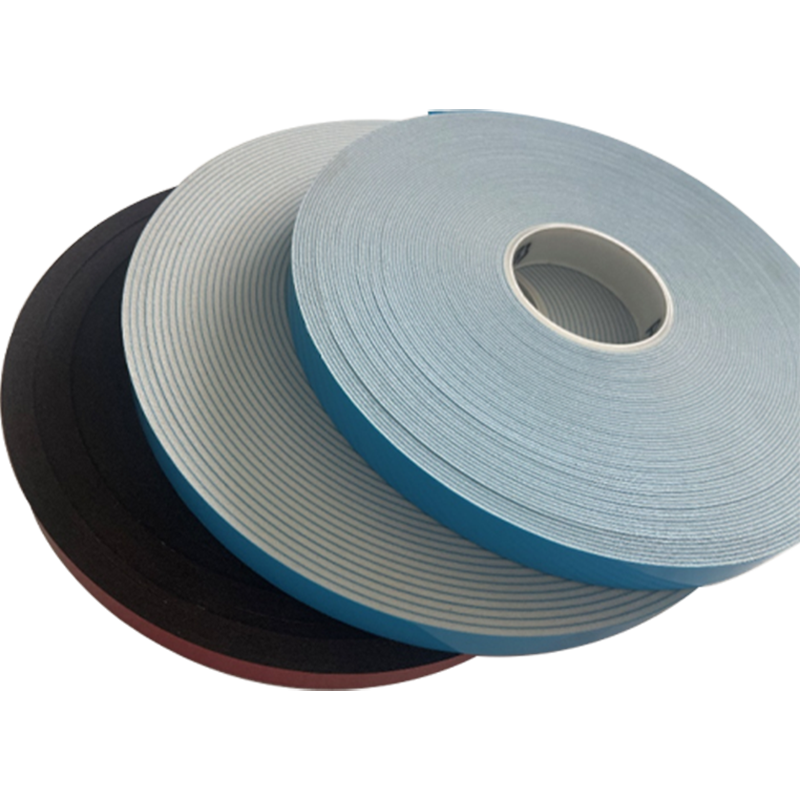
● Waterproof - the desirable material for waterproofing. ● Dust-proof - positive performance of dust prevention.● Low resilience - prevent the deforma...
See Details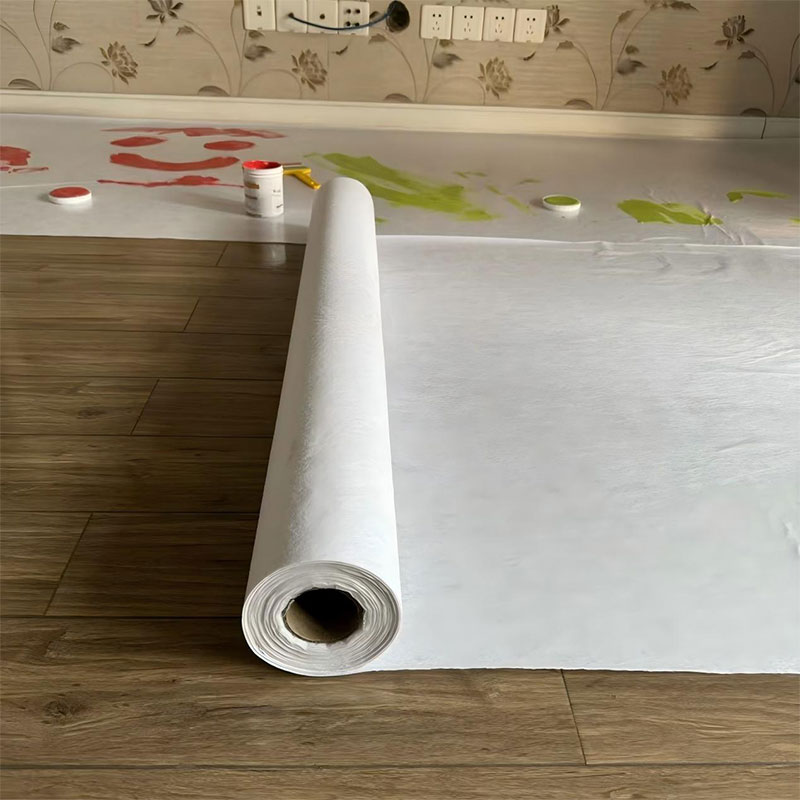
This product has non-woven synthetic fleece in middle; PE film adhered onto top of the non-woven fabric, which is coated with self adhesive glue on it...
See DetailsWe’re a reliable partner that shapes our expertise into success for your project.
Copyright 2024 Wuxi Qida Tape Co., Ltd. All Rights Reserved
 Wholesale Protective Film/Foil Manufacturers
Privacy