

 English
 English
 русский
 Français
 Español
 Português
 عربى
عربى
Cat:Glue -coated Protective Film
● No “ghost shadow” or “fish eye” after removal; ● Stable adhesion level; ● UV resistance for up to 6 months; ● Can print customized logo or applicati...
See Details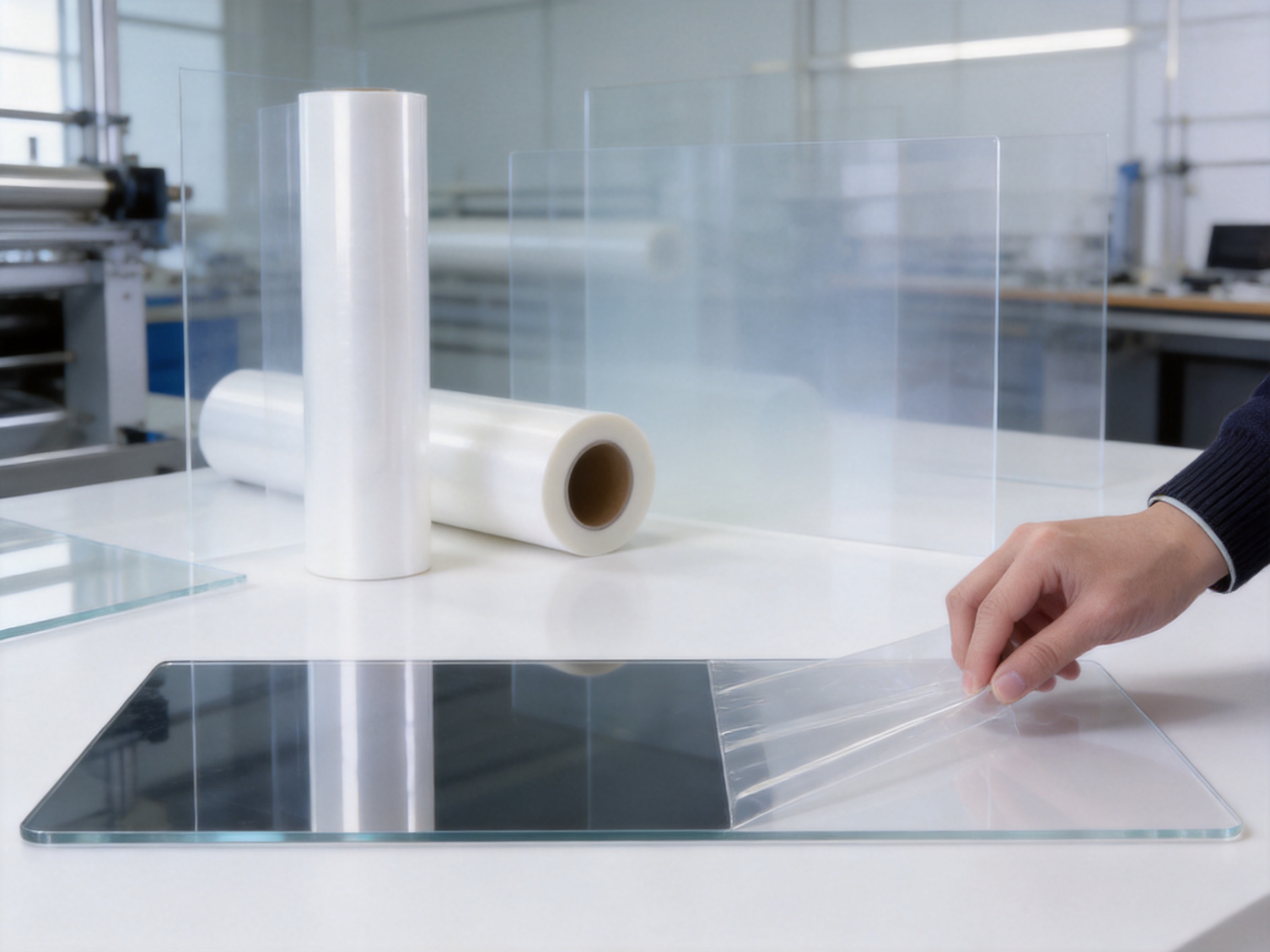
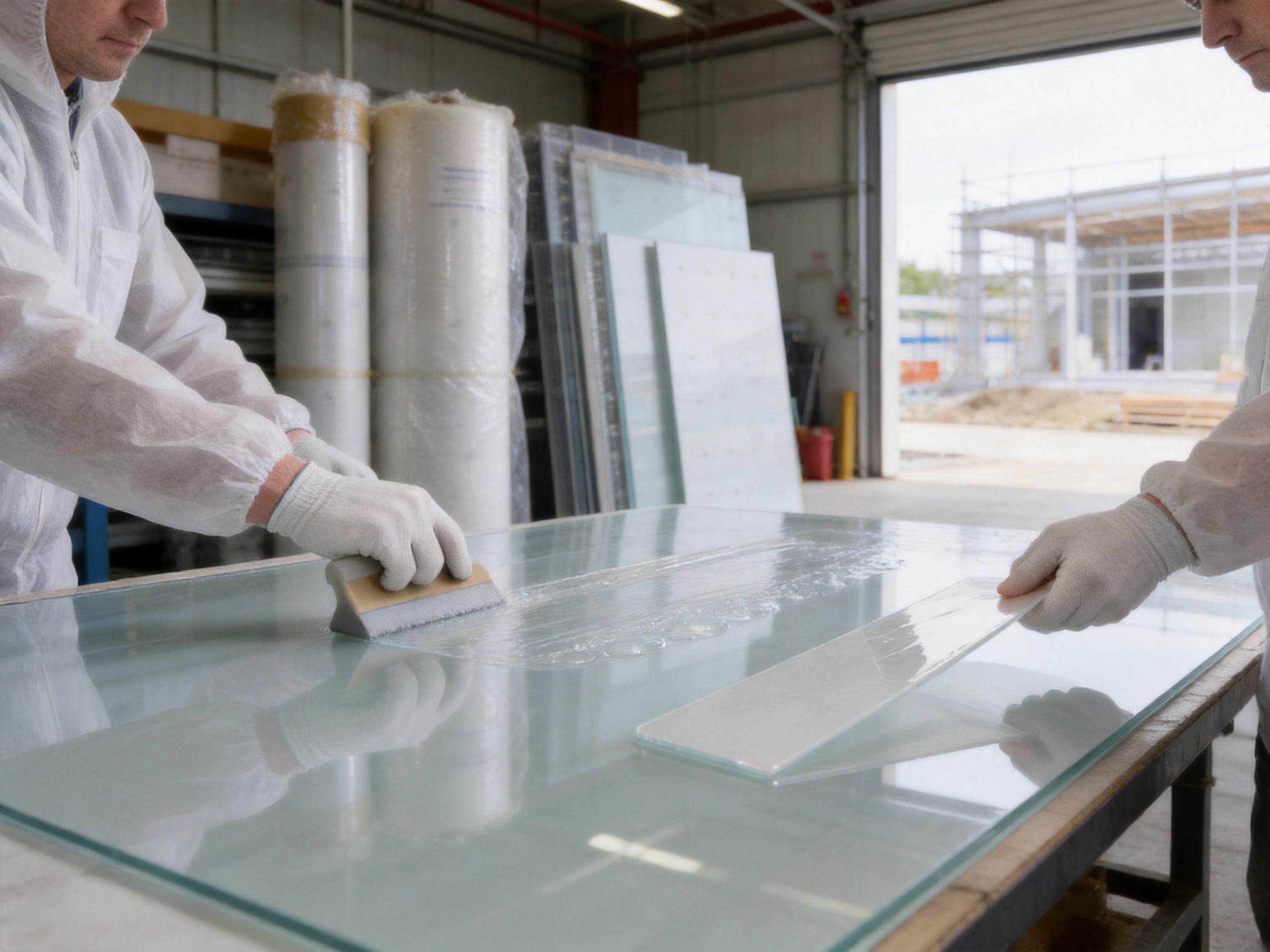
Transparent plastics and decorative polymer sheets are widely used in modern manufacturing, construction, transportation, signage, electronics, furniture, lighting, and interior design. Acrylic, also known as PMMA, polyester or PET, polycarbonate, and vinyl or PVC offer an attractive combination of light weight, visual appeal, design flexibility, and functional performance. However, these materials can be vulnerable to scratches, dust, fingerprints, abrasion, stains, and surface marks during cutting, forming, machining, transportation, storage, and installation.
Protective Film for Acrylic, PMMA, Polyester, PET, Polycarbonate, PC, vinyl, and similar materials provides a practical temporary protection solution. It covers the exposed surface during manufacturing and handling, helping the finished material reach the customer in clean, attractive, and usable condition. Once the material is ready for installation or final use, the film can be removed without leaving significant adhesive residue or causing damage when the appropriate product and removal method are selected.
The protective film described in this article is a glue-coated film developed for applications that require clear appearance, controlled low adhesion, easy removal, and reliable surface protection. It combines a flexible backing film with an acrylic adhesive system designed to provide stable contact with smooth plastic surfaces. The product can be supplied in several colors, sizes, roll lengths, and printing configurations to meet different industrial and commercial requirements.
Acrylic sheets are valued for their high clarity, gloss, weather resistance, and ability to replace glass in many applications. They are used for displays, advertising boards, architectural panels, machine guards, light covers, furniture components, and interior decoration. Despite their durability, acrylic surfaces may be scratched by hard particles, rough packaging, tools, or sliding contact during processing and delivery.
PET and other polyester materials are used in films, sheets, labels, electrical components, decorative products, and industrial panels. Their smooth surfaces are often selected for appearance, dimensional stability, or electrical performance. Surface contamination or abrasion can reduce visual quality and may make further processing more difficult.
Polycarbonate is known for impact resistance and is used in safety glazing, protective shields, equipment covers, lighting components, transportation parts, and industrial products. Although polycarbonate is tougher than many conventional plastics, its surface can still suffer from scuffing, dust accumulation, fingerprints, and handling marks. A protective film helps separate the surface from the surrounding environment during the period between production and final use.
Vinyl and PVC surfaces can also benefit from temporary protection. Decorative laminates, printed panels, profiles, sheets, and other vinyl products may be exposed to dirt and abrasion during cutting, bending, transportation, and installation. A suitable low-adhesion film can preserve the appearance of these materials without creating unnecessary removal problems.
For all of these substrates, the protective film must perform a careful balancing function. It must adhere firmly enough to stay in place during normal handling, but not so aggressively that it causes adhesive transfer, surface staining, curling, cracking, gloss change, or difficult removal. It must also conform to the material surface without excessive stretching, bubbling, or wrinkling.
This protective film is a glue-coated surface protection product intended for acrylic, PMMA, PET, PC, PVC, and related smooth plastic materials. The backing film provides a flexible physical barrier, while the acrylic adhesive creates controlled contact with the protected surface. The low adhesion design is suitable for temporary applications in which the film must be removed after processing, storage, transportation, or installation.
The product is available in thicknesses from 30 micrometers to 60 micrometers. This range allows users to select a film according to the required balance of flexibility, handling strength, conformability, and protection. Narrower and wider formats can be produced, with available widths from 100 millimeters to 2,250 millimeters and roll lengths from 100 meters to 2,000 meters.
Film colors may include clear, white, foggy clear, or white and other customized options. Clear film is appropriate when users need to see product information, surface color, printed patterns, or inspection marks through the film. White film can provide a stronger visual barrier and may be selected for packaging, identification, or appearance requirements. Foggy clear film can provide a softer visual effect while still allowing general recognition of the protected material.
Customized printing is available in configurations from zero to three colors. Users may print a company logo, installation instructions, handling warnings, product identification, directional arrows, or removal reminders. Printing can improve brand visibility while also helping operators understand the correct application and removal procedures.
One of the most important concerns when protecting transparent or glossy plastic is the possibility of a visible “ghost shadow” after the film is removed. A ghost shadow may appear as a cloudy, hazy, uneven, or slightly different area on the substrate. A fish-eye effect may appear as circular or irregular visual marks caused by adhesive behavior, contamination, uneven coating, or interaction between the film and the substrate.
The product is designed to reduce these risks through low gel content, controlled adhesive formulation, and stable coating performance. When the film is correctly matched to the substrate and used within the recommended conditions, the protected surface can retain its original appearance after removal. This is particularly valuable for transparent acrylic, high-gloss PET, clear polycarbonate, and decorative plastic sheets where even a small visual defect can affect acceptance.
Gel particles and coating irregularities can create localized adhesion differences. These differences may cause visible spots, bubbles, uneven contact, or residue during removal. A low-gel adhesive structure helps support a more consistent contact layer across the film width and length.
Stable coating quality is also important for large rolls. If the adhesive varies significantly from one section to another, the film may adhere differently at the beginning, middle, and end of the roll. Consistency makes production planning easier and reduces the risk of operators needing to adjust application procedures repeatedly.
The adhesive is designed to provide soft, stable, low-level adhesion. This means the film can remain attached to the surface during ordinary handling while avoiding excessive bonding strength. A balanced adhesive system is especially important for sensitive plastic surfaces that may be affected by strong pressure-sensitive adhesives.
Soft adhesion also helps the film follow smooth surfaces without creating unnecessary stress. When the adhesive is too aggressive, removal may require excessive force and may pull at the substrate surface. When the adhesive is too weak, the film may lift at the edges, collect dust, or fall off during transportation. The objective is controlled protection rather than maximum permanent bonding.
The film can be peeled away after the protected material has completed its processing or installation stage. Easy-peel performance helps reduce labor time and makes final preparation more efficient. Operators can remove the film at a controlled speed without needing specialized equipment in many normal applications.
Easy removal is particularly helpful for large panels, long profiles, and products that require protection through several stages of handling. A film that can be removed smoothly reduces the likelihood of torn pieces, adhesive residue, surface scratching caused by forced scraping, or delays during final cleaning.
Some protective films may curl excessively after removal, especially when the backing has been stretched, exposed to temperature changes, or peeled too quickly. Curling can make collection and disposal inconvenient and may increase the chance of the adhesive side contacting finished surfaces.
The flexible backing and controlled adhesive design help support clean removal with reduced curling. This feature contributes to safer handling and more efficient production. Nevertheless, correct storage, installation, and removal remain important because temperature, humidity, surface cleanliness, and application tension can influence performance.
For transparent products, the protective film should not unnecessarily obscure the substrate. High clarity allows users to inspect the material while it is protected. It can also help operators identify defects, printed patterns, alignment marks, or surface conditions before the film is removed.
Color stability is important for both clear and colored film. A stable appearance supports product identification and helps maintain a professional presentation during storage and delivery. Color stability may also be relevant when the film carries printed instructions or a customized logo.
The product provides UV resistance for approximately three to six months depending on the specific construction, environmental conditions, and application requirements. The product information also identifies UV resistance of up to six months for suitable uses. This makes the film appropriate for temporary outdoor storage, transportation, construction staging, and installation periods where the protected material may be exposed to sunlight.
UV resistance should not be interpreted as unlimited outdoor durability. Strong solar radiation, high temperatures, humidity, pollution, and long exposure periods can influence film aging and adhesive behavior. Users should confirm the expected exposure period and conduct application testing when the film will remain outdoors for an extended time or in severe climates.
Product type |
Glue-coated temporary surface protective film |
Recommended substrates |
Acrylic, PMMA, PET, polyester, PC, polycarbonate, PVC, vinyl, and related smooth surfaces |
Film thickness |
30 micrometers to 60 micrometers |
Available width |
100 millimeters to 2,250 millimeters |
Roll length |
100 meters to 2,000 meters |
Elongation |
At least 300 percent |
Adhesion level |
Low |
Adhesive type |
Acrylic |
Film colors |
Clear, white, foggy clear, white, and customized options |
Printing |
Available in zero to three colors |
UV resistance |
Approximately three to six months, depending on construction and conditions |
The technical values provide a useful starting point for product selection. Actual performance can vary according to the substrate composition, surface energy, gloss level, processing temperature, storage environment, application method, and length of contact. For critical applications, a trial roll or sample test should be completed before full-scale production.
A temporary protective film normally consists of a backing layer and a pressure-sensitive adhesive layer. The backing film supplies tensile strength, flexibility, elongation, and a physical barrier against dust and abrasion. The adhesive layer determines how the film attaches to the substrate and how it behaves during removal.
The acrylic adhesive used for this product is selected for controlled adhesion and stable performance. Acrylic adhesive systems can be formulated for different surface energies, temperature ranges, and removal requirements. For acrylic, PET, and polycarbonate surfaces, the adhesive must be sufficiently uniform to avoid visible irregularities while remaining gentle enough for temporary use.
The backing film must also be compatible with the application. A film that is too rigid may not conform smoothly to curved or slightly uneven surfaces. A film that is too weak may tear during application or removal. The stated elongation of at least 300 percent indicates a highly flexible construction that can accommodate handling and moderate deformation when applied correctly.
High elongation is beneficial during film application, but operators should not deliberately overstretch the material. Excessive tension can produce shrink-back, edge lifting, wrinkles, or uneven adhesive contact. The film should be applied with controlled tension and pressed onto the surface in a smooth, progressive manner.
The manufacturing process begins with the production or preparation of the backing film. The backing must meet requirements for thickness uniformity, transparency, flexibility, tensile performance, and surface quality. Uniform thickness helps ensure consistent handling and supports predictable adhesive coating.
Advanced production equipment supports accurate control of the film structure. Careful process management can reduce surface defects, thickness variation, contamination, and winding problems. The backing film is inspected before coating so that unsuitable material does not proceed to later stages.
The adhesive is prepared according to the intended substrate and performance requirements. Formulation variables may include polymer composition, solids content, viscosity, additives, and curing or drying conditions. The objective is to create a low-adhesion system with sufficient holding power, clean peel performance, and minimal residue.
Different customers may require different adhesive constructions. Some applications may require acrylic water adhesive, while others may benefit from acrylic solvent adhesive or natural rubber adhesive. The manufacturing capability includes multiple adhesive options so that the product can be matched to different surfaces and processing conditions.
During coating, the adhesive is applied evenly to the backing film. Coating weight and distribution influence adhesion, optical appearance, drying behavior, and removal performance. An uneven adhesive layer can cause areas of excessive bonding or insufficient contact, so coating control is essential.
Production equipment introduced from Germany supports advanced manufacturing and coating operations. The use of modern machinery, trained technicians, and controlled production parameters helps improve repeatability from batch to batch. Process records and inspection procedures can be used to monitor the performance of the coated film throughout manufacturing.
After coating, the film may pass through drying or curing stages to remove solvents or water and stabilize the adhesive. Temperature, airflow, line speed, and residence time must be controlled according to the adhesive construction. Inadequate drying can contribute to residue, odor, unstable adhesion, or blocking. Excessive drying or heat can alter the adhesive and backing.
Stabilization helps the finished film reach a consistent condition before rewinding and shipment. This is important because the adhesive may continue to develop its final properties after coating. A carefully managed stabilization period supports more predictable customer performance.
Customized printing can be completed after the film construction is prepared. The printing process may add logos, words, symbols, arrows, or operating instructions in up to three colors. Print quality should be checked for clarity, alignment, adhesion, and resistance to normal handling.
Printed information can make the protective film easier to identify in a busy manufacturing environment. For example, a repeated message can indicate which side should be applied, remind users to remove the film before final delivery, or communicate handling instructions. Customized printing also supports brand recognition for distributors and industrial customers.
Large coated rolls can be rewound and slit into the widths requested by the customer. Slitting accuracy is important for automated production lines, panel processing, and packaging operations. Poorly controlled slitting may create uneven edges, telescoping rolls, loose winding, or difficulty during machine feeding.
The company’s production processes include rewinding, slitting, and packaging in its own factory. Keeping these processes under internal control helps improve coordination between coating, converting, inspection, and shipment. It also supports flexible order quantities and customized dimensions.
Finished rolls are checked for appearance, dimensions, winding quality, printing accuracy, adhesive performance, and other agreed specifications. A testing laboratory and inspection equipment support quality evaluation. Packaging is selected to protect the rolls from moisture, dust, impact, and deformation during transportation.
Appropriate packaging is especially important for wide and long rolls. The film should arrive with stable edges, clean surfaces, and undamaged cores. Clear identification of roll size, batch information, product type, and customer requirements helps support traceability and warehouse management.
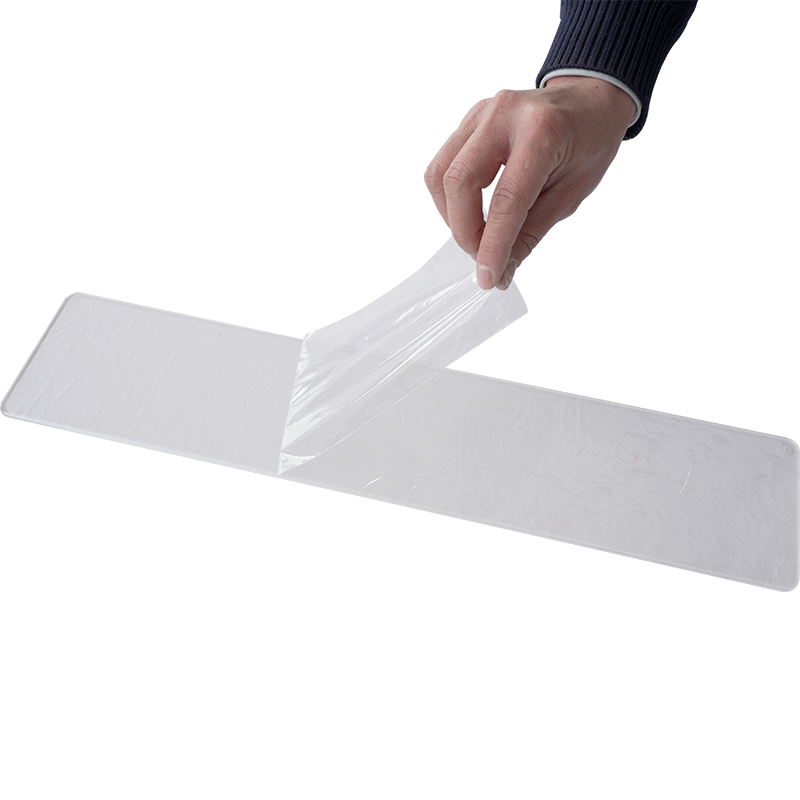
Protective Film For Acrylic (PMMA), Polyester (PET) aAnd Polycarbonate (PC) Etc
Wuxi Qida Tape Co., Ltd. is a factory specializing in the development, production, and marketing of protective films and surface protection solutions. Its experience covers protection for stainless steel, aluminum, pre-coated metal, plastic panels, ceramic, carpets, decorative laminates, glass, and other surfaces. This broad application background supports the development of film products for different levels of adhesion, surface sensitivity, and processing conditions.
The company operates under ISO 9001 and ISO 14001 management systems. ISO 9001 focuses on quality management and process consistency, while ISO 14001 addresses environmental management. These systems provide a framework for documented procedures, continuous improvement, process monitoring, and responsible operational control.
The company has introduced advanced machines from Germany and employs experienced technicians and engineers. It also works with research and development institutes to continue improving protective film products. This combination of equipment, technical personnel, and development cooperation is important for customers requiring more than a standard commodity film.
Manufacturing operations include backing film production, adhesive coating, logo printing, rewinding, slitting, and packaging. Maintaining these stages within the company’s own factory can shorten communication paths and make it easier to coordinate product changes. It also allows engineers to review the complete construction rather than focusing on only one converting stage.
The company has a factory area of approximately 20,000 square meters, more than 95 experienced staff members, and annual production capacity exceeding 12,000 tons. Founded in 1999, it has developed experience in domestic and international supply. Its products are sold throughout China and exported to Europe, North America, Australia, the Middle East, Japan, and other regions.
Compliance and product testing support include ISO 9001, ISO 14001, SGS, RoHS, REACH, PFAS, and Prop 65 testing or related management and compliance requirements. Specific documentation should be confirmed according to the product grade, market, substrate, and customer order. This testing background is useful for companies that need to evaluate material restrictions, environmental requirements, or market-entry documentation.
General-purpose protective films may be developed for metal, glass, or robust painted surfaces and may not be ideal for clear plastics. Acrylic, PET, and polycarbonate can respond differently to adhesive contact, temperature, pressure, and long-term exposure. A film designed for these materials places greater emphasis on optical appearance, clean removal, and low risk of visual change.
The product’s low adhesion acrylic adhesive is suitable for applications where the protective film must remain attached temporarily without creating a permanent bond. This specialized positioning can provide an advantage over films selected only by price or nominal thickness.
Transparent materials expose coating defects more clearly than opaque substrates. Ghost shadows, fish-eye marks, haze, or adhesive irregularities may be visible even when the physical protection function appears satisfactory. The low gel content and high clarity characteristics address this concern more directly than a basic packaging film.
Available widths from 100 millimeters to 2,250 millimeters and roll lengths from 100 meters to 2,000 meters allow the film to be matched to different panel sizes, production lines, and packaging systems. Color and printing options provide additional flexibility. Customers can request a neutral clear film, a visible white film, a foggy clear appearance, or a customized printed construction.
Some suppliers depend heavily on outside partners for coating, printing, slitting, and packaging. An integrated factory can coordinate these processes more efficiently and respond to technical requirements with fewer communication gaps. In-house production also helps support custom dimensions, adhesive options, and private-label orders.
Protective film performance depends on more than the name of the substrate. Two acrylic sheets from different manufacturers may have different surface treatments, gloss levels, additives, or processing histories. Experienced engineers can help customers assess the material and identify a suitable film construction. This technical support can reduce the risk of selecting a product solely from a general catalog description.
Annual capacity exceeding 12,000 tons supports larger orders and continuing supply programs. Customers in panel manufacturing, plastics processing, signage, construction, and distribution may benefit from a stable supply relationship. Production planning, repeat specifications, and batch records can help improve consistency across multiple orders.
Acrylic protective film is used on clear sheets, colored sheets, mirrored acrylic, cast acrylic, extruded acrylic, and finished acrylic panels. Typical applications include advertising displays, light boxes, retail fixtures, architectural panels, partitions, furniture components, and decorative surfaces.
The film can protect the surface during cutting, drilling, routing, bending, polishing, transportation, and installation. Printed instructions may be used to indicate processing direction or remind installers to remove the film after completion.
PET protective film can be applied to polyester sheets, decorative films, electrical components, labels, display parts, and other smooth polyester-based products. The transparent film allows visual inspection while reducing contact with dust and tools.
For applications involving heat, printing, coating, or forming, users should verify temperature compatibility and removal timing. A short trial can establish whether the adhesive remains stable during the intended process.
Polycarbonate protective film is suitable for flat panels, safety shields, machine guards, light covers, transportation components, and industrial products. The film helps reduce scratches and handling marks while the polycarbonate moves through production and distribution.
When the polycarbonate includes a hard coating, anti-fog coating, UV coating, or other treatment, compatibility testing is essential. Coated surfaces may have different adhesion behavior from untreated polycarbonate.
Protective film for PVC and vinyl can be used on decorative panels, profiles, printed sheets, flooring-related products, signage materials, and interior components. The film helps maintain clean appearance during cutting, packing, storage, and installation.
Plastic panels are often moved through multiple stages before reaching the final site. A temporary protective film can reduce the need for repeated cleaning and help prevent minor surface damage caused by stacking, handling, and transportation. This can improve labor efficiency and reduce product rejection.
Before applying the film, confirm that the substrate is clean, dry, smooth, and free from dust, oil, grease, release agents, loose particles, and other contamination. A clean surface allows the adhesive to make consistent contact and reduces bubbles or localized lifting.
Use a cleaner that is known to be compatible with the material. Some solvents can attack acrylic, polycarbonate, PVC, or printed surfaces. If there is any uncertainty, test the cleaner in a small, inconspicuous area before beginning full-scale application.
The surface should be completely dry before the film is applied. Moisture trapped between the film and substrate may cause cloudiness, bubbles, or unstable adhesion. The working area should also be reasonably clean to prevent airborne particles from becoming trapped beneath the film.
Inspect the roll before use. Confirm the width, length, color, printing, adhesive direction, and batch information. Check for visible damage, contamination, telescoping, loose winding, or edge defects. Do not use a roll that has been damaged during transportation until its condition has been evaluated.
For new substrates, new coatings, or critical visual applications, perform a small test. Apply a representative piece of film and observe initial adhesion, appearance, bubble formation, removal force, residue, and surface condition after removal.
Start from one edge and gradually place the film onto the surface. Use a clean squeegee, soft cloth, or suitable applicator to press the film evenly. Work progressively rather than applying the entire film at once. This method helps reduce wrinkles, trapped air, and misalignment.
Avoid excessive tension. The film should not be stretched aggressively during application. Overstretching can produce recovery forces that later cause shrinkage, edge lifting, wrinkles, or uneven appearance. Apply enough tension to maintain control, but allow the film to remain close to its natural dimensions.
If a bubble forms during application, lift the film carefully and reapply the affected area when possible. Do not use sharp tools directly against the substrate. A soft applicator can help move air toward an open edge. Small bubbles may sometimes dissipate depending on the film and adhesive construction, but large or repeated bubbles should be corrected.
Edges and corners require special attention. Ensure that the film is not folded, contaminated, or excessively stretched at the edge. If the protected product will be stacked or transported, firmly attached edges help prevent dust from entering beneath the film.
The protective film should normally be removed after the protected material has completed the relevant manufacturing, transportation, or installation stage. Leaving temporary film on the surface longer than necessary may increase exposure to heat, sunlight, moisture, and environmental contamination. The recommended service period should be confirmed for each application.
Begin at a corner or edge and peel the film at a slow, even speed. Avoid sudden jerking or pulling directly upward with excessive force. A controlled peel reduces stress on the substrate and helps prevent tearing or adhesive transfer.
An approximate peeling angle of 45 degrees is often suitable, although the ideal angle can vary according to the surface, film age, temperature, and adhesive construction. Peeling too aggressively or at an unsuitable angle may increase removal force.
For large-area film or film that has been exposed to cool conditions, moderate preheating may help soften the adhesive and improve removal. Heating must be controlled carefully. Excessive heat can affect acrylic, polycarbonate, PVC, coatings, printed surfaces, or the film itself.
Use the lowest practical temperature and test a small area first. The objective is to make the adhesive easier to release, not to heat the substrate unnecessarily. Follow the material manufacturer’s recommendations whenever they are available.
If a small amount of adhesive residue remains, do not immediately scrape the surface with a blade or abrasive pad. Use a mild cleaner or solvent recommended for the specific substrate. Apply it to a soft cloth or sponge and wipe gently.
Cleaning chemicals must be selected carefully. An unsuitable solvent may cause crazing, whitening, gloss change, swelling, or other damage to acrylic, polycarbonate, PET, or PVC. Always test the cleaning method in an inconspicuous area before treating a visible surface.
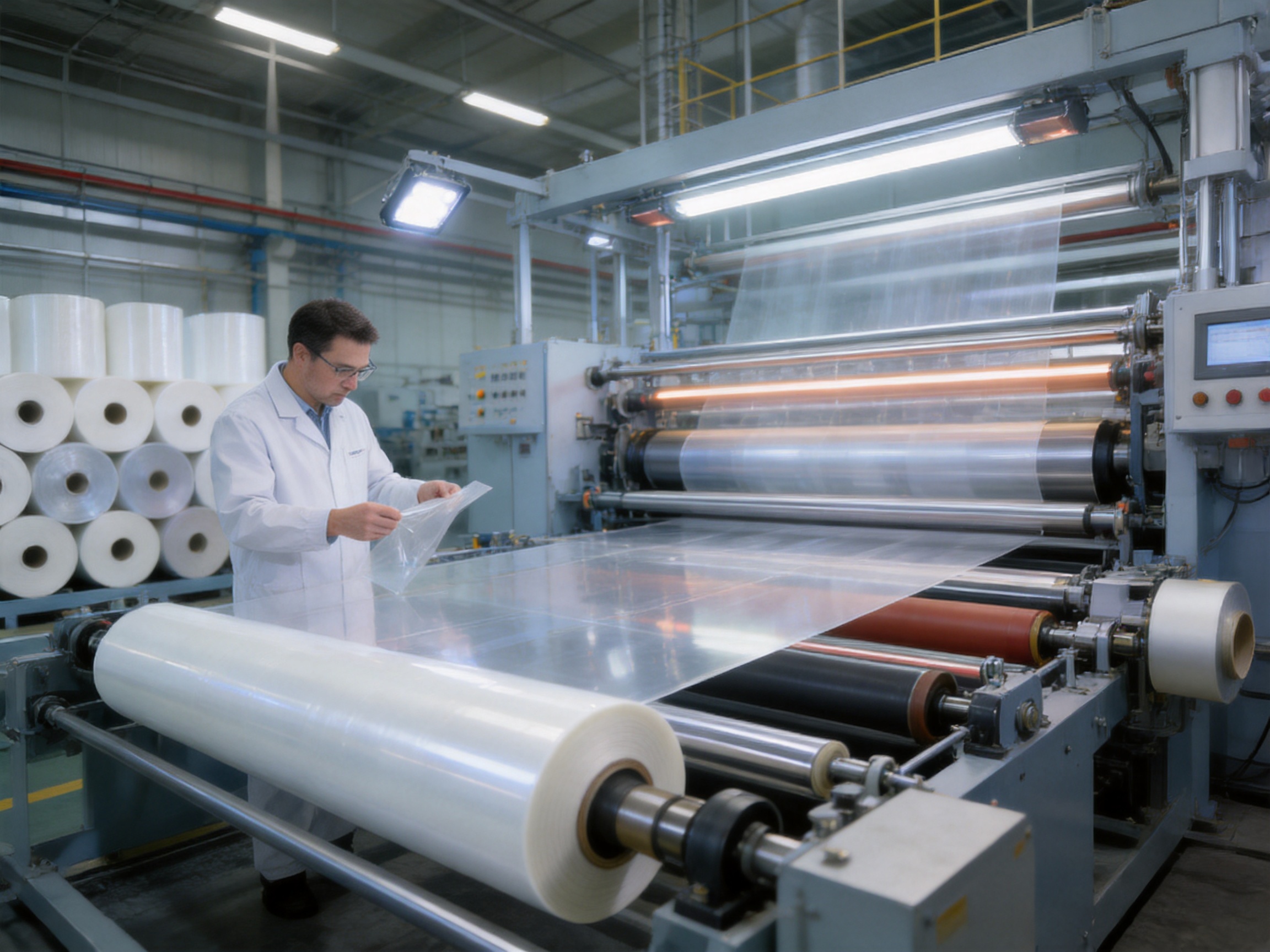
Store protective film in a clean, dry environment away from direct sunlight, heat sources, water, solvents, and heavy impact. Keep rolls in their original packaging until they are needed. Avoid placing heavy objects on the rolls because pressure may deform the edges or affect winding quality.
Rolls should be handled with suitable equipment and should not be dropped. Damaged cores or crushed edges can make the film difficult to unwind and may result in wrinkles during application. Keep the material in a stable temperature and humidity range whenever possible.
Before application, allow the film and substrate to reach a similar temperature. Sudden temperature differences can cause condensation or dimensional changes. If the film has been stored in a cold warehouse and the substrate is warm, conditioning time may improve application consistency.
Inventory should be managed according to a first-in, first-out principle unless a different procedure is required. Record the receipt date, batch number, roll size, and customer project. This information supports traceability and helps users monitor the intended storage and application period.
Begin by identifying the substrate. Confirm whether it is acrylic, PET, polycarbonate, PVC, or a composite material. Determine whether the surface is untreated, coated, printed, textured, polished, or laminated. The surface treatment may have a greater influence on adhesion than the base material alone.
Next, identify the protection period. A film used for a few days inside a factory may require different UV and aging performance from a film used for several months outdoors. Consider the expected exposure to sunlight, temperature changes, humidity, dust, chemicals, and mechanical handling.
Film thickness should be selected according to the required handling strength and conformability. Thinner films may be economical and easy to apply, while thicker films may provide additional handling durability. However, thickness alone does not determine protection quality. Adhesive performance, backing strength, surface cleanliness, and application technique are equally important.
Width and roll length should match the production process. A roll that is too narrow may require multiple strips and create additional seams. A roll that is too wide may be difficult to handle or may not fit the equipment. Customized slitting can help reduce waste and improve production efficiency.
Choose clear, white, foggy clear, or another color according to inspection and branding needs. If the product will be processed while covered, clear film may be preferable. If operators need an obvious visual indication that the surface is protected, white or printed film may be more suitable.
Finally, confirm whether printing is required. A logo, handling message, or removal instruction can reduce mistakes, especially when the material passes through several companies or production departments.
Protective film requirements vary significantly between industries. A standard product may be sufficient for a general plastic panel, while a high-gloss transparent component may require a more carefully controlled adhesive construction. OEM and ODM services allow customers to discuss substrate type, surface finish, dimensions, adhesion level, color, printing, roll length, and packaging.
Wuxi Qida Tape Co., Ltd. can develop products according to customer technical data sheets or samples. This capability is useful when a customer is replacing an existing film, solving a removal problem, adapting the product to a new substrate, or creating a private-label product.
Customization may include adhesive selection, backing thickness, film width, roll length, color, printed pattern, core size, packaging style, and labeling. Customers should provide as much application information as possible, including the expected contact period, storage environment, processing temperature, removal method, and any surface treatment on the substrate.
Technical development should include sample evaluation and, when necessary, a pilot order. The results of peel testing, aging tests, visual inspection, and removal trials can be used to refine the product before larger production. This approach is more reliable than selecting a film only from a nominal specification.
Surface protection can contribute to material efficiency by reducing scratches, contamination, and damage that might otherwise cause products to be rejected or reworked. A clean removable film can also reduce the need for repeated cleaning during production and installation.
Environmental considerations should include the backing material, adhesive system, packaging, storage, and disposal method. Users should follow local regulations for disposal and recycling. Because protective films may contain a combination of polymer and adhesive, recycling options can vary by region and facility.
The company operates under ISO 14001 environmental management procedures and supports product compliance requirements such as RoHS, REACH, PFAS, and Prop 65 testing or documentation. Specific compliance status should be confirmed for the selected product and destination market. Different customers may have different requirements concerning restricted substances, declarations, test reports, and packaging materials.
Quality control begins with incoming materials. Backing film, adhesive raw materials, cores, packaging components, and printing materials should be evaluated according to internal specifications. Consistent raw materials help reduce variation during coating and converting.
During production, operators and technicians monitor coating conditions, film appearance, thickness, winding, printing, and process stability. Testing may include visual inspection, dimensional measurement, adhesion evaluation, peel observation, tensile or elongation assessment, and aging or UV-related testing where required.
Finished rolls should be inspected for clean edges, uniform winding, correct length, accurate width, stable printing, and absence of obvious contamination. Quality records and batch identification help connect the finished product with its manufacturing history.
For customers with special requirements, inspection criteria can be discussed before production. This may include limits for haze, gel particles, coating lines, edge damage, splice quantity, roll hardness, core dimensions, or printed registration. Clear agreement between supplier and customer helps avoid misunderstandings.
Plastic sheet manufacturers can apply the film shortly after extrusion, casting, polishing, printing, or cutting. The film protects the product while it moves through internal handling, storage, packing, and shipment. Customized width and roll length can help integrate the film into existing equipment.
Fabricators often cut, drill, route, bend, or machine acrylic and polycarbonate. Applying protective film before or during processing can reduce surface marks caused by fixtures, tools, or worktables. Printed film can also help identify processing direction or protect both sides of a panel when required.
Architectural plastic panels and decorative sheets may be exposed to dust, tools, cement particles, and handling during site installation. A temporary film can remain in place through selected installation stages and be removed during final cleaning or handover.
Distributors can offer multiple film colors, sizes, and adhesive options to serve different plastic and panel customers. Factory customization and private-label printing can help create a differentiated product range. Stable production capacity also supports repeat orders and planned inventory.
Equipment manufacturers may use protective film on transparent guards, control panels, covers, displays, and finished components. A clean removable film protects products during assembly and shipment while making it clear to the end user that the surface should be uncovered before operation.
It is intended for acrylic or PMMA, PET or polyester, polycarbonate or PC, PVC, vinyl, and similar smooth plastic surfaces. Compatibility should be verified when the substrate has a special coating, printed layer, anti-fog treatment, hard coat, or unusual surface energy.
No. The product uses a low-adhesion acrylic adhesive for temporary surface protection. It is designed to remain in place during normal handling and then peel away when protection is no longer required.
The stated thickness range is 30 micrometers to 60 micrometers. The most suitable thickness depends on the required handling strength, flexibility, surface shape, processing method, and protection period.
Yes. Printing is available in zero to three colors. Customers may request a logo, product information, handling instruction, directional marking, or removal reminder, subject to artwork and production confirmation.
Available options include clear, white, foggy clear, white, and other customized colors. Clear film is useful when visual inspection through the film is required, while colored film can provide stronger identification or branding.
Available widths range from 100 millimeters to 2,250 millimeters. Custom slitting can help match the film to panel dimensions or production equipment.
The stated UV resistance is approximately three to six months, with up to six months possible under suitable conditions. Actual outdoor life depends on sunlight intensity, temperature, humidity, pollution, substrate, installation quality, and film construction. Testing is recommended for demanding outdoor applications.
The product is designed to avoid ghost shadows and fish-eye appearance after removal. Low gel content, stable adhesive coating, and controlled low adhesion support this objective. Nevertheless, surface testing is recommended because substrate formulation and environmental conditions can affect results.
Start from an edge and peel slowly at a steady speed. An angle around 45 degrees is often suitable. Avoid sudden pulling, excessive force, and sharp tools. If the film is difficult to remove, moderate preheating may help, but the substrate manufacturer’s recommendations should be followed.
The high elongation and flexible backing can support application to some curved or moderately shaped surfaces. The degree of curvature, surface finish, and required contact period should be evaluated in advance. Excessive stretching should be avoided because it may cause shrink-back or edge lifting.
Use a mild cleaner or solvent recommended for the specific substrate. Apply it to a soft cloth and wipe gently. Always test the cleaning method first because some chemicals can damage acrylic, polycarbonate, PET, PVC, coatings, or printed surfaces.
Yes. The company can develop protective film products according to customer samples or technical data sheets. Customization may include adhesive type, film thickness, width, roll length, color, printing, packaging, and other agreed specifications.
The company offers acrylic water adhesive, acrylic solvent adhesive, and natural rubber adhesive for different industry requirements. The correct option depends on the surface, application period, temperature, removal conditions, and customer performance targets.
The product is manufactured by Wuxi Qida Tape Co., Ltd. at No. 18 Wanshou Road, Qianzhou Town Industrial Park, Wuxi City, Jiangsu Province, China, Post Code 214181. The company manages backing film production, adhesive coating, printing, rewinding, slitting, and packaging within its factory.
Customers can contact the sales team by telephone at 0086-13771122281 or by email at sales@qidatape.com. It is helpful to provide the substrate type, dimensions, surface treatment, application process, protection period, expected temperature, outdoor exposure, and removal requirements.
A practical evaluation begins with a representative substrate sample. The sample should include the same surface treatment, color, gloss, and processing condition as the intended production material. Apply the film using the planned equipment or application method.
Inspect the sample immediately after application for bubbles, wrinkles, edge lifting, haze, and visual distortion. Store or process it under expected conditions. If the film will be exposed to sunlight, heat, humidity, or transportation vibration, reproduce those conditions as closely as possible during the trial.
After the planned contact period, remove the film slowly and inspect the surface under suitable lighting. Check for adhesive residue, ghost shadow, fish-eye marks, gloss change, discoloration, cracking, and surface damage. Record the removal force and whether the film tears or curls excessively.
For production use, evaluate more than one roll or batch when possible. A successful trial should be followed by confirmation of roll dimensions, packaging, printing, batch identification, and delivery requirements. This systematic procedure helps ensure that the selected film performs reliably beyond a single laboratory sample.
Protective Film for Acrylic, PMMA, PET, Polycarbonate, PC, PVC, and vinyl is designed to preserve the appearance and condition of sensitive plastic surfaces during manufacturing, storage, transportation, and installation. Its low-adhesion acrylic adhesive, low gel content, high clarity, stable color, flexible backing, easy-peel performance, and reduced risk of ghost shadow or fish-eye appearance make it suitable for demanding temporary protection applications.
The available thicknesses, widths, roll lengths, colors, printing options, and adhesive constructions provide flexibility for different industries and production systems. Customized logo printing and application instructions can improve identification, handling, and brand presentation.
Wuxi Qida Tape Co., Ltd. supports this product with integrated manufacturing capabilities, advanced equipment, experienced technicians, research and development cooperation, quality and environmental management systems, a testing laboratory, and substantial production capacity. Its ability to control backing film production, adhesive coating, printing, rewinding, slitting, and packaging within its own factory provides a strong foundation for consistent supply and customized development.
For best results, users should match the film to the exact substrate, clean and dry the surface before application, avoid excessive tension, store the rolls properly, and remove the film slowly within the recommended service period. A sample trial remains the most reliable method for confirming compatibility, especially when the surface is coated, highly glossy, transparent, chemically sensitive, or intended for extended outdoor exposure.
1. ISO 9001, Quality Management Systems: Requirements.
2. ISO 14001, Environmental Management Systems: Requirements with Guidance for Use.
3. General technical principles for pressure-sensitive adhesive tape selection, coating, converting, and peel testing.
4. Manufacturer technical information for temporary protective films used on acrylic, PMMA, PET, polycarbonate, PVC, and related plastic surfaces.
5. General handling and storage guidance for pressure-sensitive adhesive rolls and temporary surface protection materials.
6. RoHS, REACH, PFAS, and Proposition 65 compliance considerations for industrial adhesive products and polymer films.
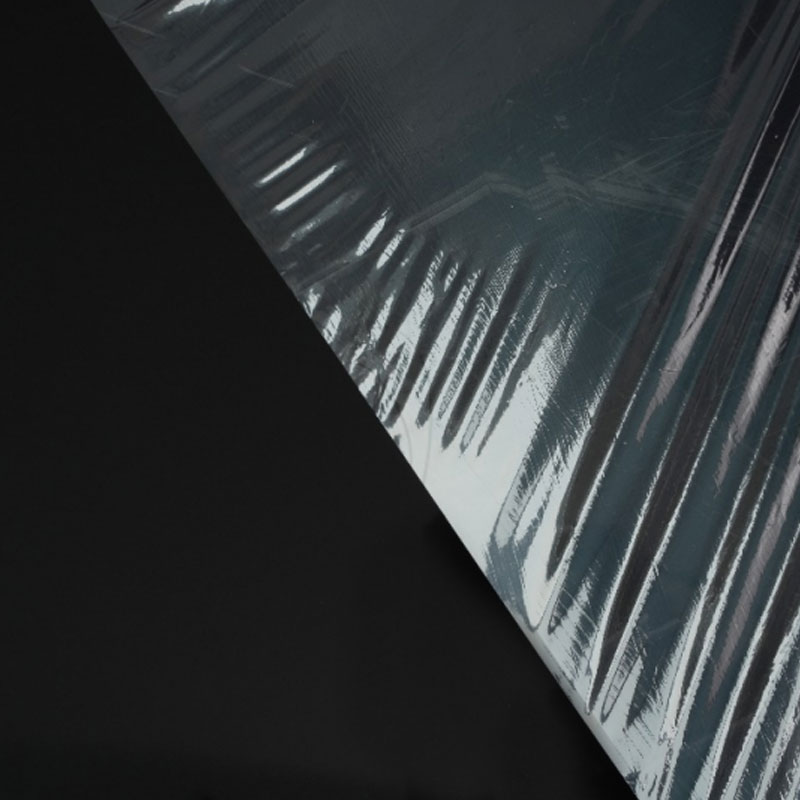
● No “ghost shadow” or “fish eye” after removal; ● Stable adhesion level; ● UV resistance for up to 6 months; ● Can print customized logo or applicati...
See Details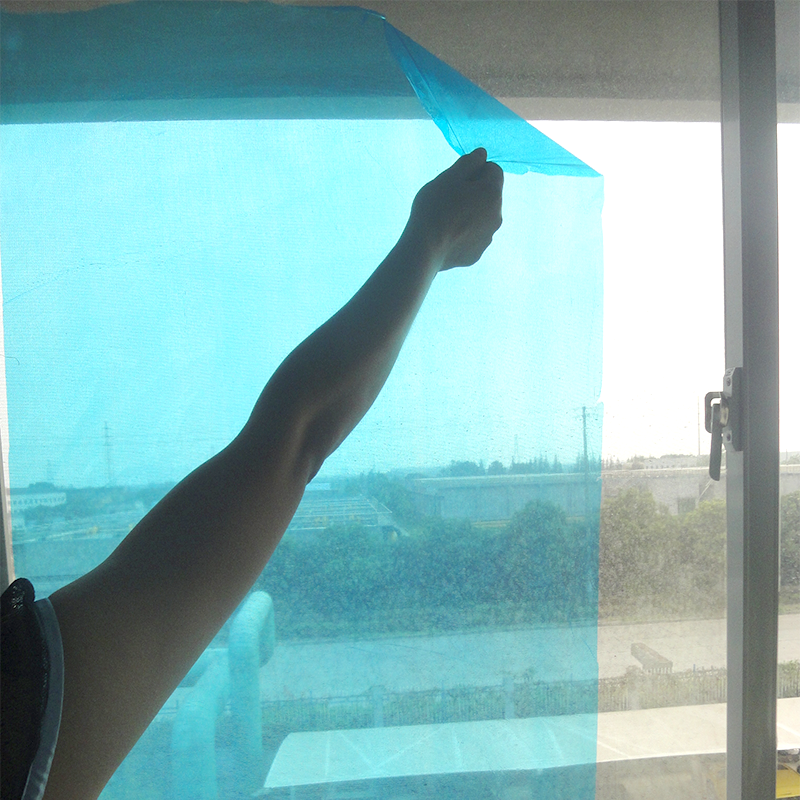
● Protect window glass against paint splatters, dirt, staining, and spillages during painting, building, plastering, tiling, general maintenance and r...
See Details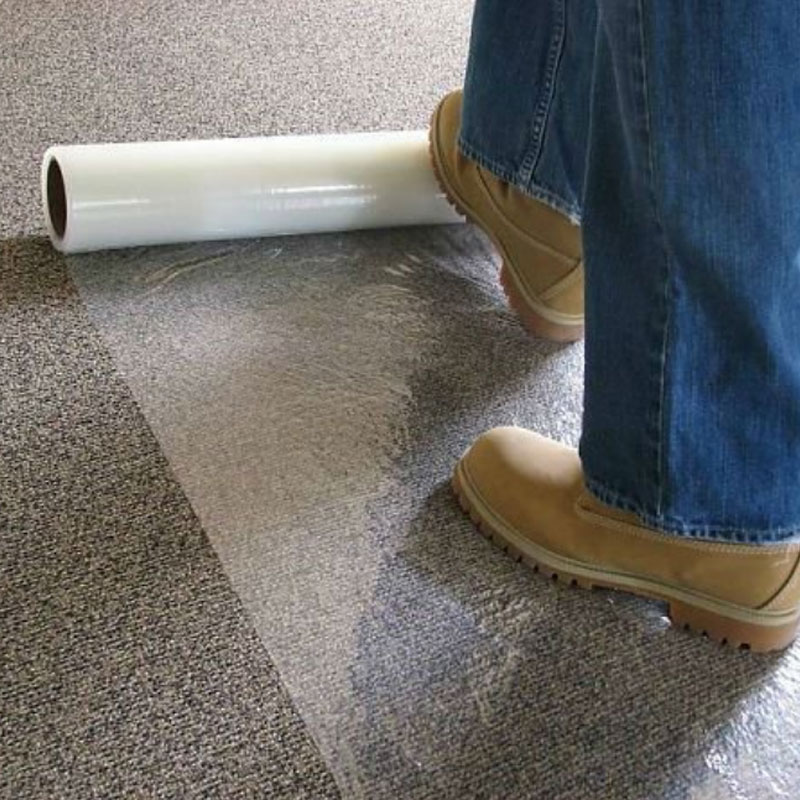
● Protects carpet against staining, paint spillage and dirt during painting, building, remodeling, plastering, tiling, decoration, general maintenance...
See Details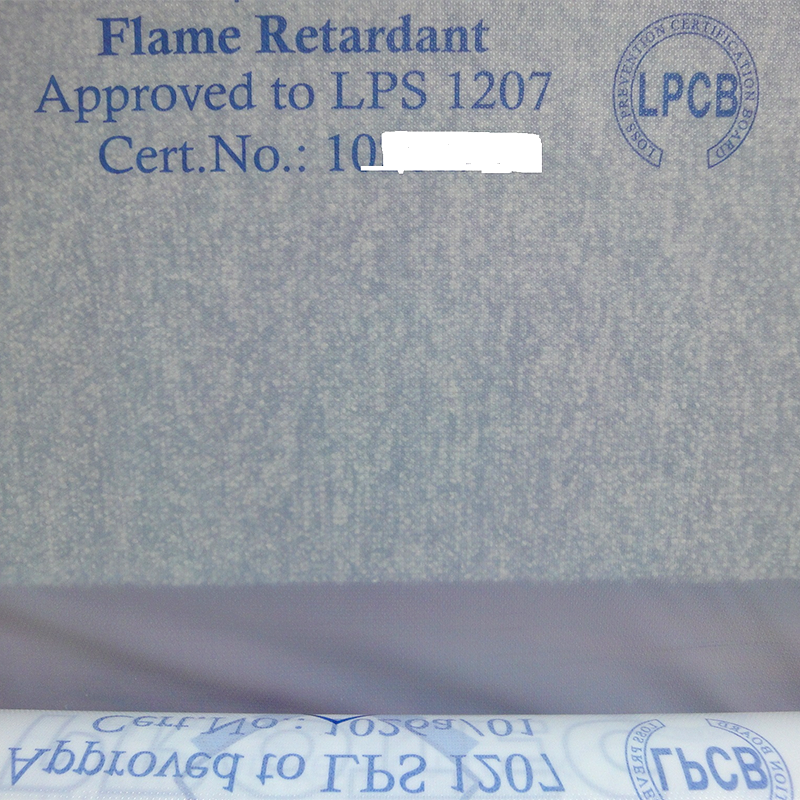
● Prevents costly damages in case of fire /flame;● Meet the strict international test standards of loss prevention; ● Extensive selection for flame re...
See Details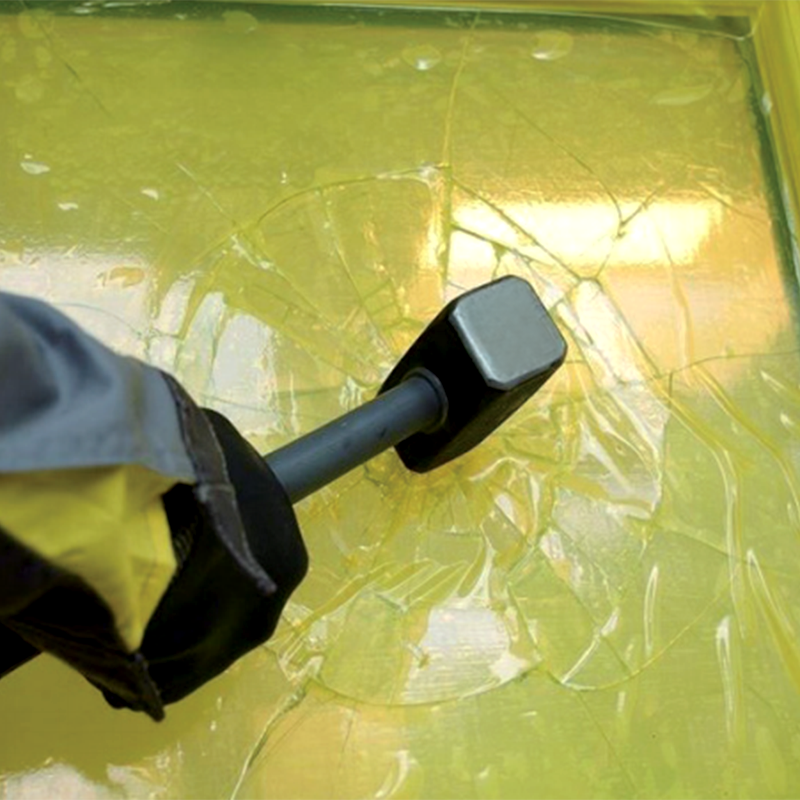
● The super tough polyethylene film with super high adhesion can stop the glass splitting and falling off during window glass demolition process;● Non...
See Details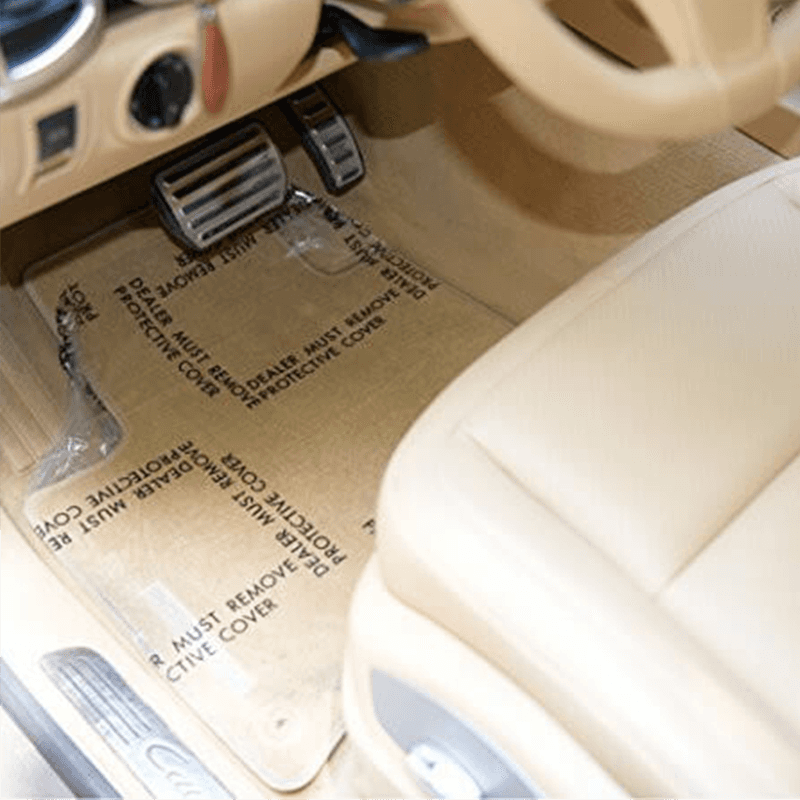
● Distance of each perforation die-cut ranges from 100mm to 1200mm;● Can peel off each die-cut piece of protective film at the perforated line easily;...
See Details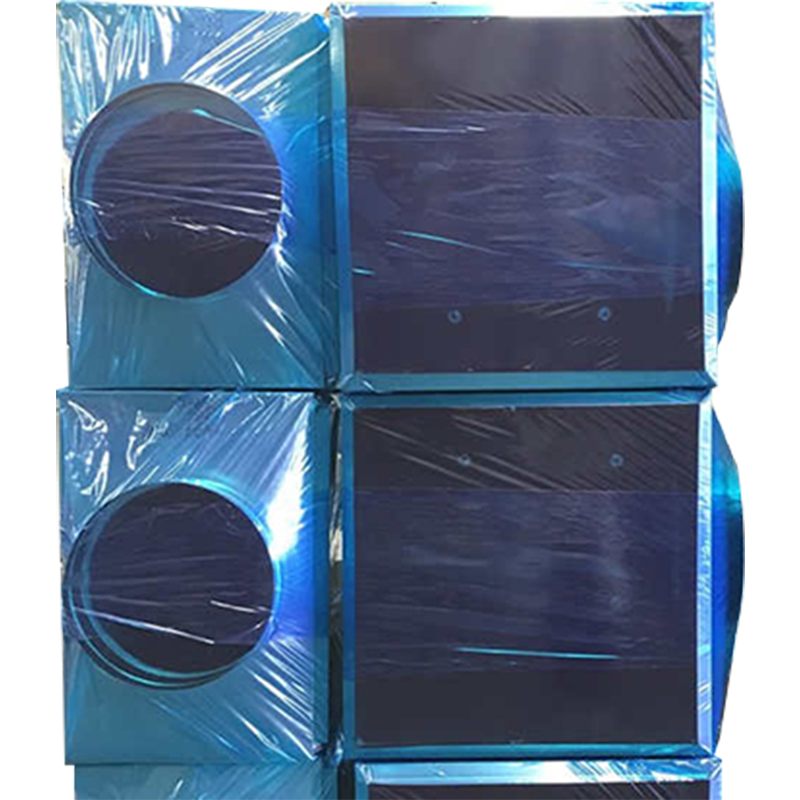
● The super-tough polyethylene film resists puncture and penetration by liquid and dirt during storage, transportation, and installation of the ductwo...
See Details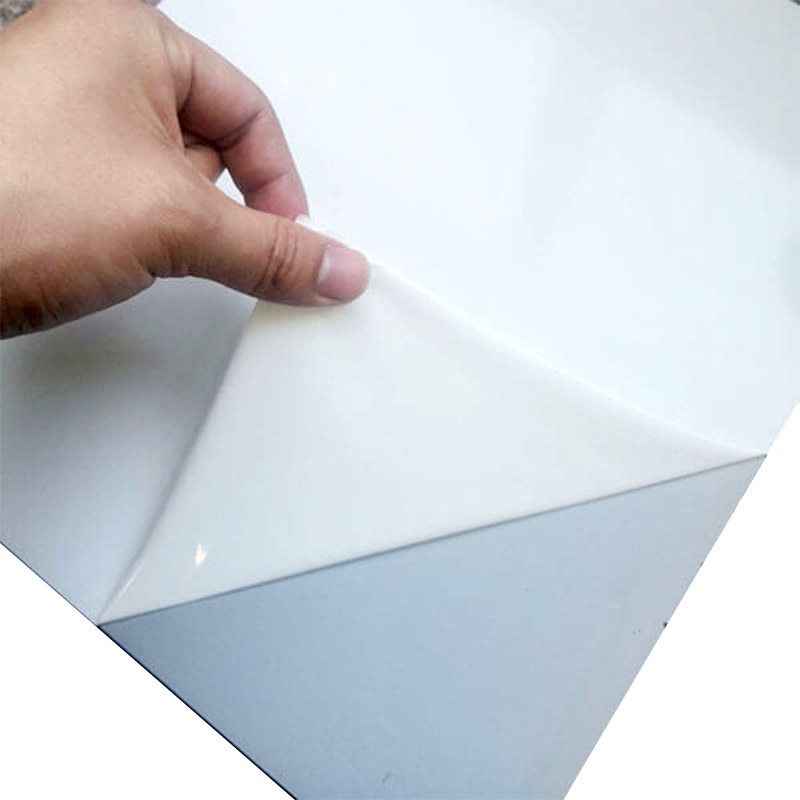
● The super tough polyethylene film with super high adhesion can stop parts of the glass or mirror from splintering away and injuring people when it i...
See Details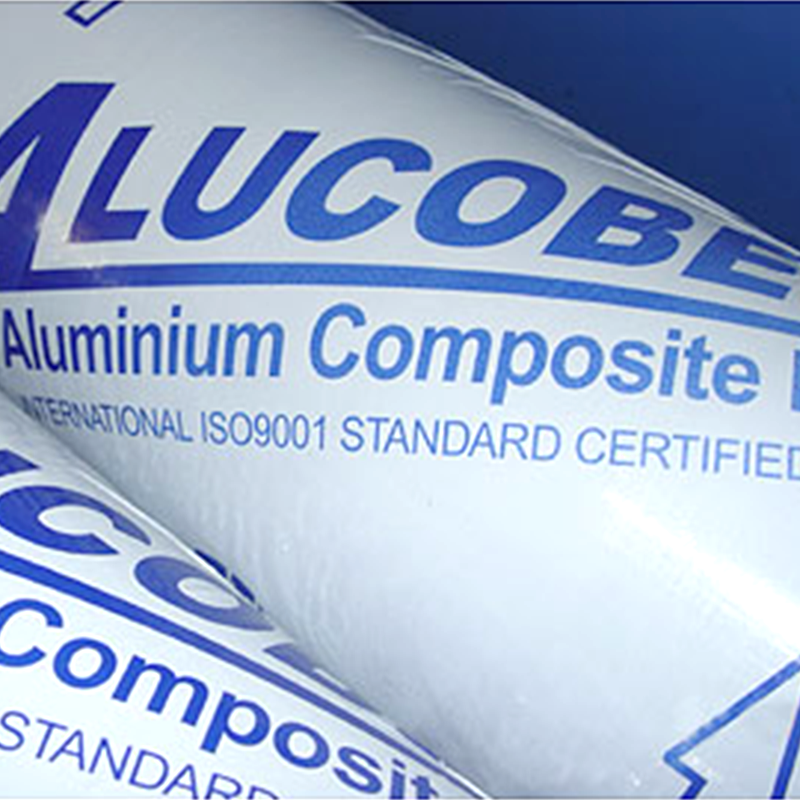
● The specially formulated adhesive ensures easy application and removal without leaving residue glue; ● The super-tough polyethylene film protects ag...
See Details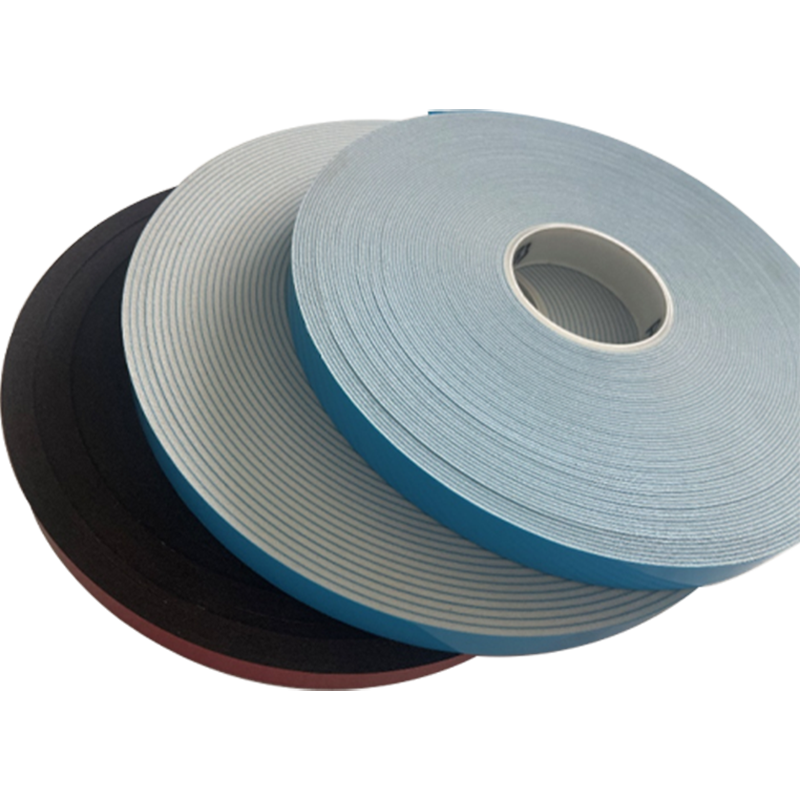
● Waterproof - the desirable material for waterproofing. ● Dust-proof - positive performance of dust prevention.● Low resilience - prevent the deforma...
See DetailsWe’re a reliable partner that shapes our expertise into success for your project.

Copyright 2024 Wuxi Qida Tape Co., Ltd. All Rights Reserved
 Wholesale Protective Film/Foil Manufacturers
Privacy
Wholesale Protective Film/Foil Manufacturers
Privacy